
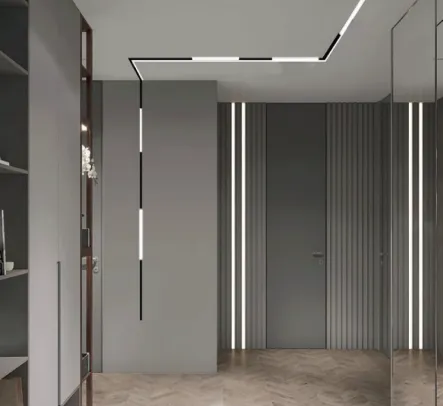
Discover how flexible illumination solutions are transforming homes and commercial spaces across Britain
Walk into any contemporary British home or boutique store these days, and you'll likely spot the sleek, adaptable glow of magnetic track lighting. These innovative systems have stormed the UK lighting scene, offering unparalleled flexibility compared to traditional fixed fixtures. Unlike old-school lighting that demands complex rewiring for simple adjustments, magnetic tracks let you slide, swap, and reposition spotlights with literally a snap of your fingers.
"What we're seeing is a design revolution," says Emma Richardson, lighting buyer for London's renowned Decorum Design Collective. "Homeowners and businesses want lighting that evolves with their spaces. That's where lighting fixtures with magnetic functionality are changing the game."
The beauty lies in the simplicity: a discreet track mounted to your ceiling or wall, with magnetic connectors allowing lamps to attach anywhere along its length. Forget drilling new holes when you rearrange furniture – just slide your spots to new positions. Planning a gallery wall? Cluster directional lights exactly where artwork will hang. Hosting dinner? Focus warm illumination over the dining area then adjust later for everyday tasks.
Commercial Advantage: For UK retailers and restaurants, this flexibility translates directly to pounds saved. "We redesigned our boutique quarterly," shares Manchester boutique owner Liam Chen. "Before magnetic systems, lighting changes cost £800 each time. Now we tweak layouts ourselves in minutes." This adaptability explains why magnetic tracks dominate commercial lighting installations across high street chains and independent stores alike.
| Brand | Key Innovation | Popular Range | Design Focus |
|---|---|---|---|
| LumiPro UK | Weather-resistant outdoor tracks | AquaSeal Series | Garden & conservatory lighting |
| Britelume | Integrated smart home compatibility | ConnectTrack System | Residential tech integration |
| Northern Lights Co | Recycled aluminium construction | EcoTrack Solutions | Sustainable commercial lighting |
| VoltX Lighting | Ultra-slim low-profile tracks | InvisiLine Collection | Minimalist architectural lighting |
What distinguishes premium brands? First, look for robust track construction – cheaper alternatives show visible seams that disrupt clean lines. Second, examine the magnetic connectors; quality versions feature copper-core contacts with satisfying 'snap' retention. Third, consider compatibility – systems accepting third-party led lights offer long-term economy.
Smart Integration: Over 65% of premium magnetic systems now offer app control or voice compatibility according to UK Lighting Association data. "It's not just about turning lights on anymore," explains tech blogger Simon Reeves. "Homeowners want to adjust colour temperature from warm to cool white depending on activity, save lighting scenes for different occasions, or sync with security systems."
Industrial Chic: Exposed magnetic tracks with visible hardware now feature in stylish apartments from Bristol to Edinburgh. Paired with filament-style led lights , this creates an urban warehouse vibe homeowners love. Finish choices extend beyond basic silver to include matte black, brushed brass, and copper tones.
Architectural Synergy: "The biggest shift is seeing tracks complement rather than compete with spaces," notes award-winning architect Daniel Rothschild. His firm now embeds tracks during renovations to enhance architectural lighting solutions . "We align tracks with structural beams or use curved configurations to follow room contours. When integrated thoughtfully, lighting becomes part of the architecture."
As eco-awareness grows, UK buyers scrutinise lighting lifecycle costs. Magnetic systems score highly on multiple fronts. First, individual spots can be replaced instead of entire systems – Britelume's recent study showed this reduces waste by 62% compared to fixed fixtures. Second, tracks made from recycled aluminium now dominate the premium market. Third, low-voltage systems consume less power while accommodating increasingly efficient led lights .
Manchester's Green Build Centre reports that homeowners doing eco-renovations choose magnetic systems 3:1 over alternatives. "Customers love combining sustainability with flexibility," says sustainability manager Anya Petrova. "They can start with essential spots then add specialised lights – task lighting for a new home office or colour-changing LEDs for entertainment zones – using the existing infrastructure."
While DIY-friendly, professionals note common installation considerations:
Surface Compatibility: Suspended ceilings require specialised brackets, while concrete demands proper anchors. Most new-build installations benefit from embedding tracks during construction.
Circuit Planning: "Map your switching needs before installation," advises electrician Molly Trent. "Many clients regret putting kitchen and dining lights on one circuit. Magnetic systems allow physical flexibility but switching plans need forethought."
The growth of low-profile track designs also enables installations where pendant lights would interfere with sightlines. "In spaces with low ceilings like Victorian terraces or converted lofts, we're using ultra-slim tracks to avoid compromising headroom," says lighting designer Amir Khan.
What's next for UK track lighting? Industry experts point to four developments:
"We're already seeing amazing architectural lighting solutions in flagship stores," shares innovation lead Jenna Woolcott. "Lights not just illuminating products but actually responding to customer movements – spotlights following shoppers down aisles automatically. That interactivity will enter homes within five years."
With so many options, how do British buyers select appropriate systems? Consider these professional tips:
Load Calculation: "Biggest rookie mistake?" laughs electrician Ray Donovan. "Overloading circuits. Calculate total wattage before buying extra lights – quality systems publish clear specs."
Future-Proofing: Opt for tracks compatible with multiple spotlight types. You might want ordinary white LEDs today but appreciate colour-changing options later.
Remember too that track layout dramatically impacts functionality. Straight runs offer simplest installation while L/T/X configurations maximise coverage. Curved systems create stunning visual flow but typically require professional installation. For most UK homes, experts suggest starting with expandable straight tracks before adding corner connectors.
As lighting evolves from static fixtures to dynamic systems, magnetic track lighting represents more than just a trend. Its fusion of functionality, sustainability, and design flexibility makes it a fundamental shift in how Brits illuminate their world – one magnetic connection at a time.
Recommend Products












