
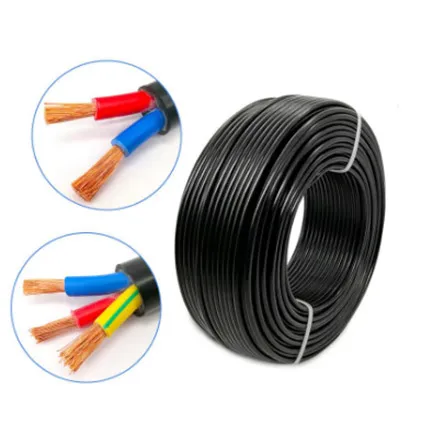
Imagine a construction site in Riyadh, Saudi Arabia. The project manager is staring at a stack of documents, (frowning deeply). The deadline for the new commercial complex is just three months away, but there's a problem: the electrical cables ordered last month don't meet the local halal compliance standards. Worse, the supplier can't deliver the additional electrical fixtures needed, and coordinating with multiple vendors is turning into a logistical nightmare. Sound familiar? For many builders and developers in the Middle East, this scenario is all too common—until they discover Coloria.
Based in China but with deep roots in the Middle East, Coloria isn't just another name in the list of cables suppliers . It's a trusted partner that understands the unique challenges of building in this region—where cultural sensitivity, regulatory compliance, and reliability aren't just box-ticking exercises, but the foundation of successful projects. In this article, we'll explore why Coloria is emerging as one of the top choices for electrical fixtures & cables solutions in the Middle East, and how its halal-compliant cables are setting new standards for quality and trust.
When you think of "Chinese cable companies," you might picture large factories churning out generic products for global export. But Coloria breaks that mold. For over three decades, this one-stop architectural solution provider has focused on doing one thing exceptionally well: understanding its markets. Nowhere is this more evident than in the Middle East, where Coloria has operated since the early 2000s, with a dedicated agency in Saudi Arabia—a strategic hub that puts it at the heart of the region's biggest construction boom.
"We don't just sell cables here," says Ahmad Al-Mansoori, Coloria's Regional Director for the Middle East. "We build relationships. Our team in Riyadh includes local engineers, logistics experts, and compliance officers who speak the language—both literally and figuratively. They know what matters to Saudi clients: not just a product that works, but one that aligns with their values and vision."
That vision includes Saudi Arabia's ambitious "Vision 2030," a plan to diversify the economy and build world-class infrastructure. Coloria isn't just supporting this vision—it's actively contributing to it. By investing in local talent, sourcing materials sustainably, and aligning its offerings with the kingdom's goals for (local employment) and green development, Coloria has become more than a vendor; it's a stakeholder in the region's growth.
So, what makes Coloria's cables different? Let's start with the most critical factor for many Middle Eastern clients: halal compliance . In a region where religious and cultural norms shape every aspect of business, even building materials aren't exempt. Halal compliance for cables might sound unusual, but it matters. It means ensuring that no raw materials derived from non-halal sources (like certain animal by-products) are used in production, and that manufacturing processes adhere to ethical standards aligned with Islamic principles.
Coloria takes this seriously. Its cables are certified by the Islamic Society of China and audited by Saudi Arabia's Halal Authority, giving clients peace of mind that their projects meet both legal and cultural requirements. "A client in Jeddah once told me, 'We could source cheaper cables from elsewhere, but if they're not halal, the project risks delays or even rejection,'" recalls Al-Mansoori. "Coloria's certification isn't just a document—it's a promise that we respect their way of life."
| Feature | Coloria's Approach | Benefit for Middle East Clients |
|---|---|---|
| Halal Compliance | Certified by Islamic authorities; no non-halal raw materials | Meets cultural and regulatory requirements |
| Heat Resistance | Special insulation for 50°C+ temperatures | Durable in harsh Middle Eastern climates |
| Fire Safety | Class A fire rating; low smoke emission | Enhanced safety for residential and commercial buildings |
| Customization | Tailored lengths, colors, and specifications | Fits unique project needs (e.g., historic renovations) |
Beyond compliance, Coloria's cables are built to withstand the Middle East's toughest conditions. Summers in Dubai or Doha regularly see temperatures above 45°C, with high humidity and sandstorms. Generic cables often fail here, leading to short circuits, maintenance headaches, and safety risks. Coloria's cables, however, are engineered with heat-resistant insulation and corrosion-proof materials, tested rigorously in simulated desert environments. "We once supplied cables for a luxury hotel in Abu Dhabi," says Al-Mansoori. "Five years later, their maintenance team told us the cables were still performing like new—no degradation, no issues. That's the Coloria difference."
Innovation is another key driver. Coloria's R&D team in China works closely with Middle Eastern clients to develop cables that meet emerging needs. For example, as more projects in the region adopt smart building technology, Coloria has introduced low-voltage cables optimized for IoT devices, reducing energy consumption while improving connectivity. Similarly, its solar-compatible cables support the Middle East's growing focus on renewable energy—aligning with global "net-zero" trends and Saudi Arabia's own sustainability goals.
Here's a secret many project managers in the Middle East learn the hard way: sourcing cables in isolation is a mistake. A typical construction project needs more than just wires—it needs electrical fixtures, switches, sockets, lighting, and often other building materials like flooring, pipes, or even solar panels. Coordinating with multiple suppliers for these items is time-consuming, costly, and risky (delays from one vendor can derail the entire project).
This is where Coloria's strength as a one-stop architectural solution provider shines. Beyond cables, it offers over 14 product categories, from basic (building materials) like solar panels and wall systems to high-end fixtures and custom furniture. For a hotel project in Riyadh, for example, Coloria didn't just supply the electrical cables—it also provided the lighting fixtures, switches, PVC pipes for plumbing, and even the custom kitchen cabinets. "The client saved over 20% on logistics alone," says Al-Mansoori. "Instead of coordinating with five different vendors, they had one point of contact, one delivery schedule, and one invoice. It simplified everything."
This "one-stop" model also reduces the risk of compatibility issues. Imagine installing cables that don't work with the lighting system, or pipes that don't fit the fixtures—common headaches when mixing products from different brands. Coloria's integrated approach ensures all components are designed to work together seamlessly. "We had a hospital project in Kuwait where the electrical and plumbing systems needed to be perfectly synchronized," explains Al-Mansoori. "Our team in China worked with the local architects to design a custom solution: cables with specific voltage ratings, pipes with precise diameters, and fixtures that matched both. The result? The project was completed two months ahead of schedule."
Talk is cheap, but results speak volumes. Let's look at a real-world example: the Al-Nour Residential Complex in Jeddah, Saudi Arabia. This 20-building project, completed in 2024, was tasked with housing 5,000 residents while adhering to strict halal compliance and energy efficiency standards. The developer initially worked with three separate suppliers for cables, lighting, and electrical fixtures—but quickly ran into problems.
"The first supplier's cables failed the halal audit," says Mohamed Hassan, the project's lead engineer. "The second couldn't deliver the LED lighting on time, and the third's switches were incompatible with the cable specifications. We were six weeks behind, and the budget was spiraling." That's when Hassan's team turned to Coloria. "Within 48 hours, their Riyadh team visited the site, assessed our needs, and presented a full solution: halal-certified cables, energy-efficient lighting, and compatible switches—all with a delivery timeline that put us back on track."
The result? The Al-Nour Complex was completed on time, under budget, and won a 2024 Saudi Green Building Award for its sustainability features. "Coloria didn't just supply products," Hassan adds. "Their engineers stayed on-site during installation, offering technical support and ensuring everything worked as planned. That level of service is rare in this industry."
Another success story comes from Dubai's Expo City, where Coloria supplied electrical fixtures & cables for the UAE Pavilion. The project required cables that could withstand extreme outdoor temperatures (up to 50°C in summer) and meet the pavilion's "zero waste" sustainability goals. Coloria delivered with its eco-friendly, halogen-free cables, which are 100% recyclable and emit low levels of CO2 during production. "We wanted the pavilion to showcase the best of UAE innovation," says the pavilion's architect, Sara Al-Zaabi. "Coloria's cables aligned perfectly with that vision—high-tech, sustainable, and designed for the long term."
The Middle East's construction boom shows no signs of slowing down. Saudi Arabia alone is investing $500 billion in new infrastructure projects, from NEOM (the futuristic city) to the Riyadh Metro expansion. Dubai continues to build iconic skyscrapers, while Qatar is gearing up for the 2030 Asian Games with new stadiums and transport links. All these projects need reliable, compliant, and innovative building materials—and Coloria is positioning itself to be at the forefront.
"Our focus for the next five years is simple: grow with the region," says Al-Mansoori. "We're expanding our Riyadh warehouse to stock more localized products, investing in AI-driven logistics to reduce delivery times, and partnering with Saudi universities to develop cables that meet the next generation of smart building standards. We're also doubling down on sustainability—by 2027, 80% of our cable production will use recycled materials, and we aim to be carbon-neutral in the Middle East by 2030."
For clients, this means more than just better cables. It means a partner that's invested in their success, today and tomorrow. "When you work with Coloria, you're not just buying a product," says Hassan from the Al-Nour Complex. "You're buying peace of mind. You know they'll be there when you need them, with solutions that fit your culture, your goals, and your timeline."
In a market flooded with cable suppliers, what makes Coloria stand out? It's the combination of three key factors: local expertise , uncompromising quality , and end-to-end support . As a saudi arabia building materials supplier with decades of experience, Coloria understands the Middle East like no other Chinese company. Its halal-compliant, climate-resistant cables are designed for this region's unique needs, and its one-stop model simplifies even the most complex projects.
So, whether you're building a hospital in Doha, a hotel in Bahrain, or a residential complex in Riyadh, remember this: the right cables aren't just wires—they're the lifeline of your project. And when it comes to lifelines you can trust, Coloria is leading the way.
Ready to build with confidence? Discover how Coloria's electrical fixtures & cables solutions can transform your next project. Because in the Middle East, success isn't just about getting the job done—it's about getting it done right, together.
Recommend Products












