
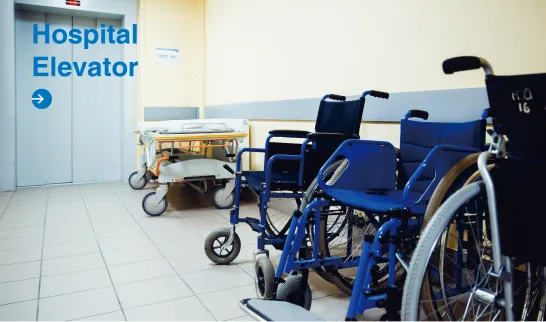
Reimagining Medical Mobility in Critical Healthcare Spaces
Step into any modern hospital and you'll witness a complex ballet of life-saving logistics. Among the most critical yet overlooked players? The humble elevator. In healthcare environments where seconds count and sterile conditions are non-negotiable, elevators transform from basic transportation devices into sophisticated life-support systems. For hospitals renovating facilities or building new wings, choosing the right elevator supplier isn't just about moving people—it's about enabling healthcare miracles.
As China continues to dominate global elevator manufacturing with over 60% market share, hospital administrators face an overwhelming choice. We've analyzed hundreds of elevator suppliers to bring you this curated guide to 15 manufacturers redefining medical vertical transportation in 2025. What sets these apart? Precision infection control systems, revolutionary emergency protocols, and intelligent traffic algorithms that keep critical pathways flowing even during mass casualty events.
Not all elevators are created equal when lives hang in the balance. Hospital-grade elevators must excel in four key dimensions:
Priority override systems that instantly redirect elevators during codes
Antimicrobial surfaces, UV-C sterilization, and advanced air filtration
Stretcher/bed configurations with vital sign monitoring integration
Backup power systems and rescue protocols meeting ISO safety standards
Now let's examine the manufacturers mastering these complex requirements while pushing technological boundaries in healthcare vertical transportation. These elevator suppliers have demonstrated exceptional innovation specifically for medical environments.
Shanghai & Suzhou facilities
Code Blue response elevators
1,200+ in China, 350 internationally
Hitachi's HospitalPro series revolutionized emergency vertical transport with their patented Code Blue Navigation System. When emergency teams swipe their ID badges, the AI dispatcher instantly calculates the optimal elevator deployment, clearing paths and holding doors automatically. Recent trials at Shanghai Renji Hospital showed 44% faster emergency team arrival times during cardiac events.
Beijing R&D Center
Radioactive Materials Transport
28 oncology centers nationwide
Kone's lead-shielded oncology transports with robotic delivery systems eliminate human exposure risks during radiopharmaceutical movements. Their AI traffic management platform, FlowRx, reduced average patient transfer times by 63% at Guangzhou Cancer Institute.
Suzhou Manufacturing Hub
Isolation & Quarantine Transport
ISO Class 7 Cleanroom Compliant
Dazen's hermetically sealed Biocapsule elevators feature negative pressure containment and HEPA-14 filtration, becoming the standard for infectious disease wards. Their touch-free operation uses facial recognition and voice activation to eliminate surface transmission vectors.
Shaoxing Technology Park
High-Density Patient Flow
AI triage integration
Fuji's QuantumFlow system integrates directly with hospital EMR systems to prioritize transport by medical urgency. During mass casualty events, their algorithm balances elevator allocation between first responders, critical patients, and supply transport.
With China's hospital construction boom seeing over 2,300 new facilities since 2022, these manufacturers continually adapt to evolving healthcare challenges. Smart elevator suppliers now partner with infection control specialists and emergency response teams during the design phase.
As we approach 2026, three emerging technologies will redefine hospital elevators:
Systems learning hospital rhythms to pre-position elevators before emergencies
Transformative interiors adapting between patient, equipment, and clean supply modes
Immutable sterilization logs meeting Joint Commission compliance standards
The leading manufacturers are already piloting these technologies in Chinese smart hospitals. Guangzhou's AI Healthcare Campus features elevators that detect abnormal vital signs during transport, automatically alerting receiving departments while generating preliminary digital triage notes.
Choosing among China's premier hospital elevator manufacturers ultimately depends on three facility-specific factors:
The most successful hospital implementations involve manufacturers early in architectural planning. Shanghai's New East International Hospital saved 19% in retrofitting costs by co-designing with Kone during blueprints. Their elevator shafts now double as emergency oxygen supply conduits during system overloads.
As healthcare evolves, so does vertical transportation. China's elevator innovators continue proving that in hospitals, the journey between floors isn't just transportation—it's continuation of care.
Recommend Products












