
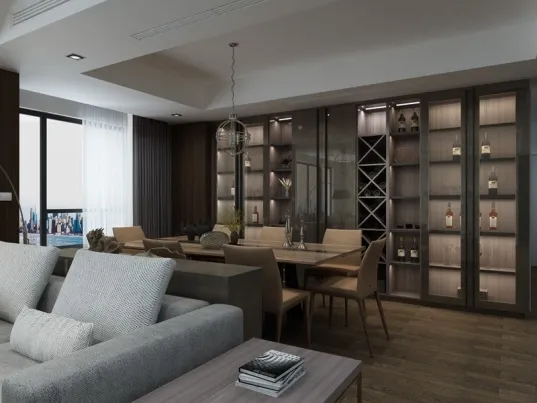
Ever opened a prized bottle only to find it spoiled? Storing wine properly isn't just about taste - it's about preserving memories in every bottle. Forget clunky fridges and dark cellars; today's wine cabinets blend cutting-edge tech with elegant design. Let's uncork the secrets behind where the world's best wine storage solutions are born.
Picture this: You've saved for years to buy that 2005 Château Margaux. You finally open it... and it tastes like vinegar. Devastating, right? That's what happens when temperature fluctuates or humidity isn't controlled. The factory behind your cabinet isn't just assembling boxes - they're engineering microclimates.
Top factories invest in vibration reduction tech so your wine sleeps undisturbed. They use UV-resistant glass that stops sunlight from cooking your Chardonnay. Forget cookie-cutter designs; leaders craft solutions for tiny apartments or wine-cellar mansions. Getting storage wrong doesn't just waste money - it murders the artistry in every bottle.
Holding 9% of the global market share, Danby dominates through smart engineering. They've cracked the code for affordable dual-zone cabinets that fit apartment kitchens without sacrificing precision.
Technical Innovation: Patented "SilentGuard" compressors run quieter than a whisper (≤32 dB). Their humidity control stays within ±1% tolerance - a key to preserving older vintages.
Why sommeliers love them: Unbeatable prices for commercial-grade units, energy efficiency reduces power bills by up to 40% compared to competitors.
Watchpoint: Fewer wood finish options than luxury brands. Limited capacity upgrades once purchased.
Powering 8% of the market, Middleby treats cabinet design like watchmaking. Their thermal regulation maintains cellar-perfect conditions even at 90°F external temperatures.
Specialty: "CrystalView" glass doors with anti-reflective coating and UV filtration that blocks 99.7% of light radiation.
Perks: Mobile-app integration lets you adjust conditions remotely. Shock-absorbing racks protect against vibrations.
Considerations: Units cost 15-20% more than average with extended lead times for customization.
Redefining what's possible with custom storage, their cellars become architectural statements. One recent Malibu project features a climate-controlled display wall visible from the ocean-view terrace.
Engineering Marvel: "MicroClimate Matrix" creates zones as small as 3 bottles with distinct temperature/humidity settings.
Advantages: No size constraints - projects range from 50 to 5,000 bottles. Materials like reclaimed oak and titanium accents.
Note: 12-16 week lead times; budget 35% over standard luxury cabinets.
Solving the "evolving collection" problem, Vigilant's cabinets grow with your passion. Buy a basic unit, then add sections later like wine-storage LEGO.
Tech Specs: Mahogany frames with expandable racks (48-240 bottle increments). WiFi sensors alert phones at the first temperature fluctuation.
Flexibility Wins: Upgrade without replacing the entire system. Industrial-grade seals maintain conditions during power outages.
Caveat: Requires professional installation. Starter units lack high-end aesthetics.
Chosen by Michelin-star restaurants, their cabinets are built for professionals who demand perfection for temperature-controlled wine cabinet storage.
Precision: Holds 55°F±0.3° with no hot/cold spots. Humidity stays at 65%±2 - the sweet spot for corks.
Expert Approval: Whisper-quiet operation essential for open kitchens. Backup battery maintains conditions for 8+ hours.
Consider: Strictly functional design. Limited consumer-facing support channels.
German precision meets innovative storage. Their BioFresh tech protects delicate whites without freezing taste-enhancing compounds.
Temperature Innovation: Separate cooling circuits for reds and whites avoid flavor contamination.
Advantages: 20-year compressor warranty - industry's longest. Touchscreens simplify management for non-tech users.
Note: Bulky units. Premium pricing reflects longevity.
For collectors who value terroir preservation, Eurocave uses clay-based insulation mimicking underground cellars' natural buffers.
Natural Tech: Charcoal filters regulate humidity organically without electrical components.
Perks: Near-zero electromagnetic emissions protect wine chemistry. No compressor vibrations.
Drawback: Slower temperature recovery when opened. Limited digital features.
Leading Asia's market with voice-controlled units. Say "chill Riesling to 48°" while cooking, and it happens.
AI Integration: Learns opening patterns. Pre-cools before peak usage times to save energy.
Cool Factor: Touchless inventory scanning. Warns when bottles near expiration.
Consider: Smaller rack spacing; magnums need customized orders.
Solving urban living challenges with slender towers (just 24" deep) that hold 150 bottles without floor reinforcement.
Space Tech: Triangular bottle stacking uses 18% less space than traditional racks.
For City Dwellers: Fits standard elevator dimensions for high-rise installation. 110v plug works anywhere.
Limitation: Less thermal inertia means slightly quicker temperature swings during outages.
Restaurant-grade durability at residential prices. Their brushed steel cabinets endure nightclub-level vibrations.
Heavy-Duty: Commercial-grade compressors rated for 24/7 operation. Steel racks support 5x bottle weight.
Workhorse: Handles frequent opening/closing. Spill-resistant trays.
Tradeoffs: Basic LCD displays. Limited finishes beyond stainless steel.
| Factory | Specialty | Climate Control Precision | Ideal For | Lead Times |
|---|---|---|---|---|
| Danby | Value-focused dual zones | ±1°F | Budget-conscious collectors | 2-4 weeks |
| Middleby | Luxury tech integration | ±0.5°F | Tech enthusiasts | 8-12 weeks |
| Genuwine Cellars | Fully custom designs | ±0.3°F | Architectural statements | 12-16 weeks |
| Vigilant | Expandable systems | ±0.7°F | Growing collections | 6-8 weeks |
| Wine Guardian | Professional precision | ±0.3°F | Serious connoisseurs | 10-14 weeks |
Global wine cabinets market will hit $2.45 billion by 2025 according to GIR. But how consumption changes:
The pandemic permanently changed priorities: Cabinets aren't appliances anymore - they're culture preservation systems . Factories now engineer for generational storage, not just short-term chilling.
Can I retrofit cabinets into existing spaces?
Absolutely! Vigilant's slim towers (as narrow as 15") fit beside refrigerators. For truly awkward spaces, Genuwine builds curved cabinets - we've seen units wrap around spiral staircases.
Do humidity controls really matter?
Critical for long-term aging. Low humidity shrinks corks allowing oxygen in - the kiss of death for Bordeaux. Eurocave's clay system maintains 68% humidity ±1% - that's better than most actual cellars!
Are bigger cabinets always better?
Overcrowding prevents air circulation. Liebherr's research shows bottles need ¼" spacing for optimal temperature stability. Overfill by 15%, and temperature swings double.
How long do quality cabinets last?
Danby/Middleby units average 12 years. But Eurocave's passive systems often last 30+ years. Tip: Check compressor warranties - anything under 5 years signals cheap components.
Choosing a wine cabinet factory isn't about buying a box - it's partnering with craftsmen who guard your liquid memories . From Danby's unbeatable engineering for value seekers to Genuwine's architectural masterpieces, each factory brings unique strengths. Remember: A great cabinet should disappear - silent, invisible protection letting your wine sing its history. In 2025, technology meets tradition where precision isn't a luxury, but the essential guardian of every bottle's story.
Recommend Products












