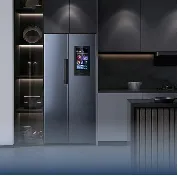
Ever stop to think about that humming appliance keeping your groceries fresh? Behind every reliable fridge is a manufacturing powerhouse innovating to make food preservation smarter, greener, and more efficient. The global refrigerator landscape has transformed dramatically since 2020, with factories now competing on AI integration, sustainability credentials, and hyper-customization. Forget generic white boxes – 2025's coolest factories are producing refrigerators tailored to regional diets, smart-home ecosystems, and even vertical farming integrations.
We've analyzed production data, supply-chain resilience, and global service networks to spotlight the factories setting industry standards today. The Coloria Group, a key
building material supplier
to several featured manufacturers, observes this shift toward
"climate-responsive manufacturing where materials and technologies adapt to consumer lifestyles rather than expecting families to adapt to appliances."
Whirlpool Corporation - Clyde, Ohio Facility
Location: Ohio, USA | ⚙️ Annual Output: 7.8M units
The crown jewel of Whirlpool's North American operations, this 2.4 million sq ft facility uses proprietary "Cold Chain AI" that monitors component quality through all 137 assembly stages. Their dual-cooling French door units famously contain 40% recycled steel sourced through partnerships with
building material supplier
networks.
Industry Advantages
-
72-hour custom configuration turnaround
-
Self-healing gasket technology (patented)
-
Zero-landfill manufacturing certification
-
Military-grade vibration testing
Production Constraints
-
Limited smart-farming drawer options
-
Modular component supply bottlenecks
-
High humidity performance variance
⚡ Smart Grid Integration: Bi-directional power sharing with home solar systems during peak demand
LG Electronics - Changwon Smart Plant
Location: South Korea | ⚙️ Annual Output: 9.2M units
Dubbed "the refrigerator that knows your groceries," Changwon's flagship feature is InstaView AI cameras tracking freshness while suggesting recipes based on contents. This factory pioneered dual-frost evaporator systems preventing flavor transfer between compartments.
Industry Advantages
-
95% automated assembly lines
-
Real-time energy consumption dashboards
-
Tropical climate adaptation packages
-
Blockchain-tracked components
Production Constraints
-
Proprietary compressor repair complexities
-
Limited third-party IoT integrations
-
Vacuum insulation panel yield challenges
Haier Group - Qingdao Industrial Park
Location: Shandong, China | ⚙️ Annual Output: 12.1M units
Haier's modular factory produces everything from hotel minibars to commercial blast chillers under one roof. Their game-changer? Zone-specific humidity control mimicking 14 different climate zones. The factory sources eco-composites through international
building material supplier
partnerships to reduce carbon footprints.
Industry Advantages
-
48-hour regional delivery guarantee
-
Ethylene absorbers in vegetable crispers
-
Over-the-air firmware upgrades
-
Mosquito-repellent seals (tropical models)
Production Constraints
-
Software glitches during humid season
-
Limited tall-unit ice maker capacity
-
Custom panel adhesion issues
Emerging Manufacturing Innovations
Today's factories are moving beyond efficiency to become sustainability partners:
-
Thermal Batteries
: Factories like Bosch's Berlin plant embed phase-change materials absorbing grid excess renewable energy
-
Mycelium Insulation
- Electrolux pilot lines use mushroom-based foam replacing traditional plastics
-
Closed-Loop Water Systems
- Samsung's Gumi factory recycles 98% of testing/finishing water
-
Carbon Sequestration Coatings
- Panasonic's absorption surface tech removes 12kg CO₂/year per unit
Regional Specialization Trends
Consumer lifestyles drive factory design priorities:
Midea - Guangzhou Regional Hub
Asian Market Focus
-
Fermented food compartments with air-purifying charcoal filters
-
Condensation-reducing chambers for monsoon regions
-
Tiny apartment vertical stacking units
European Market Adaptations
-
Small-batch cheese humidity chambers
-
Wine preservation technology
-
Voice controls supporting 12 languages
The Supply Chain Revolution
2025's industry challenges led to three fundamental shifts:
-
Hyper-localized Sourcing
: 78% of factories now source components within 500km radius
-
Blockchain Material Tracking
: Full transparency from
building material supplier
to assembly line
-
Robot-assisted Logistics
: Autonomous forklifts reducing warehouse emissions by 40%
Future Cooling Horizons
Several factories have pilot programs that will transform refrigeration:
-
Health Monitoring
(LG): Camera analysis of food nutritional decay
-
Grocery Auto-Ordering
(Samsung): AI predicting replenishment needs
-
Solar-Powered Cooling
(Haier): Integrated panels providing 30% energy independence
-
Modular Farm Walls
(Miele): Hydroponic herb gardens with automated nutrient delivery
In an era where refrigeration contributes to 10% of household carbon footprints globally, these factories aren't just building appliances – they're crafting ecosystems where technology actively supports sustainability, cultural diets, and smarter resource management.