
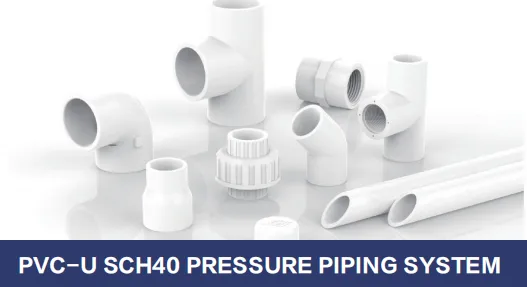
Hey there! If you're working with piping systems, you've probably encountered PVC-U SCH40 pipes. They're incredibly versatile, reliable, and cost-effective. But what makes them suitable for different pressure applications? Let's dive in and explore the top 10 types of PVC-U SCH40 pressure piping systems - the kind you'll actually need to know for real-world projects.
This is where PVC-U SCH40 really shines in everyday life. Imagine your home's plumbing system - that's typically PVC-U SCH40 handling water pressure. For standard 1/2″ to 2″ pipes, operating pressure ranges from 270 psi (for 1″ pipes) down to 166 psi (for 2″ pipes). What's great is how these pipes maintain integrity against water hammer effects that cause sudden pressure spikes.
Pro Tip: Always account for temperature changes! PVC-U SCH40 strength decreases about 20% at higher temperatures around 60°C. You wouldn't want your perfectly installed system acting up in summer heat.
Farmers absolutely love PVC-U SCH40 for irrigation setups. Why? They're lightweight for installation across fields yet robust enough to handle pressure demands of sprinkler systems. The key here is understanding surge pressures - those temporary pressure increases when valves open suddenly.
Pool pros know PVC-U SCH40 is non-corrosive with chlorine and salt water - a huge advantage over metal pipes. Flow rates vary by pipe size:
The sch40 standard piping system (this keyword naturally appearing here) handles that continuous pressure demand without flinching.
For multi-story buildings, the vertical pressure load management becomes crucial. Here's how PVC-U SCH40 handles it:
The material's smooth interior prevents mineral buildup that would restrict flow over time.
Manufacturing plants rely heavily on cooling systems, and PVC-U SCH40 is frequently chosen for these applications. What makes it work?
At the 4″ size common in industrial settings, you're looking at around 133 psi operating pressure - sufficient for most cooling loops.
While not for strong acids or solvents, PVC-U SCH40 works well for mild chemical solutions. Its smooth bore prevents contamination buildup, and different formulations offer:
Remember to always verify chemical compatibility charts before installation!
A somewhat controversial application, but PVC-U SCH40 works surprisingly well for compressed air when installed correctly. Key considerations:
Many workshops use 1″ SCH40 pipes for branch lines at 100 psi successfully.
The aquaculture industry heavily relies on PVC-U SCH40 for water transfer in farms:
Pressure considerations change with elevation differences in raceway systems.
Creative fountain designers love SCH40 because:
A standard ¾″ pipe at 200 psi (well below its 289 psi capacity) creates dramatic high-arc water displays.
Important note: This requires specifically rated CPVC blends. Advantages include:
Always follow NFPA 13 standards and local codes for any fire protection use.
Regardless of which application you choose, these maintenance tips will extend your system's life:
The numbers tell the story of why this material continues to be a go-to solution:
When comparing options across different pipe sizes, the combination of pressure handling, chemical resistance, and flexibility makes PVC-U SCH40 tough to beat. We've seen entire municipalities switch from old metal systems to PVC-U SCH40 networks and immediately notice improved water pressure and lower maintenance costs.
Real-World Insight: That odd creaking sound in some systems? It's usually thermal expansion - PVC expands 3 times more than steel. The solution? Either include expansion loops or switch to expansion joints. Problem solved!
At the end of the day, choosing the right PVC-U SCH40 system means understanding both the mechanics and the application. Whether it's for residential, industrial, or creative uses, the key is matching pipe sizes to pressure needs while considering temperature ranges and chemical exposures. Get this right, and you'll have a system that serves reliably for decades.
Remember: Pressure capabilities are just one factor. The real magic happens when you combine proper installation techniques with high-quality SCH40 components and thoughtful maintenance planning. Do this, and your pipes won't just handle pressure - they'll handle years of trouble-free service.
Recommend Products












