
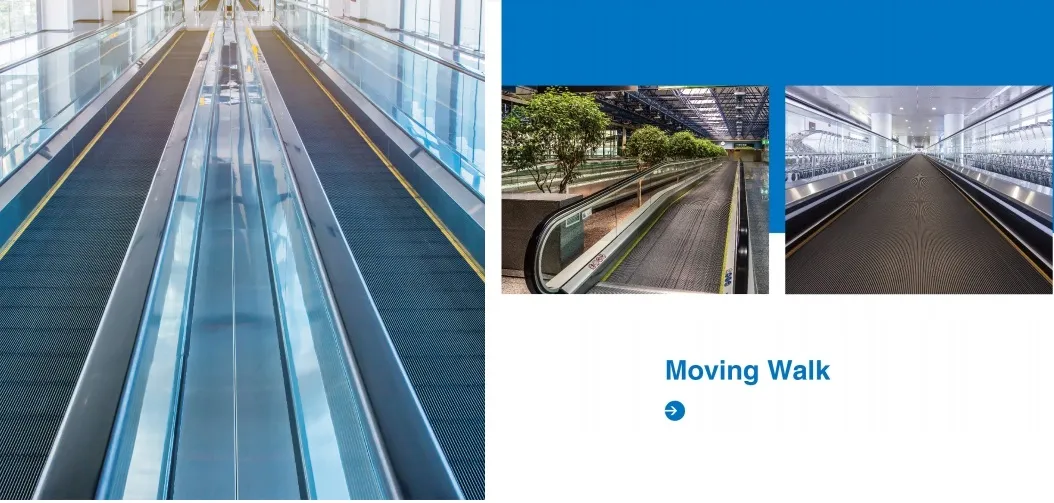
The giants revolutionizing how we move in airports, malls, and transit hubs
You know that feeling when you step onto an airport walkway after a long flight? That relief of letting the moving path do the work? That's the magic crafted by today's moving walkway innovators. In this deep dive, we'll explore the top 10 factories that are reshaping urban mobility with cutting-edge technology and clever engineering. Get ready to discover the masterminds behind those smooth-gliding pathways you use every day.
We didn't just pick names from a hat. Our ranking comes from careful analysis of:
Having sourced materials globally for projects including airport terminals and hospital complexes, we understand what sets truly exceptional manufacturers apart. Top-tier commercial projects demand nothing less than flawlessly integrated systems.
These German engineers have changed the game since their solar-powered walkway debuted at Berlin Central Station. Walking through their Hamburg facility feels like stepping into the future - robots assemble precision parts while engineers test vibration patterns on multi-story prototypes. They've revolutionized gearless drive systems, cutting energy use by 40% compared to traditional models. Their secret weapon? Modular installation systems that slash construction timelines in crowded airports. Dubai International's expansion featured their whisper-quiet units.
Their sustainability story is compelling too. Last year, 92% of their manufacturing waste was recycled into architectural façade solutions for their building partners. With an eye on tomorrow, they're piloting kinetic energy recovery systems that harvest footstep vibrations to power LED pathway lighting.
When Tokyo needed ultra-narrow walkways for historic subway stations, StrideMaster delivered with their signature feather-touch handrails and barely-there balustrades. Their 2024 redesign of Seoul's Incheon Airport walkways features rain-sensing grip surfaces that auto-adjust tread texture during wet weather. What really sets them apart is predictive maintenance - sensors track 14 performance metrics and automatically order replacement components before failures occur.
From flooring to structural components, their vertically integrated production chain ensures flawless quality control. During our tour, we watched seamless aluminum decorative trims married to composite cores that will endure millions of footsteps without warping.
Walk into Chicago O'Hare's newest terminal and you're experiencing GlidePath's "Caterpillar" dual-zone system. Their genius layering approach creates express lanes for travelers in a hurry alongside standard-paced sections. But their real breakthrough came with healthcare installations where critical care equipment must move without vibration. By rethinking suspension systems traditionally used in elevator construction, they achieved unprecedented stability.
Their community-first approach includes job training programs and sourcing recycled stainless steel fittings from American mills. While touring their workshop, we noted how custom-shaped trims eliminated pinch-points - essential for accessibility compliance.
| Factory | Specialized Technology | Max Speed | Energy Saving | Notable Installation |
|---|---|---|---|---|
| MobilityTech | Self-Power Lighting | 1.8 m/s | 40% | Dubai International Airport |
| StrideMaster | Rain-Sensing Surface | 1.6 m/s | 32% | Singapore Jewel Changi |
| GlidePath | Dual-Zone System | 2.0 m/s | 29% | Chicago O'Hare Terminal 5 |
| UrbanFlow | Heavy-Duty Pallet | 1.4 m/s | 31% | Copenhagen Metro |
The movement never stops - literally. Leading innovators are working on:
Having walked through countless terminals and transit hubs, I've seen how thoughtfully designed moving pathways transform human experiences. These manufacturers aren't just moving people - they're moving possibilities. Remember that next time you effortlessly glide through an airport with your luggage in tow!
The global shift toward sustainable, high-density urban development makes moving walkways more crucial than ever. Beyond their obvious function, these engineering marvels demonstrate how thoughtful design solves complex people-movement challenges. For commercial builders planning transportation hubs or hospitals, choosing partners who master both electrical equipment reliability and architectural integration makes all the difference.
Whether you're an architect specifying materials or a facilities manager maintaining systems, this industry's evolution promises exciting developments. Keep your eyes on the factories pushing boundaries with eco-friendly building materials and energy-harvesting systems - they're building the ground beneath our feet, literally and figuratively.
Recommend Products












