
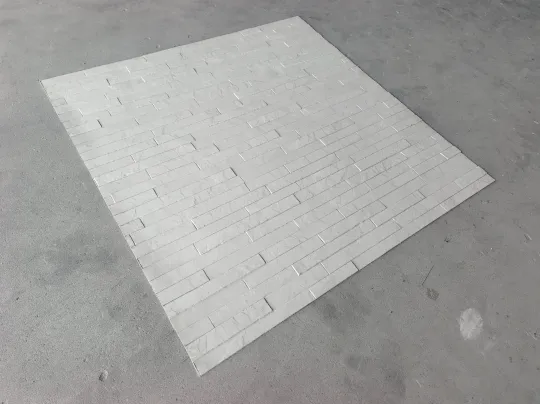
Granite is like that reliable friend who never lets you down. Formed deep within the Earth's crust under intense heat and pressure, it's one of nature's most durable creations. What's fascinating about granite is its speckled appearance – those mineral flecks aren't just decorative, they tell the story of Earth's geology.
Builders love granite for foundations and bridges because it doesn't flinch under pressure. Its high compressive strength means it can handle massive weights without cracking. Plus, it's practically immune to weathering – granite structures from ancient civilizations are still standing tall today. The only downside? Cutting and shaping granite requires serious power tools – trying to work with it is like dancing with a heavyweight boxer.
If you're considering granite for your project, know that it gives a luxurious, timeless look. Kitchens, monuments, and facades gain character when granite shows up. It's like adding an heirloom piece to your home.
Limestone has a softer story to tell – it's essentially nature's diary of ancient seashells and marine life compressed over millennia. Unlike granite's toughness, limestone has a warm, welcoming texture that almost invites you to touch it. When cut, it releases that distinctive earthy scent like rain on desert soil.
Masons appreciate limestone because it's a dream to carve. Sculptors can create intricate details that other stones won't allow. Think of Gothic cathedrals with their ornate facades – that's limestone magic. But beware: limestone has a softer side too. Acid rain makes it weep and dissolve over time, so it needs protection in harsh climates.
Modern applications include interior flooring and elegant facade work. When maintained well, limestone develops a handsome patina that deepens its character year after year.
Sandstone is nature's canvas – made of layered desert winds and ancient rivers frozen in time. Its swirling patterns feel like looking at geological fingerprints. Run your hand across sandstone and you'll feel history etched in every grain.
What's remarkable is how sandstone breathes. Its porosity allows moisture to move through, preventing damaging buildup – perfect for humid climates. Traditional desert dwellings use sandstone to naturally regulate indoor temperatures – staying cool under the scorching sun. But it's no match for frosty winters; freezing temperatures can turn this rock into flakes.
Today, sandstone adds soul to modern designs: garden walls, fireplaces, and feature walls gain texture and warmth. Its earthy palette connects us to the natural world in our urban environments.
Slate whispers elegance in every gray-blue plane. Born from compressed sea mud and metamorphic transformation, it splits into perfect sheets as if designed for purpose. That distinctive cleavage makes it a roofer's best friend – overlapping shingles weather storms for centuries.
Ever notice how slate feels cool even on hot days? That's its thermal mass working magic. Schools and poolside areas use slate flooring because it resists slipping even when wet – water becomes its ally. Though durable, slate has a temperamental side. Treated poorly during installation, it can fracture into unhappy pieces.
Modern uses have expanded to sophisticated countertops, backsplashes, and even artistic wall cladding. Pair it with glass and steel for contemporary contrast, and it sings.
Marble is Earth's poetry in mineral form – those dramatic veins tracing ancient geological dramas. Formed when limestone transforms under tremendous heat, it emerges with crystalline grace. Light doesn't just reflect off marble – it dances through the translucent layers.
Working marble is like collaborating with an artist. Its relative softness allows sculptors to achieve dreamlike detail – Michelangelo's David wouldn't exist without it. Yet living with marble demands affection. Acid spills etch its elegant surface, and outdoor exposure stains its purity.
Today's innovative sealants and treatments allow marble to shine in modern kitchens, bathrooms, and feature walls. When sourced through responsible building material suppliers, it becomes an eco-friendly heritage piece that lasts lifetimes.
Quartzite is granite's chic cousin – born from sandstone but transformed through metamorphic makeovers. Its shimmering, glassy appearance comes from fused quartz crystals, creating a surface that laughs at scratches and scoffs at heat marks.
While similar to granite in durability, quartzite offers something special: dazzling color variety. Imagine sunset-amber stones with crystalline sparkle, or milky-white varieties that seem lit from within. Installation requires expertise though – cutting quartzite unleashes stubborn silica dust.
For high-traffic floors and kitchen worktops, quartzite delivers beauty without fragility. It weathers gracefully outdoors, turning structures into natural landmarks that gain character with age.
Travertine tells stories of bubbling springs and mineral-rich waters depositing layer upon layer through eons. Its characteristic pitted surface reads like geological braille, preserving fossils and gas bubbles in crystalline embrace.
Roman architects adored travertine – the Colosseum stands as its greatest testament. Unlike impervious granite, travertine breathes moisture vapor, preventing trapped humidity damage. Modern masons fill its natural voids with grout or epoxy for smooth functionality.
That warm Mediterranean vibe makes travertine perfect for pool decks and terraces. Indoors, it creates spa-like serenity in bathrooms. New treatments enhance its stain resistance, proving ancient materials can suit contemporary lifestyles.
Basalt arrives with volcanic drama – born from molten lava flows that hardened into iron-rich toughness. Deep gray to blue-black, its fine-grained texture feels cool and mysterious under your palm.
Civil engineers rely on basalt for challenging projects: sea walls resisting ocean pummeling, bridge foundations shrugging off seismic tremors. Its density provides remarkable sound dampening – perfect for urban barriers. Polishing unveils its subtle crystalline beauty.
Contemporary architecture uses basalt in bold pavings and minimalist countertops. Sustainability teams praise its low-processing requirements – basalt often comes ready-to-install straight from quarries.
Bluestone hugs the Atlantic coastline like a geological memory keeper. Technically a sandstone subgroup, its unique mineral brew reacts to weather by developing a distinctive blue-gray patina – like sea mist frozen in stone.
Those irregular cleft surfaces create naturally non-slip paths – heaven for rainy courtyards and pool surrounds. Native American tools still emerge from bluestone quarries, revealing its ancient craft heritage. Heat retention makes it a natural solar collector on patios.
Modern use includes sauna floors and wellness centers – its thermal properties provide soothing foot warmth. Eco-lodges incorporate indigenous bluestone to harmonize structures with coastal environments sensitively.
Fieldstone feels like Earth's casual self-expression – stones rounded by glaciers and rivers, gathered rather than quarried. No two pieces match; their irregular shapes tell stories of geological journeys lasting millennia.
Dry stone walling using fieldstone creates living architecture. Without mortar, these walls breathe moisture and flex with frost heave. Wildlife nest in their crevices – they're ecology and function combined. Modern techniques incorporate hidden stainless steel anchors while preserving rustic charm.
From heritage restoration to contemporary garden features, fieldstone anchors buildings to landscapes like no other material. Its zero-carbon harvesting makes it a sustainable architect's dream choice.
Stone masonry connects us to both our ancient heritage and sustainable future. The incredible diversity of geological materials means architects and builders have natural solutions for every challenge – from granite's enduring strength to travertine's hydrothermal wisdom. Smart selection requires matching the stone's biography to its purpose.
Beyond technical considerations, stones offer emotional resonance. They ground our buildings to the planet's story – limestone's maritime history, sandstone's desert dreams, granite's primal earthiness. When we build with stone thoughtfully, we create living structures that mature with dignity. Modern masonry techniques blended with innovative architectural facade solutions allow these materials to meet contemporary demands without losing their soul.
Recommend Products












