
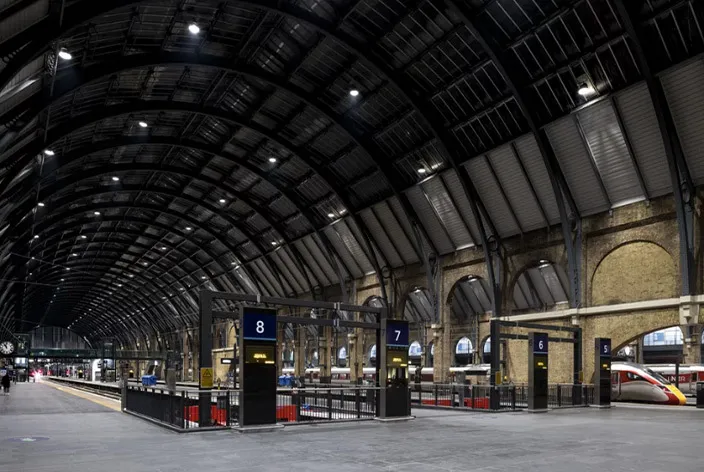
How innovation and sustainability are reshaping global illumination
Industrial lighting isn't just about brightness anymore – it's about intelligent ecosystems that transform warehouses into smart hubs and redefine how factories operate. As we approach 2025, a new wave of manufacturers is pushing boundaries with groundbreaking architectural lighting solutions that blend efficiency with unparalleled functionality. These pioneers are turning sterile industrial spaces into dynamic environments where lighting actively contributes to productivity and safety.
When you walk into a facility lit by LuminaTech, you immediately notice something different – the light feels alive. That's their patented adaptive spectrum technology at work. What started as a specialized workshop near Munich has transformed into an industrial powerhouse that supplies lighting systems to commercial flooring installations worldwide. Their secret sauce? Integrating IoT sensors directly into light fixtures that automatically adjust color temperature based on occupancy and task requirements.
▶︎ Wireless mesh networks eliminating wiring costs
▶︎ Lithium-phosphate batteries providing 72hr emergency backup
▶︎ Machine learning algorithms optimizing warehouse illumination zones
| Technology | Application | Energy Savings |
|---|---|---|
| Dynamic Task Tuning | Assembly lines, quality control stations | Up to 62% vs traditional systems |
| Solar Harvesting Fixtures | Distribution centers, loading docks | 31% average grid reduction |
This Chicago-based innovator made waves when they reengineered industrial LED lights from the circuit board up. Their secret? Borrowing thermal management principles from aerospace engineering. The result: fixtures that maintain perfect color rendering in environments ranging from -40°F freezer warehouses to 130°F foundries.
"We don't just sell lights – we sell climate resilience," says CEO Amelia Rodriguez. That philosophy powers their new PhotonGrid platform which allows maintenance crews to pinpoint failing fixtures through augmented reality interfaces before outages occur.
Operating from massive facilities in Shenzhen, this manufacturer exemplifies the new generation of China lighting manufacturers . Their vertically integrated operation controls everything from semiconductor production to fixture assembly, allowing unprecedented quality control.
Their SolarSync series epitomizes industrial lighting evolution – seamless switching between grid power and integrated solar panels. But what truly sets them apart is their AI-powered lighting optimization software that learns facility workflows to dynamically create "light pathways" guiding workers through complex environments.
Waterproof IP68 rating Corrosion-resistant alloys Seismic-resistant mountsAs a premier Saudi Arabia lighting supplier , DLS understands extreme environments better than anyone. Their SandShield technology protects optical components in desert installations, while their revolutionary air-cooling systems combat lumen depreciation in high-temperature settings.
The Al-Riyadh factory recently implemented a groundbreaking solar integration feature – automatically switching between conventional and battery-powered modes during peak electricity pricing, saving manufacturing plants up to $45,000 annually per facility.
Scandinavian minimalism meets industrial robustness in NorthStar's award-winning Lumina series. These fixtures prove that architectural lighting solutions can coexist with functional illumination through elegant design language that complements modern factories.
Their claim to fame? Polar-grade lighting systems that deliver consistent 95+ CRI color rendering at -58°F without bulky enclosures. When Nordic Auto replaced their assembly line lighting, they reported a 23% reduction in quality control errors attributed solely to improved visual clarity.
What separates 2025's leaders from traditional manufacturers? Several game-changing technologies:
The transformation goes beyond hardware. "True innovation happens when your lighting becomes a responsive nervous system for the facility," says Pacific Dynamics' engineering director Chen Wei. This philosophy drives their SensorWeb technology where each fixture becomes an environmental monitoring station, tracking everything from particulate levels to thermal gradients.
▶︎ Distribution hubs eliminating 84% of lighting maintenance costs
▶︎ Seaports reducing energy consumption by gigawatt hours annually
▶︎ Automotive plants reducing error rates through precision spectrum control
Looking forward, the convergence of commercial lighting systems with advanced sensors represents industrial lighting's next frontier. Facilities are transitioning from passive illumination to intelligent visual ecosystems that actively enhance operational flow. Whether it's guiding autonomous vehicles through logistics centers via dynamic light paths or creating real-time hazard mapping in refineries, tomorrow's lighting systems will become as essential to operations as electrical infrastructure itself.
Perhaps the most underappreciated evolution? How advanced industrial lighting affects worker well-being. Tunable-spectrum systems synchronize with circadian rhythms in round-the-clock facilities, reducing fatigue-related accidents by 31% according to EU manufacturing safety reports. At Desert Light's Riyadh facility, their new CircadianMax system even adjusts for Ramadan fasting schedules – a cultural consideration rarely addressed in industrial engineering.
Recommend Products












