
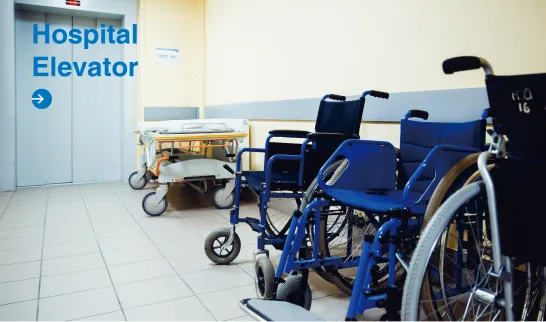
Did you know hospital elevators make over 40 billion trips annually in the US alone? That's more than 100 million trips daily! These workhorses aren't just moving people - they're transporting hope, urgency, and life-saving equipment through the veins of healthcare facilities.
Unlike regular office or residential elevators, medical lifts face unique demands:
These spacious giants (minimum 1400×2400mm cabin) feature reinforced floors and stretcher guides. Smooth acceleration prevents patient discomfort - essential for post-op transfers. Larger models easily accommodate ICU equipment alongside medical staff.
Equipped with override controls that respond to emergency calls instantly. During critical situations, they bypass all other commands - getting medical teams to operating theaters or ERs in record time.
The backbone of hospital logistics! Located away from patient areas, they transport laundry, meal carts, and medical supplies. Heavy-duty floors withstand constant cart traffic, often featuring corner guards and resilient walls.
Most common in multi-story hospitals due to energy efficiency. Use steel ropes/pulleys with electric motors, achieving speeds up to 3.0m/s. Ideal for high-traffic staff transport between departments.
Performing well in low/mid-rise buildings (4-6 floors), they use fluid-driven pistons. Though slightly slower (0.4-1.0m/s), they offer superior weight capacity at lower installation costs - great for community hospitals.
Specially designed with non-ferromagnetic materials to prevent interference with sensitive imaging equipment. Copper shielding and specialized motors ensure safe transport of MRI machines to upper floors.
For contagious patients, these feature hands-free operation and enhanced air filtration systems. Antimicrobial copper surfaces reduce pathogen transmission between cleanings.
The newest kids on the block! Using air pressure differences, they're energy-efficient and perfect for retrofitting older buildings. Compact cylindrical design suits small spaces while providing visibility during transport.
Massive models (1800×2700mm+) designed for moving entire surgical units or diagnostic machinery between floors. Feature reinforced structures and specialized loading ramps.
AI-powered systems that optimize traffic flow by grouping riders by destination. Reduces wait times up to 30% during shift changes - crucial for staff efficiency and patient experience.
| Feature | Hospital Elevators | Regular Elevators |
|---|---|---|
| Capacity | 1,600-2,000kg | 450-1,600kg |
| Cabin Size | 280-350 ft³ | ~175 ft³ |
| Speed | 0.4-3.0 m/s | 1.0-7.0 m/s |
| Door Options | Hands-free, multiple configurations | Single opening method |
| Special Features | Emergency comms, stretcher guides, antibacterial surfaces | Limited safety features |
"The difference between good and great hospital elevators? It's all in the accessibility details. Properly designed controls can literally save lives during code blue situations." - Hospital Facilities Director
When selecting elevators, hospitals must prioritize:
For hospital administrators working with elevator suppliers, specifying robust materials like seamless stainless steel interiors significantly extends equipment lifespan while reducing maintenance costs.
The next generation of hospital lifts is already emerging:
When evaluating options, consider:
Remember - hospital elevators are literally life support systems. Choosing the right types ensures patients receive timely care, staff operate efficiently, and your facility maintains critical operations 24/7/365.
Recommend Products












