
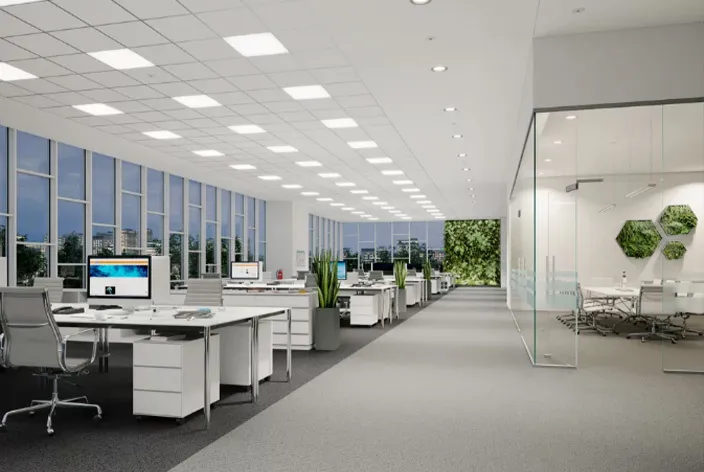
Ever walked into an office and immediately felt either energized or drained? Chances are, the architectural lighting solutions played a huge role. Custom office lighting goes beyond just screwing bulbs into fixtures—it shapes productivity, mood, and even company culture. Forget those harsh fluorescent tubes from the '90s; today's workplaces demand smart, adaptive illumination systems that sync with human circadian rhythms.
What makes these pioneers stand out isn't just their engineering chops. It's how they combine commercial lighting expertise with behavioral science. They're not just lighting up desks; they're creating environments where people actually want to brainstorm at 3 PM on a Tuesday. And guess who's shaking up the industry? Several cutting-edge China lighting manufacturers are now leading in LED innovation, offering game-changing performance without the eye-watering price tags of traditional European brands.
When BMW redesigned their Munich HQ, they called Aurora. Why? Their "LightSync" system uses motion sensors and AI to adjust color temperature based on occupancy and task types. Need focus time? Cool white light floods your workstation. Heading into a creative session? Warmer hues gently ease in. Their pendant-style LED lights aren't just fixtures—they're mood architects. What truly wows clients is their invisible tech; all the wizardry hides in sleek lighting fixtures that look like modern art sculptures.
Today's elite manufacturers obsess over three things: human-centric design, energy sipping efficiency, and effortless controls. The magic happens when commercial lighting systems integrate seamlessly with building management platforms. At a Shanghai tech firm, daylight harvesting systems dim LED lights near windows while boosting illumination in interior zones—all while using 62% less power than conventional setups.
| Technology | Energy Savings | Implementation Complexity | User Impact |
|---|---|---|---|
| Motion-Activated Zones | Up to 40% | Low | High (prevents 'light graveyards') |
| Tunable White LEDs | 15-25% | Medium | Transformative (mood regulation) |
| Li-Fi Data Transmission | N/A (enables IoT efficiency) | High | Game-changing (dual-purpose infrastructure) |
Generic lighting plans fail because accounting departments don't work like design studios. Forward-thinking companies now deploy task-specific illumination:
Look inside Amazon's newest London offices and you'll see this philosophy in action. Their "light neighborhoods" create distinct visual territories without physical walls—no small feat in open-plan environments.
The leaders aren't just reducing wattage; they're reinventing material lifecycles. Several top manufacturers now offer take-back programs where old lighting fixtures get disassembled and upcycled into new products. One Danish company even plants ten trees for every 100 luminaires sold. But the real revolution? Maintenance contracts that guarantee 99.3% uptime while using 70% less energy than legacy systems—proving eco-design isn't just virtuous, but viciously cost-effective.
Silicon Valley's best-kept secret uses aerospace-grade thermal management to push LEDs beyond typical lifespans. Their "EverLast" series boasts a staggering 200,000-hour rating—that's 22 years of 24/7 operation. When Netflix needed glare-free video production lighting that wouldn't fry their 8K camera sensors, LuminaTech delivered with zero-flicker circuits and Hollywood-grade color rendering.
Expect three seismic shifts: lighting fixtures with embedded air purification tech (already in trials at Seoul hospitals), self-powering units harvesting kinetic energy from footsteps, and AI directors that learn your team's rhythms to pre-optimize scenes. One thing's certain—the companies blending Chinese manufacturing agility with European optical science and American control software will dominate this radiant revolution.
Recommend Products












