
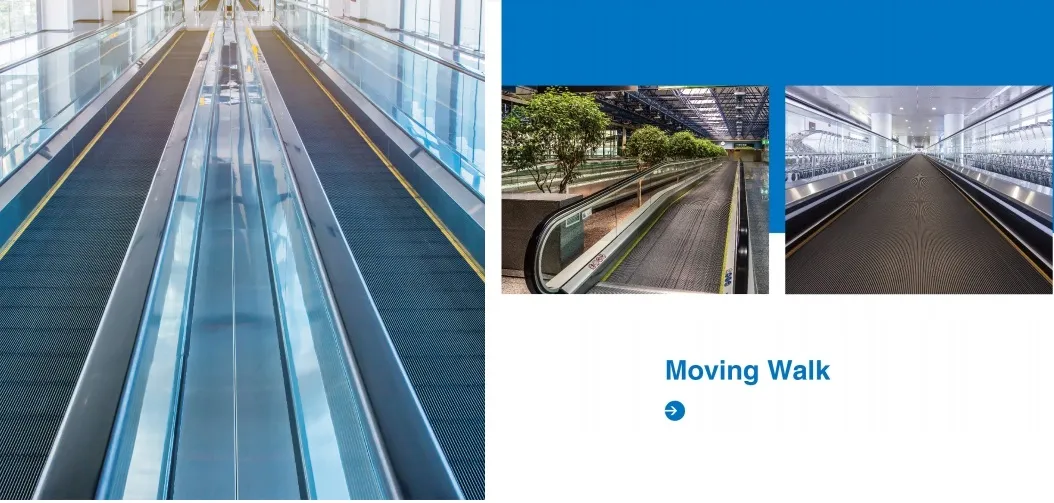
Moving walkways aren't just about getting from point A to B anymore – they're architectural experiences shaping modern transport hubs. These marvels blend engineering with architectural façade solutions to create seamless travel experiences. In airports from Dubai to Singapore, moving walkways act as both functional transport and stunning visual statements. Companies innovating in this space are redefining how we experience shopping malls, transit hubs, and public spaces. Here's an inside look at the global leaders making strides in custom mobility solutions.
The fusion of commercial flooring systems with advanced automation has transformed pedestrian flow engineering. Where traditional walkways once offered basic functionality, today's custom solutions integrate safety tech, eco-materials, and smart sensors. This evolution reflects shifting architectural priorities toward human-centered design and sustainable infrastructure.
| Rank | Company | HQ Location | Specialization | Signature Tech |
|---|---|---|---|---|
| 1 | Mobius Mobility Systems | Germany | Curved airport walkways | Self-healing tread surfaces |
| 2 | AeroGlide Innovations | Japan | High-speed walkways | Predictive maintenance AI |
| 3 | UrbanFlow Dynamics | USA | Outdoor installations | Weather-adaptive surfaces |
| 4 | StrideMaster International | Switzerland | Medical facility systems | Low-vibration operation |
| 5 | TransitEco Solutions | Sweden | Sustainable materials | Solar-powered operation |
| 6 | SkyWay Technologies | South Korea | Glass-bottomed installations | Interactive lighting displays |
| 7 | FlowScape Creations | France | Artistic installations | Color-changing surfaces |
| 8 | Apex Motion Systems | Singapore | Space-optimized designs | Collapsible structures |
| 9 | GlobeTrotter Transit | China | High-capacity systems | Crowd-sensing automation |
| 10 | InnovaMove Solutions | Netherlands | Hybrid escalator-walkways | Seamless transition tech |
Gone are the days of drab conveyor belts. Today's industry leaders treat walkways as sculptural elements, integrating materials you'd expect from luxury whole-house customization projects. Bamboo composites, recycled glass aggregates, and even photovoltaic cells get woven into handrail designs. The fusion of high-quality building materials and kinetic engineering creates installations that double as public art.
The magic happens in R&D labs where engineers play with unusual textures - think granite-infused treads that mimic museum floors or acoustic panels that reduce echo. Some manufacturers even offer climate-adaptive surfaces that expand and contract like living skin during temperature shifts. These innovations transform utilitarian structures into conversation pieces.
When Singapore's Changi Airport wanted a centerpiece for its Jewel complex, they didn't settle for ordinary. The resulting helical walkway wraps around the world's tallest indoor waterfall, featuring:
This project demonstrates how modern mobility solutions can become destination experiences rather than mere transportation.
The real game-changer? The shift toward tailor-made solutions. Top companies now treat each installation like a bespoke suit:
| Customization Level | Basic Systems | Premium Solutions |
|---|---|---|
| Configuration | Straight-line templates | 360° curvature with elevation shifts |
| Material Options | 3 standard finishes | 70+ certified materials including antimicrobial surfaces |
| Operational Intelligence | Fixed speed settings | AI-driven crowd management |
| Safety Features | Emergency stop buttons | Real-time slip detection and posture analysis |
This attention to detail extends to maintenance too. Smart systems now self-diagnose bearing wear before failures occur, while modular components allow targeted repairs without full shutdowns. As one engineer quipped: "We've moved from treating walkways as appliances to treating them as living infrastructure."
The surging demand for smart infrastructure has created exciting opportunities across four key markets:
Major cities increasingly rely on these systems as connective tissue between transport nodes. New York's Moynihan Station features curved walkways with embedded wayfinding that adapt to train schedules, proving that elevator suppliers who diversify into walkway systems gain significant advantages in large-scale projects.
Hospitals are embracing gentle-gradient walkways that transport patients and equipment with zero jolts. These medical-grade systems feature:
The coming decade promises even smarter mobility:
As urban populations grow, these innovations will transform how we navigate cities. The companies leading this charge understand that moving people isn't just about engineering – it's about creating experiences that spark joy in daily commutes.
The true measure of these engineering marvels isn't their length or speed, but how they make travelers feel. The best installations create moments of wonder – that magical feeling when functional infrastructure transcends utility to become memorable experiences. As airports and city planners increasingly prioritize passenger experience alongside efficiency, the walkway's evolution from simple conveyor to experience platform represents the beautiful intersection of technology and human-centered design.
Recommend Products












