
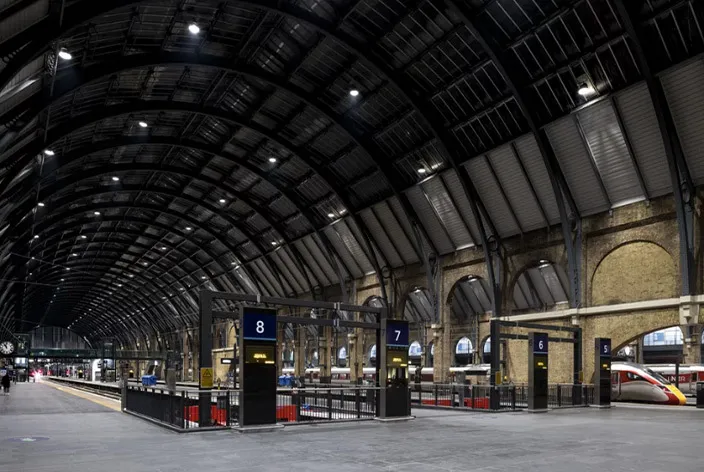
Where innovation meets illumination: Leaders transforming warehouses, factories, and commercial spaces worldwide
You ever walk into a massive warehouse or production facility and just pause for a second? Not because of the machinery or the scale, but because the lighting just feels...right. That's no accident. Behind every well-lit industrial space, there's a lighting specialist who's nailed the perfect balance of functionality and aesthetics. In today's hyper-competitive industrial world, smart lighting isn't just nice to have – it's critical for productivity and safety.
Remember when factory lighting meant rows of flickering fluorescent tubes? Those days are history. Today's industrial lighting combines LED technology with IoT connectivity to transform how warehouses and manufacturing plants operate. We're talking about systems that automatically adjust brightness based on occupancy, fixtures that guide autonomous vehicles, and lighting rigs that last decades instead of years.
The game changers? Companies that create custom solutions specifically for industrial applications. These innovators understand that lighting a frozen food warehouse has different demands than illuminating an electronics assembly line. It's this specialized knowledge that puts our top ten list head and shoulders above standard commercial lighting providers.
If industrial lighting was rock 'n' roll, LumenPro would be selling out stadiums. Hailing from Germany's industrial heartland, they've lit up everything from BMW plants to pharmaceutical clean rooms. What sets them apart? Their obsession with modular lighting systems. Instead of ripping out entire fixtures when upgrades are needed, you can just slide out components. Their architectural lighting solutions for huge distribution centers are particularly impressive, creating visual guides that help workers navigate massive spaces instinctively. Their secret sauce is custom optics – designing lenses that precisely control light spill to eliminate glare on reflective surfaces.
You'll often hear warehouse managers raving about LumenPro's predictive maintenance system. Sensors in each fixture monitor performance and alert maintenance teams before failures happen. No more scrambling to replace lights at midnight when the night shift complains!
Based near Chicago's manufacturing corridor, ElectroLite started with a simple goal: solve the "over-lit but still dark" paradox in manufacturing plants. They pioneered angled lighting systems that get illumination exactly where it's needed without blinding machine operators. Their color-tuned LEDs have transformed automotive paint booths, where true-color rendering is absolutely critical. What's killer about ElectroLite? They co-develop solutions directly with plant managers during night shifts, observing real operational challenges firsthand before creating prototypes.
Their crowning achievement might be vibration-resistant fixtures. Heavy machinery causes constant vibrations that destroy conventional lighting. ElectroLite's shock-absorbing mounts extend fixture life by 300% in these punishing environments. Plus, their fixtures integrate seamlessly with industrial automation systems – when a robotic arm swings into position, the lights automatically brighten just where it's working.
Ever seen those YouTube videos showing entire factory floors that appear to float in light? You're probably looking at BrightSource work. This UK-based innovator has mastered something few competitors can touch: indirect lighting at industrial scale. Instead of beaming lights downward, BrightSource bounces illumination off specially treated ceilings. The result? Shadow-free environments where workers can spot microscopic defects on production lines.
In refrigerated warehouses that drop to -30°F, BrightSource's cold-rated lighting fixtures outperform everything else. Standard LEDs fail spectacularly at extreme temperatures, but BrightSource solved this by integrating heating elements that gently warm the fixtures just enough to maintain optimal operating conditions. Their hazardous location certifications make them indispensable in chemical plants and refineries where a single spark could be catastrophic. It's no wonder oil giants trust them in explosive atmospheres.
Here's the open secret in industrial lighting: some of the most advanced fixtures come from this Shenzhen powerhouse. NovaLux has transformed what it means to be a China lighting manufacturer . Beyond just manufacturing, they've built an R&D powerhouse focused exclusively on industrial applications. When global shipping companies need freezer-to-tropical lighting systems that work equally well at the equator or in Arctic ports? NovaLux delivers. Their corrosion-proof fixtures, built for salty coastal air, are installed at major ports worldwide.
What makes pros choose NovaLux? Their modular wiring systems. Instead of complicated installation requiring electricians, their snap-together connectors let maintenance staff replace entire light sections in minutes. But the real game-changer is their integrated motion tracking. In busy warehouses, lights automatically brighten ahead of forklift paths, improving safety while reducing energy costs in unoccupied aisles.
From Swedish auto plants to Norwegian shipyards, Vertex masters what others struggle with: winter lighting solutions. In Nordic countries where workers may not see natural sunlight for months, lighting affects everything from productivity to morale. Vertex creates spectrum-tuned systems that mimic natural daylight progression, helping regulate workers' circadian rhythms during long winter shifts.
Their most brilliant innovation? "Task lighting on demand." Instead of flooding entire work areas, Vertex uses AI to predict where illumination will be needed next based on production line schedules. Lights brighten just before workers approach specific stations, cutting energy use by an average of 60% compared to traditional systems. For facilities with automated equipment, Vertex's dark factories concept allows full operation with human-only lighting zones that activate when maintenance crews enter areas.
Specializing in food production and pharmaceutical manufacturing, Radiant solves two critical problems: shadow elimination and sanitation compliance. Their sealed lighting fixtures feature smooth, crevice-free designs that meet strict FDA and EU hygiene standards. Clean-room approved and pressure-washable? That's standard with every Radiant installation. But where they truly shine is IP68 waterproofing that allows direct hose-downs without damage.
Their breakthrough came with micro-adjustable beam angles. Workers can redirect individual lights in seconds to illuminate workbenches that get reconfigured frequently. During plant upgrades, you won't find Radiant customers tearing out existing lighting infrastructure – their smart driver technology allows seamless integration of new fixture generations with legacy systems, protecting previous investments.
Precision engineering meets lighting science at this Munich-based firm. Lighthaus dominates the high-bay lighting segment for tall warehouses and aircraft hangars. Their claim to fame? Fixtures that deliver consistent illumination from heights exceeding 80 feet. While competitors' lights create bright spots directly beneath fixtures with dark zones between, Lighthaus engineers perfect overlap patterns using proprietary reflector technology.
Where they out-innovate everyone is integrated emergency lighting. Instead of separate backup systems, every Lighthaus fixture contains dual power circuits with automatic switchover during outages. Better yet? Their fixtures feature passive cooling systems that eliminate noisy fans while keeping LEDs at optimal temperatures for maximum lifespan. For facilities pursuing sustainability, they're pioneering recyclable fixtures where every component can be separated at end-of-life for remanufacturing.
Operating from Singapore with manufacturing across Southeast Asia, PhotonTek brings unique solutions tailored for high-heat, high-humidity environments. Their thermal management approach lets fixtures thrive where temperature-sensitive electronics normally fail. For facilities like foundries and glass plants with ambient temperatures exceeding 120°F, PhotonTek's passive-cooled fixtures are the only reliable option.
What customers love is PhotonTek's pay-for-illumination model. Instead of buying fixtures, companies purchase guaranteed light levels over 10-year contracts. PhotonTek monitors and maintains everything remotely, replacing components before failures occur. This is especially valuable in hard-to-reach locations like dockyard crane systems or processing plants with continuous operations. Their custom spectral tuning helps manufacturers detect material defects invisible under standard lighting.
Specialists in extreme environments, StellarWorks illuminates mines, tunneling projects, and arctic operations. Their ruggedized fixtures withstand impacts that would shatter conventional lights. How? Suspended internal components instead of rigid circuit boards. In one famous case, a StellarWorks fixture survived a 30-foot fall onto concrete during mine construction – workers simply snapped it back into its mounting bracket and it worked perfectly.
Beyond toughness, StellarWorks masters adaptive color temperature. Their fixtures automatically shift from warm to cool light based on the time of day, reducing eye strain during extended shifts. For remote locations, they've developed solar-hybrid systems that supplement grid power with integrated photovoltaic panels. Their battery-equipped fixtures provide eight hours of backup lighting during outages – critical for safe facility evacuation.
Completing our list is this UK-headquartered innovator redefining smart lighting. Beacon integrates lighting with facility-wide IoT systems, creating responsive environments where illumination interacts with machinery and workflows. For automated warehouses, Beacon fixtures communicate with AGV robots, creating light pathways and warnings invisible to humans but perfectly clear to machines. They've turned lighting into a sensor network with each fixture reporting real-time data on environmental conditions.
The killer feature? Beacon's lighting-as-a-service platform provides analytics showing exactly how illumination improvements boost productivity. Their clients see average 3-8% output increases simply from optimized lighting environments. By reducing energy consumption while enhancing working conditions, Beacon delivers the holy grail: lighting systems that literally pay for themselves within 18-36 months.
| Company | Specialization | Signature Technology | Global Projects |
|---|---|---|---|
| LumenPro Global | Architectural & Warehouse | Modular Fixture Systems | 2000+ |
| ElectroLite Systems | Manufacturing Plants | Vibration-Resistant Mounts | 850+ |
| BrightSource Industrial | Extreme Environments | Indirect Lighting Systems | 1200+ |
| NovaLux Technologies | Port & Coastal Facilities | Corrosion-Proof Fixtures | 3400+ |
| Vertex Industrial | Northern Climate Solutions | Circadian Tuning Tech | 700+ |
| Radiant Dynamics | Food & Pharma Production | Hygienic Fixture Design | 1800+ |
| Lighthaus Industrial | High-Bay Lighting | Overlap Pattern Tech | 950+ |
| PhotonTek Systems | High-Heat Facilities | Passive Cooling Systems | 2500+ |
| StellarWorks Lighting | Mining & Remote Sites | Impact-Resistant Design | 600+ |
| Beacon Industrial | Smart Warehouse Systems | Machine-Visible Signaling | 1400+ |
These aren't just lighting companies - they're productivity partners. The best industrial lighting firms become extensions of their clients' operations teams. When Boeing retools an assembly line or Amazon builds a new fulfillment center, lighting experts are at the planning table from day one. It's this integration that transforms illumination from an afterthought into a strategic asset.
What separates the top tier? First, durability engineering. Industrial fixtures must outlast the buildings they illuminate. Second, lighting intelligence that integrates with automation ecosystems. Third, and most importantly, custom solutions tailored for specific visual tasks. The lighting needed for inspecting microchips differs radically from illumination for loading docks – and the best companies nail these nuances.
We're moving toward predictive illumination systems that know where lighting will be needed before humans do. Imagine AI that anticipates maintenance activities and illuminates work areas automatically. Or lighting networks that guide workers to equipment needing attention using dynamic light paths. Future facilities won't just be lit – they'll communicate through light.
For facility managers, this revolution delivers something precious: measurable ROI. Reduced energy bills, longer fixture life, fewer accidents, higher product quality, and happier workers. That's why companies leading this charge aren't just selling lighting fixtures – they're delivering operational upgrades disguised as illumination solutions. One thing's certain: the future of industrial spaces will be brilliantly lit.
Recommend Products












