
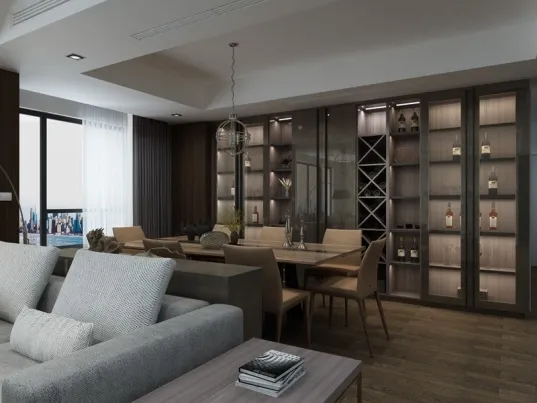
Think about the last time you opened a perfectly preserved bottle of wine—that moment when the aromas hit your senses just right, telling you everything about its journey from vineyard to glass. That magic doesn't happen by accident. Behind every well-preserved bottle is precision engineering and design mastery. In Japan, where innovation meets centuries-old traditions of craftsmanship, wine preservation has been elevated to an art form.
The Japanese market is particularly fascinating because it uniquely blends minimalist aesthetics with cutting-edge humidity-controlled technology. Over the past decade, Japan's wine cabinet manufacturers haven't just followed global trends—they've set them, especially with their advances in dual-zone cooling and eco-friendly materials.
Mitsubishi’s Climbar series revolutionized temperature precision with its patented MagCold technology, keeping wines between 10–14°C regardless of external environment fluctuations.
Infrared humidity sensors
Earthquake-resistance (up to 6.5 magnitude)
UV-filtered glass doors
Integrated vibration dampeners
"Our engineers obsess over the micro-environment of every bottle shelf. Vibration is the silent killer of aging wines, which is why we developed silicone-mounted storage grids."
– Hiroshi Tanaka, Senior VP of Product Development
Blending nano-technology filtration systems with bamboo charcoal interior walls for temperature stabilization and odor elimination.
• Nanoe™ X air purification system
• 6-layer insulation for energy efficiency
• Dual independent cooling circuits
• Capacitive touch interface with app control
What truly distinguishes the Japanese approach is the fusion of traditional omotenashi (hospitality principles) with digital precision:
Convertible single-to-dual zone cabinets with patented airflow systems that create micro-climates per bottle positioning.
• Acoustic frequency vibration cancellation
• Reversible door mechanics
• AI-powered consumption tracking
• Dual carbon filtration
"We designed the Emperor's vertical shelving to eliminate 'dead zones' that exist in conventional designs. Each bottle receives laminar airflow equivalent to subterranean aging environments."
– Technical Documentation Excerpt
When selecting your wine cabinet, consider these often-overlooked factors that Japanese manufacturers prioritize:
Units like Sanyo's WhisperCell operate below 22dB – quieter than a library. Important for open-concept living spaces.
Seek magnetic gaskets instead of rubber seals – they maintain integrity longer without hardening.
Look for models with 72-hour thermal retention like Hitachi's WineFortress® series for power outage protection.
Top-tier units measure vibration in micrometers/second rather than vague "low vibration" claims.
Japan's manufacturers lead in integrating artificial intelligence with climate control:
Industry analysts predict the dual-zone market will grow at 7.2% CAGR through 2026, with Japanese brands capturing 45% of the premium segment.
Industry Insight: "While European brands lead in traditional design, Japanese manufacturers dominate technical innovation. Their next frontier? Integrated environmental control where cabinets automatically adjust settings based on atmospheric pressure changes during typhoon season." – Global Wine Tech Report 2025
The evolution of Japan's wine cabinet industry reflects something deeper than consumer electronics—it's a testament to the country's philosophy of harmonious coexistence between technology and nature. These aren't just refrigeration units; they're precision time capsules honoring winemakers' craft.
With AI integration and eco-design pushing boundaries, Japanese manufacturers continue redefining what wine preservation means. The attention to vibrational harmonics, micro-climate partitioning, and disaster preparedness reveals a uniquely holistic approach—one that understands great wine isn't just stored; it's nurtured.
Recommend Products












