
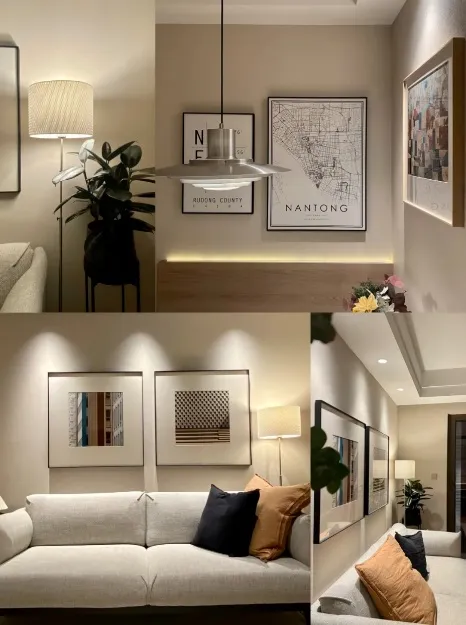
When it comes to illuminating your home, Japanese lighting manufacturers blend cutting-edge technology with timeless aesthetics. Over decades, Japan's lighting industry has mastered the art of transforming LED lights into stunning focal points while optimizing architectural lighting solutions that elevate daily living. Whether you're sourcing lighting fixtures for a minimalist Tokyo apartment or designing ambient spaces in Kyoto, these innovators create more than illumination – they craft atmosphere.
Japanese lighting philosophy emphasizes three core principles: harmony (和), subtlety (渋), and respect for material (物の哀れ). This approach has birthed commercial lighting technologies adapted flawlessly for residences, from energy-efficient systems to human-centric circadian designs. Unlike mass-produced alternatives, Japanese brands prioritize longevity – a counterpoint to disposable culture.
With roots dating to 1926, Akari revolutionized paper lantern craftsmanship through modern engineering. Their lighting fixtures now incorporate proprietary washi paper composites that diffuse LEDs with museum-quality warmth.
| Flagship Technology | Biomimetic Dimming System that mimics natural daylight cycles |
| Residential Specialty | Modular ceiling systems with integrated acoustic properties |
| Aesthetic Signature | Organic geometries using sustainable bamboo frames |
Pioneers in circadian-friendly LED lights , Shizen's systems automatically adjust color temperature from energizing cool whites to bedtime ambers. Their collaboration with sleep researchers produced the industry's first melatonin-sensitive bulbs.
Unlike standard smart bulbs, Shizen's technology learns your routines while maintaining privacy through local processing – no cloud dependency.
Transforming traditional shoji screen concepts into modern architectural lighting solutions , Kansai's frameless LED panels seem to float within walls. Their moisture-resistant variants make them ideal for bathroom and spa installations.
| Innovation | Self-healing polymer surfaces that repair minor scratches |
| Eco-Feature | Recycled aluminum bodies with 95% reclaim efficiency |
| Smart Integration | Native compatibility with major home automation platforms |
Where art meets engineering: Fujimoto's designer-collaboration series includes sculptural chandeliers utilizing origami folding techniques. Despite their artistic appearance, all fixtures maintain industrial-grade durability.
Known for "invisible technology" philosophy, HikariTech hides sophisticated LED matrices within architectural elements. Their cove lighting and illuminated handrails exemplify contextual illumination that prioritizes atmosphere over visible fixtures.
Key development: The first to market with Bluetooth mesh networking allowing 200+ devices without hubs. This scalability makes whole-home lighting scenarios seamless.
Specialists in transformable spaces, Osaka's magnetic track systems let homeowners rearrange pendants without tools. Their "Light Canvas" product combines tunable LEDs with projection-mapping capabilities for accent walls.
| Material Innovation | Translucent ceramic LEDs eliminating plastic use |
| Key Market | Compact urban dwellings requiring multifunctional lighting |
| Signature Feature | Gesture-controlled dimming via infrared sensors |
Precision optics define Tokyo Beam's approach. Using aerospace-grade lenses, they create razor-sharp task lighting with zero spill – perfect for kitchen islands and reading nooks. Their theatrical background brings drama to residential spaces.
Masters of indirect illumination, Kyoto's layered lighting approach creates depth through shadow play. Their paper and wood composites diffuse light softly while complementing natural materials common in Japanese interiors.
Focused on extreme climates, Sapporo designs fixtures resistant to -40°C temperatures and heavy snow loads. Their thermal management systems prevent condensation – ideal for mountain homes and northern regions.
Innovation Spotlight: Nanoscale hydrophobic coatings prevent dust accumulation in high-ceiling installations, reducing maintenance.
Blending tradition with innovation, Nara revives historic crafts through LED reinterpretations. Their collaborations with temple artisans produce fixtures using ancient joinery techniques without nails or glue.
| Heritage Techniques | Washi paper treated with persimmon tannin for durability |
| Modern Integration | Wireless charging surfaces built into table lamps |
| Specialty | Ultra-low voltage garden lighting with wildlife-safe spectrums |
When evaluating Japanese lighting fixtures , consider these factors:
Beyond technical excellence, Japanese residential lighting excels in emotional intelligence. The subtle interplay of light and shadow (陰影礼賛) creates spaces that feel alive. As day transitions to night, high-quality LEDs adapt not just in brightness but in emotional tone – energizing morning light gently softening to evening ambiance.
This human-centric approach stems from Japan's design philosophy: technology should serve quietly without demanding attention. Unlike clinical commercial lighting adapted for homes, these manufacturers create illumination that feels personal, warm, and fundamentally human. When light harmonizes with space rather than dominating it, you experience not just visibility – but atmosphere.
Recommend Products












