
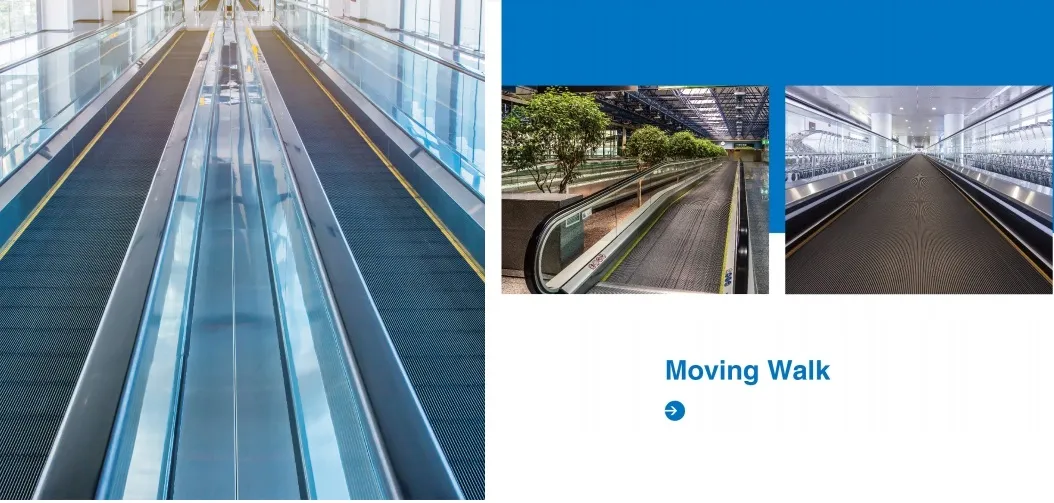
When you're navigating bustling airports or massive shopping complexes, those magical moving sidewalks aren't just convenient – they're modern marvels of engineering. Japan's blend of technological precision and innovative design has birthed some of the world's most reliable people-mover systems. As architectural façade solutions become more integrated with urban landscapes, Japan's moving walkway specialists continue redefining how we experience public spaces.
From Tokyo's sprawling transit hubs to Kyoto's historic sites retrofitted with accessibility features, Japanese manufacturers understand that moving walkways aren't just machinery – they're part of a building's personality. Many incorporate sustainable elements like energy-recovery systems, tying into the growing demand for environmentally friendly building materials across commercial infrastructure projects.
Why the world looks to Japan: It's that obsession with harmony between form and function. These aren't just conveyor belts for feet – they're carefully crafted experiences that consider everything from the faint hum of motors to how the handrails feel in your palm. Japanese engineers treat moving walkways like living extensions of the buildings they inhabit.
Imagine stepping onto a walkway that adjusts its speed based on passenger density – that's Mitsubishi's Crystal Mover system. Their walkways aren't just metal pathways; they're conversation starters in Tokyo's trendiest spaces. From Narita Airport's terminal connectors to luxury mall installations, they approach every project like bespoke tailors measuring a suit. What makes them stand out? Their regenerative drives actually feed power back into the building's grid – smart engineering that aligns with today's push for sustainable building materials.
For commercial building materials requiring absolute reliability, their predictive maintenance AI platform uses vibration analysis and thermal imaging to catch issues months before they become problems. Clients especially love how they customize everything from the deck lighting colors to the rubber handrail composition.
When Osaka's Grand Gateway needed a solution matching its futuristic vibe, Hitachi delivered walkways with interactive LED-lit panels. Their secret weapon? Nano-coated surfaces that stay pristine for months without cleaning – a game-changer for high-traffic areas. For hospitals needing germ-resistant paths between wings, Hitachi uses antimicrobial materials exceeding standard medical equipment certifications.
One clever feature gaining popularity: their "pause and go" sensors that temporarily halt empty walkways during off-peak hours. It's these thoughtful touches transforming their projects into commercial appliance solutions rather than mere transit options. Clients constantly praise their post-installation care packages including customized emergency shutdown protocols.
Revolutionizing accessibility, Toshiba's "SmartPath" walkways detect mobility aids and automatically widen key sections before users reach them. Their recent installation at Shizuoka Station became a viral sensation – not for speed, but for its cherry blossom motif lighting that transforms with seasons. For facilities prioritizing low-maintenance building wall materials, Toshiba offers scratch-resistant ceramic-coated surfaces.
For mixed-use developments needing coordinated transit solutions, their walkways seamlessly integrate with vertical transportation. Project managers appreciate how they simplify things with single-point accountability from blueprints to maintenance.
Ever walked on a moving sidewalk that feels like strolling on clouds? Fujitec engineers achieve this through micro-suspension technology that cushions every step. Famous for handling tricky installations in earthquake-prone zones, their walkways feature seismic auto-leveling that activates before humans even feel tremors. Contractors working with building materials for commercial projects love how Fujitec customizes each project, providing walkways matching ceiling heights and flooring aesthetics.
Their low-profile models prove invaluable when working with complex architectural spaces where ceiling constraints pose challenges, allowing integration into historically preserved buildings without compromising structural integrity.
Turning heads at Japan's tech expos, Kone's "People Mingle" system transforms group movement into an energy-efficient ballet. Their hallmark feature? Walkways that sync with escalators to create traffic ripple effects avoiding bottlenecks. When Yokohama Museum needed wheelchair-friendly solutions that didn't scream "hospital equipment", Kone delivered elegant brushed steel pathways indistinguishable from contemporary exhibits.
What facilities managers appreciate: their walkways report daily diagnostics automatically and order replacement parts proactively. Their custom finishes program lets you match existing architectural decorative stone surfaces perfectly.
Specializing in extreme environments, Shinko builds walkways operating flawlessly in Hokkaido's -25°C winters and Okinawa's salt-spray coastal locations. Their rust-proof aluminum composites withstand conditions that destroy conventional systems. Recently, they've pioneered solar-integrated walkways where photovoltaic glass side panels generate auxiliary power.
Construction firms appreciate how Shinko provides full logistical mapping showing exactly when each prefab section will arrive onsite. For projects demanding high-performance building wall materials, their load-distribution systems can handle pallet jacks and heavy maintenance carts without buckling.
Who says moving walkways must be straight? J-Slide's curved systems create organic people flow through circular museum galleries and round atrium spaces. Their revolutionary compressed air bearings eliminate friction noise, achieving near-silent operation perfect for libraries and concert halls.
Architects love their transparent model showing structural elements through glass decks – a functional art installation. As specialists in customized building solutions for complex spaces, they solve problems others deem impossible, like zigzagging walkways around existing columns or creating oval-shaped moving platforms.
Pioneering accessibility standards since the 1960s, Nippon Otis offers the gentlest acceleration curves in the industry – crucial for elderly care facilities. Their walkways feature textured guidance paths detectable by cane users and built-in emergency call pillars every 20 meters. They've perfected antimicrobial additives that actually strengthen rubber over time instead of degrading it.
Their modular approach shines in retrofits where existing flooring must remain untouched – requiring no subfloor modifications. As providers of critical building materials for commercial projects, they maintain regional depots ensuring technicians reach any site nationwide within four hours.
Where others see constraints, Sumitomo sees creative opportunities. Their space-saving inclined walkways now replace ramps at dozens of Japanese train stations. Cleverest innovation? A flat-fold model that tucks against walls during special events. During Tokyo's summer festivals, temporary Sumitomo walkways handle crowds that would otherwise overwhelm historic neighborhoods.
Developers building sustainable campuses praise their walkway power systems that integrate with the building's overall energy management. Their ultra-high-capacity models move crowds efficiently without feeling overcrowded – a psychological design approach studying human comfort thresholds.
The artisans of the industry, Sanei creates walkways where the decking resembles polished marble or traditional tatami mats. In Kyoto's cultural district, they camouflaged walkways as extensions of historic stone paths. Recently, they developed a rain-repellent system for open-air shrines where sensors automatically activate water dispersal systems minutes before storms.
Sanei specializes in seamless partnerships with interior designers and architects from project inception. Their approach yields environmentally friendly building materials with recycled steel content and motors using permanent magnet technology – cutting energy waste by 40% versus conventional systems.
| Manufacturer | Max Load Capacity | Special Features | Lead Time | Unique Advantage |
|---|---|---|---|---|
| Mitsubishi Heavy Industries | 25,000 people/hour | Self-cleaning grooves | 18-24 weeks | Energy-generating operation |
| Hitachi Building Systems | 22,000 people/hour | Touchscreen info panels | 16-20 weeks | Pause-during-idle sensors |
| Toshiba Elevator | 20,000 people/hour | Weatherproof models | 22-26 weeks | ADA-compliant accessibility |
| Fujitec Mobility | 18,000 people/hour | Micro-suspension system | 14-18 weeks | Earthquake auto-leveling |
| Kone Mobility Flow | 24,000 people/hour | Pattern recognition | 20-24 weeks | Traffic flow optimization |
| Shinko Electric | 30,000 people/hour | Arctic-grade systems | 26-30 weeks | Extreme weather resilience |
| J-Slide Motion | 12,000 people/hour | Non-linear installation | 30+ weeks | Curved path expertise |
| Nippon Otis | 15,000 people/hour | Hospital-grade sanitation | 18-22 weeks | Gentle acceleration curves |
| Sumitomo Heavy Ind | 20,000 people/hour | Collapsible models | 12-16 weeks | Space-saving inclines |
| Sanei Systems | 16,000 people/hour | Aesthetic customization | 28-34 weeks | Cultural integration focus |
Having spoken to dozens of facility managers across Japan, five key priorities emerge when selecting moving walkway partners:
Pro Tip: The hidden game-changer? Vibration dampening systems. Top-tier manufacturers use tuned mass dampeners reducing vibrations transferred to building structures – crucial for museums and laboratories where even micro-vibrations matter.
Most delays occur from overlooking site prep details. Japanese manufacturers excel through military-precise planning:
For projects using specialized flooring like bamboo charcoal environmentally friendly wallboard near walkway zones, manufacturers conduct material compatibility tests ensuring no chemical interactions degrade surfaces over time.
Japan's R&D labs hint at tomorrow's innovations already in prototype:
The most exciting development? Companies like Sanei are exploring walkways as public art – embedding traditional craft motifs under glass decks that only become visible when activated. This represents the Japanese philosophy where technology serves culture, making mundane journeys meaningful.
As architecture increasingly prioritizes human-centered design, moving walkways transform from utilities into signature statements. The manufacturers who'll thrive understand that even functional elements contribute to a building's emotional impact.
When evaluating partners, look beyond specs to how deeply they consider the human experience – the slight pause before acceleration, the handrail's temperature, the lighting levels changing subtly throughout the day. Japan's leaders excel at these nuances because they see people-moving not as industrial engineering, but as choreography of urban life.
Recommend Products












