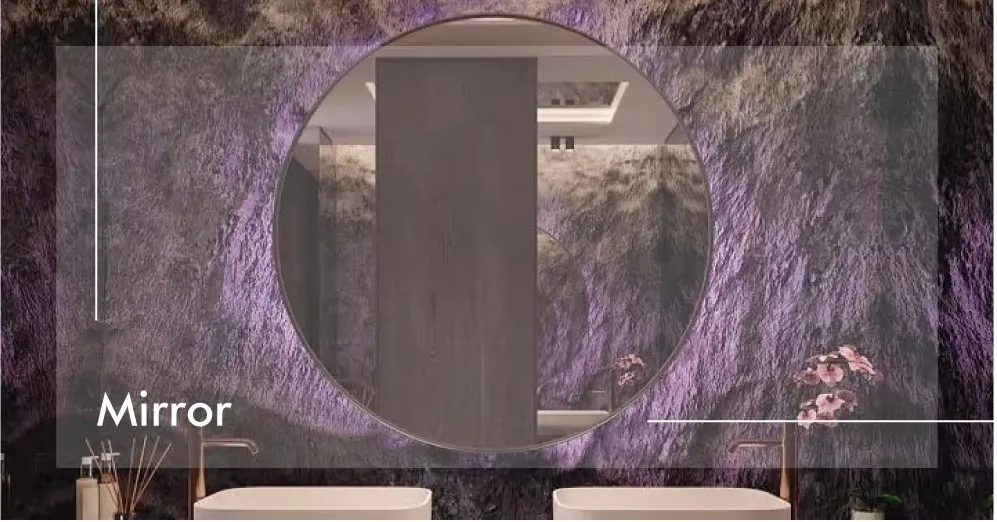
When you think about Japanese manufacturing, what comes to mind? Probably cutting-edge electronics, precision automobiles, or maybe even world-class ceramics. But here's something that might surprise you: Japan has an incredible legacy in mirror manufacturing that often flies under the radar. These companies aren't just making simple reflective surfaces - they're crafting optical marvels that find their way into everything from luxury cosmetics to space telescopes.
In our deep dive into this fascinating industry, we'll explore the unique approaches Japanese companies take to create mirrors that go way beyond your bathroom vanity. And with the integration of modern architectural elements like
acoustic ceiling tiles
in their facilities, they maintain precise environmental conditions for quality manufacturing. We'll examine their heritage, specialized techniques, and why their products are so highly sought after worldwide.
What sets Japanese mirror makers apart isn't just their technical precision, though that's certainly a factor. It's how they blend centuries-old craftsmanship with bleeding-edge innovation. When you look into one of their mirrors, you're seeing generations of refinement reflected back at you. These companies treat mirror-making as both an art and a science, which explains why their products can command premium prices globally.
Before we meet the top manufacturers, let's understand what makes Japanese mirrors special. Unlike mass-produced alternatives, these companies focus on four key principles:
1. Precision Beyond Perfection
Japanese mirror optics are measured in microns - that's millionths of a meter. The level of accuracy required means manufacturers employ interferometers that can detect distortions thinner than a human hair. This obsessive attention to detail ensures zero distortion, critical for scientific applications and high-end retail installations where image accuracy matters.
Their calibration processes take mirror-making from craft to pure science. Temperature-controlled rooms maintained using specialized construction materials prevent molecular-level warping during polishing. The result? Reflections so true they reveal every detail with uncompromising clarity.
2. Sustainable Innovation
Japan's mirror industry leads in eco-conscious manufacturing. Firms have pioneered mercury-free silvering techniques that eliminate toxic chemicals from production. One Kyoto-based manufacturer even developed a closed-loop water system that recycles 95% of processing water, setting new environmental standards globally.
What's fascinating is how these companies transform sustainability into competitive advantage. For example, a mirror's reflective coating might be engineered to last decades rather than years, dramatically reducing replacement waste. This approach fits Japan's mottainai philosophy - the regret of waste - transforming environmental responsibility into business strategy.
3. Application-Specific Engineering
Don't expect one-size-fits-all solutions here. Japanese manufacturers excel at creating purpose-built mirrors for wildly different applications. For dermatology offices, they produce mirrors with specialized coatings that reveal skin conditions invisible under normal light. Automotive companies source vibration-resistant mirrors for side-view applications that remain distortion-free at highway speeds.
Some even develop "smart mirrors" embedded with sensors for health monitoring. Imagine checking your reflection while getting real-time hydration analysis! This bespoke approach means Japanese manufacturers often collaborate directly with clients to solve unique optical challenges.
Now let's meet the companies defining Japan's mirror excellence. Our ranking considers innovation, craftsmanship heritage, and market influence. These firms represent the pinnacle of reflective technology.
MORITA OPTICS CO., LTD.
Since 1951, Morita Optics has been refining the art of precision optics. Their mirrors power critical equipment in semiconductor manufacturing, where even nanometer-level distortions can ruin silicon wafers worth thousands of dollars. What truly sets them apart is their proprietary vacuum deposition process.
Specializes in industrial-grade mirrors for scientific equipment, medical diagnostics, and semiconductor manufacturing.
Walking through their Yokohama facility feels like stepping into a high-tech museum. Some polishing machines have been continuously refined for decades, combining analog controls with digital precision. Their flagship product - a distortion-free concave mirror measuring 2.4 meters - is used in satellite calibration systems. Morita's rigorous QA process involves 147 separate checks before certification.
YAMAMURA CO.,LTD.
Since their founding in 1953, Yamamura has become synonymous with professional-grade beauty mirrors. They revolutionized the industry with their signature 10X magnification mirror design that reveals every pore without distortion. Unlike cheaper alternatives, their multi-layer anti-fog coating keeps reflections clear in steamy salon environments.
Leading manufacturer of professional salon mirrors and high-definition makeup mirrors with anti-fog technology.
Yamamura's dedication shows in subtle touches - beveled edges polished for 72 hours to achieve a jewel-like finish, custom lighting solutions that mimic natural daylight, and ergonomic bases engineered for precise angle adjustments. Their mirrors don't just reflect beauty; they enhance the professional's ability to create it.
SANWA INDUSTRY CO.,LTD
Founded back in 1918, Sanwa Industry brings old-world craftsmanship to modern applications. Their mirror division specializes in extreme-environment applications where ordinary mirrors would fail. Their submarine-grade mirrors withstand pressures equivalent to 5,000 meters depth without distortion.
Manufacturer of specialized mirrors for marine, aerospace, and extreme-environment applications.
Sanwa's uniqueness lies in material science innovations. They developed a titanium-backed mirror that's 70% lighter than traditional silvered glass without sacrificing reflectivity. These grace everything from deep-sea exploration vessels to space station modules. Their factory maintains separate polishing rooms for different materials to prevent cross-contamination - a testament to their precision mindset.
PURE TONE CO LTD
Pure Tone brings an artistic sensibility to mirror manufacturing since 1997. Founder Masao Fujiwara envisioned mirrors as sculptural elements rather than purely functional objects. Their signature "Breathing Glass" collection features mirrors with controlled imperfections that create mesmerizing light patterns.
Creates artistic and decorative mirrors with unique texturing and light diffusion properties.
Their manufacturing approach blends controlled manual work with precision techniques. Artisans hand-finish each piece using traditional methods while proprietary coating technologies create iridescent effects. Their collaboration with architects has produced breathtaking installations where mirrors become architectural elements rather than just wall hangings.
MIKUNI SEIKYO CO LTD
Operating since 1945, Mikuni Seikyo pioneered eco-conscious mirror production. Their breakthrough came in the 1970s when they developed the first lead-free mirror coating system. Today, they supply major cosmetic brands with mirrors that feature antibacterial nano-coatings.
Manufacturer of hygienic mirrors with antimicrobial properties for healthcare and beauty industries.
Visiting their Osaka facility reveals their scientific rigor. Quality control uses spectral analysis to measure reflectivity across wavelengths. This ensures their cosmetic mirrors provide true-color reflections that designers rely on. Their factory layout exemplifies efficient Japanese manufacturing - materials flow seamlessly between stations minimizing handling and contamination risks.
OPTCOM CO.,LTD.
Optcom takes inspiration from Japan's lighting heritage to create mirrors that transform spaces. Their signature product - a backlit smart mirror - incorporates invisible sensors that measure humidity and ambient light to optimize brightness automatically. This technology powers luxury hotel bathrooms worldwide.
Designer of smart mirrors with integrated lighting systems and environmental sensors.
What's truly innovative is how they've transformed the mirror into an interface. Some models feature touch-sensitive surfaces that control room lighting or display information like weather forecasts. Others incorporate ultrasonic fog prevention that activates before condensation forms. Their R&D lab resembles a tech startup's rather than traditional glass factory - full of prototypes testing new interaction concepts.
SANKO SEIKOHJYO CO., LTD
With 80 years in precision manufacturing, Sanko brings exacting standards to reflector production. Their mirrors guide lasers in industrial cutters and focus stage lighting in Tokyo's famed Kabuki theaters. The common thread? Absolute dimensional stability regardless of temperature fluctuations.
Produces precision parabolic reflectors for lighting, industrial lasers, and optical equipment.
Sanko's manufacturing secret lies in their glass formulation. Custom-engineered blends expand and contract uniformly with temperature changes, maintaining critical focal distances. Each reflector undergoes interferometer testing to certify surface curves within 1/10,000mm tolerance. This hyper-precision extends to their custom polishing equipment, hand-calibrated monthly against master standards.
OSAKA SPECIAL GLASS CO., LTD.
Operating since 1890, Osaka Special Glass creates lighting mirrors for the world's most demanding applications. They hold 70% of Japan's market for specialty lighting mirrors and supply reflectors for global projector manufacturers. Their innovation? Micro-textured surfaces that eliminate "hot spots" in projection systems.
Manufacturer of lighting-grade mirrors with uniform light diffusion for projection systems.
Their manufacturing approach combines glass mastery with surface science. Custom-developed abrasive compounds create microscopic surface features that scatter light precisely. Quality control includes robotic arms that measure reflectivity at thousands of points across each mirror. This data-driven approach ensures every unit performs identically - critical for entertainment venues where lighting consistency matters.
NIPPON STEEL Stainless Steel Art Corporation
As a subsidiary of Japan's steel giant, this company creates metal mirrors offering unique properties. Their stainless steel mirrors won't shatter, resist extreme temperatures, and can be shaped into complex curves impossible with glass. This makes them ideal for architectural installations and public spaces.
Creates shatter-proof stainless steel mirrors for architectural and public space applications.
Their mirror production uses steel polishing techniques developed for telescope components. Final buffing takes up to 72 hours per square meter using progressively finer diamond compounds. The result is stainless surfaces with 95% reflectivity approaching glass quality. Their Yokohama showroom features mind-bending warped mirrors that transform spaces into immersive art experiences.
THREE NINE SHIMANO CO.,LTD.
Operating since the 1970s, Shimano specializes in safety mirrors that prevent workplace accidents. Their convex mirrors provide wide-angle views in warehouses, factories and parking facilities. Unlike cheap imports, their designs maintain consistent optical qualities without distortion at the edges.
Designs safety and security mirrors with precision distortion control for industrial environments.
Shimano's innovation lies in material durability. Their mirrors withstand impacts that shatter conventional glass, thanks to specialized laminates. They've even developed heated versions that prevent snow accumulation in cold regions. Installation designs include vibration-dampening mounts to withstand forklift traffic in busy warehouses. Their safety mirrors literally save lives by eliminating blind spots in hazardous areas.
The Japanese mirror industry isn't resting on its laurels. Companies are actively developing:
Responsive Surfaces:
Mirrors that change reflectivity based on lighting conditions or user preferences. Imagine office building windows that become mirrors during night hours for privacy and security.
Energy-Generating Mirrors:
Designs with integrated photovoltaic edges that harvest light while reflecting it. These could power the smart features integrated into future mirrors.
Augmented Reflection:
Mirrors overlaying contextual information on your reflection. Think makeup tutorials appearing on your bathroom mirror or outfit suggestions in your wardrobe reflection.
Healing Environments:
Specialized coatings that release negative ions or aromatherapy compounds, transforming mirrors into wellness devices. Combining materials like
acoustic ceiling tiles
that absorb sound with these advanced mirror systems creates truly integrated environments.
What becomes clear when exploring Japan's mirror industry is how these companies blend traditions with innovation. They prove that even familiar objects like mirrors offer limitless possibilities when approached with craft consciousness and technological ambition. Their creations do more than reflect the world - they help us see it differently.
So next time you glance at your reflection, consider the incredible engineering behind that simple surface. Japanese mirror manufacturers continue pushing boundaries, ensuring we'll see ourselves in new ways for generations to come.