
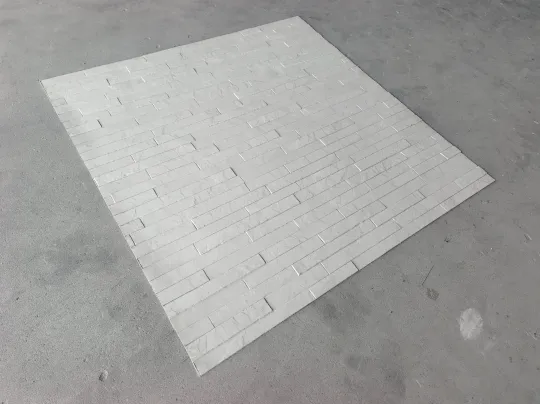
Discover how Japanese craftsmanship blends tradition with cutting-edge innovation
You know that feeling when you walk into a space and the walls sing ? Where stone feels less like a cold building material and more like poetry carved from mountains? That's what Japanese masonry stone wall panels are all about. Japan's approach isn't just about sticking rocks on walls - it's about turning stone into visual haikus.
There's something special going on in Japanese manufacturing. While the rest of world races for cheaper/faster/lighter, Japan's craftsmen whisper: "Patience." The country gives us stone solutions that balance modern engineering with ancestral respect for materials. Over centuries, Japanese builders mastered stone masonry for temples and castles - today's manufacturers inherited that obsessive attention to detail.
Why bother with stone walls anyway? Beyond the obvious beauty, they're practically superheroes. Stone panels naturally insulate spaces, keep things temperate year-round, shrug off weather like it's nothing, and maintain their dignity for decades. Plus, Japanese architects keep finding new tricks - embedding tech for energy efficiency or developing lightweight panels that install as easily as tiles.
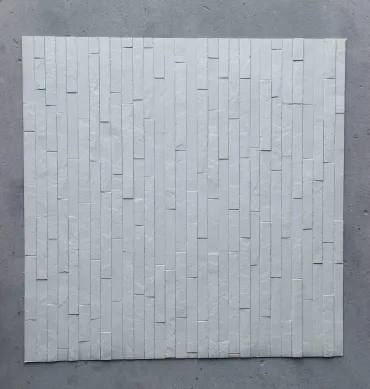
Japanese manufacturers revolutionized stone applications through three breakthroughs:
The Weightless Stone Miracle: Those ancient temples might have thick stone walls supporting roofs, but modern panels are ridiculously thin (we're talking 1-3mm) yet incredibly strong. By bonding natural stone slices to flexible backing materials, they achieved that impossible combination of lightweight and durability.
Corner Wizardry: Remember how corners used to be that awkward place where stone patterns stopped abruptly? Companies like CAN'STONE fixed that with L-shaped 90° corner pieces that create seamless wraps around edges. It sounds simple, but the engineering behind natural stone bends is pure sorcery.
The Shape Shifters: Japanese manufacturers offer more shape profiles than a sushi menu. Stacked stone that looks like medieval castles. Ledgestone with clean linear geometries. Quirky fieldstone with organic amoeba shapes. Precision-cut ashlar rectangles so exact they'd make a samurai's katata blade jealous.
Ever notice how Japanese stone panels feel alive? That's no accident. Beyond installation basics, consider:
Interior Mood Magic: Nothing elevates spaces like accent walls using stone. Luxury hotels and restaurants know this secret - a well-executed stone wall transforms guests from observers to participants in an atmosphere.
Outdoor Resilience: When properly treated, stone panels become weather warriors. The Japanese perfected water-resistant formulations especially important in rainy seasons while developing frost-resistant varieties for mountain regions.
Furniture with Soul: Why should walls have all the fun? Applying stone veneer to counters, tables or cabinets adds geological character to functional pieces. Even existing furniture gets new life with stone overlays.
When Japanese perfectionism meets stone masonry, you get CAN'STONE. Founded in 1997, this Kyoto-based artisan collective creates veneer that fools even geologists. Their signature move? Masonry patterns so authentic they out-real real stone. Half the weight of conventional stone with twice the presence.
Their secret weapon is texture alchemy. Using proprietary manufacturing techniques developed through decades of trial and error, they create dimension and shadow play that adds impossible depth. While competitors sell materials, CAN'STONE sells atmosphere .
Custom color development Natural stone replication technology Seamless L-corner systemFun fact: Their craftsmen study traditional Japanese rock gardens to understand how stones communicate emotion. That zen philosophy permeates their entire product line.
Why choose between technology and nature? StoneArt Japan doesn't make you. Their patented fusion process creates what architects call "impossible panels" - featuring marble veins flowing like rivers across surfaces that flex slightly during earthquakes. Brilliant for seismic zones without sacrificing aesthetics.
The innovation? They embed structural fibers in liquid stone formulations, allowing for curves and contours previously unimaginable. Their Kyoto factory looks like a cross between a pottery studio and NASA lab.
Earthquake-resistant formulations Free-form curvable panels Integrated lighting groovesTheir heritage series recreates stones from famous Japanese castles using digital scanning and artisan hand-finishing - history you can touch.
While others chase novelty, Nihon Sekizai masters fundamentals. For 58 years, they've supplied the stone equivalent of a perfectly crafted sushi knife - precise, reliable, beautiful in its function. Their strength? Consistency across massive volumes.
Their Hokkaido quarries produce uniquely icy-toned granites, while their manufacturing plant offers standardized panel systems that architects adore for budget predictability. When deadlines matter, their just-in-time delivery shines.
Quarry-to-factory control Predictable color matching Prefabricated panelized systemsLittle known fact: Their installation templates are so precise that contractors report 40% faster projects. That's Japanese efficiency meeting stone weight.
What happens when legendary furniture makers turn to stone? Tendo Mokko applies their woodcraft DNA to geological materials. The results? Panel systems with insane joinery where stones lock together like puzzle pieces without visible fasteners.
Their standout: Hybrid wood-stone panels combining warm timber with cool minerals. Imagine cedar grain flowing into basalt veins - nature's collaboration framed through Japanese craftsmanship.
Patented interlock joining system Wood-stone fusion panels Magnetic mounting optionsArchitects love their "demo-able walls" - panels that click together without adhesives, allowing future redesigns without demolition waste.
Kansai laughs at conventional stone limitations. Their labs develop feather-light synthetic stones with unbelievable properties: panels that change color with temperature, glow softly after sunset, or purify indoor air.
Their current hit? Thermo-reactive basalt that darkens during winter for heat absorption and lightens in summer for reflectance. The architectural equivalent of a breathing organism.
Photocatalytic air-purifying stone Temperature-reactive surfaces Integrated solar-charged glowFor tech-loving clients, they embed touch-sensitive controls into stone surfaces - your wall literally becomes an interface.
Specializing in what Japanese builders call "kintsugi stone", Fujiyama embraces natural imperfections. Where competitors reject stones with fissures or discolorations, Fujiyama highlights them with metallic inlays, turning flaws into focal points.
Their craft resembles fine jewelry more than construction. Each panel undergoes individual assessment, with artisans deciding how best to enhance character through careful filling, polishing and enhancement. You don't install their stone - you curate it.
Custom character enhancement Kintsugi-style gold/silver repairs Limited edition geological specimensNote: Order early. Their most sought-after panels featuring volcanic ash patterns book 18 months ahead.
The ninjas of lightweight stone solutions, Osaka ThinStone pioneered ultra-slim 1mm panels without sacrificing structural integrity. How? Proprietary nano-coatings applied to precisely sliced stone that reinforce from within.
Their specialty? Commercial retrofits where weight matters. When Tokyo's Ginzamen building needed stone walls without structural upgrades, Osaka's panels saved 80% weight versus conventional materials.
1mm ultra-thin panels Self-adhesive backing systems Recycled stone material optionsThe irony? Their thinnest panels resemble ancient layered stone formations more than modern building materials - proof that cutting-edge often mirrors ancient wisdom.
Named after Japan's beloved philosophy of imperfect beauty, Wabi-Sabi deliberately avoids industrial perfection. Their stones seem casually stacked like mountain cairns, though each placement results from meticulous calculation.
The illusion is masterful: dry-stacked ledgestone that actually snaps together via hidden connectors, weathered patterns achieved through controlled surface treatments. Clients seeking warmth and character find their soulmate here.
Irregular pattern generation system Controlled weathering techniques Interlocking dry-stack systemTheir crowning achievement? Patented variegation controls ensuring intentional randomness that coordinates across panels - organized chaos at its most beautiful.
Marrying stone with Japan's precision aluminum industry, Shiroishi creates cladding systems unlike anything else. Their aluminum framework clicks together with stone panels in modular configurations allowing incredible design freedom.
Their genius? The aluminum grid handles structural loads while thin stone becomes pure cladding. You get stone beauty without stone limitations - walls become removable/reconfigurable surfaces.
Modular aluminum frame systems Integrated electrical conduits Magnetic panel attachmentFor commercial clients, they pioneered accessible stone cladding systems where panels swing open to reveal maintenance access - beauty that doesn't punish future technicians.
Drawing inspiration from Japan's ancient Jomon pottery, this company creates dramatically textured stone surfaces. Using special casting techniques, they produce panels with rope patterns, fingermarks and organic impressions unseen elsewhere.
Beyond aesthetics, their textures serve practical purposes - providing grip for wet areas, diffusing light beautifully, or absorbing sound in resonant spaces.
Tactile textured surfaces Acoustic optimization patterns Light-diffusing reliefsTheir "legacy imprint" service records a client's hand/finger patterns permanently cast into stone - architecture becoming personal archaeology.
The real magic? How these manufacturers approach stone holistically:
Installation Intelligence: While competitors treat installation as an afterthought, Japanese engineers design panels with installer experience paramount. Easy-align guides, pre-set reveals, simplified anchors, and clearly documented sequences. It reflects their user-centered design philosophy.
Climate Consciousness: From specialized formulations preventing frost damage in Hokkaido to humidity-resistant bonds in Okinawa, Japanese panels suit regional microclimates unlike standardized imports.
Beyond Aesthetic Responsibility: Solar-reflective stones reducing urban heat island effects, recyclable materials reducing waste, local quarries decreasing transport emissions - Japanese manufacturers lead in sustainable stone solutions.
Here's the thing about quality Japanese stone: it evolves beautifully over decades, developing richer patinas as it becomes part of a building's life story. Choosing stone isn't selecting a material - it's hiring a silent storyteller for decades.
The manufacturers we covered stand out by transforming stone's limitations into innovations, making beauty accessible, designing installations smarter, and respecting that stones should serve people rather than challenge them. That mindset transcends technical specs - it creates emotional connections.
For truly responsive architectural façade solutions , Japanese stone panels deliver at levels others don't. They prove materials can be lightweight yet permanent, traditional yet innovative, functional yet soulful. Like cherry blossoms blooming on ancient stones, these manufacturers show modernity and heritage belong together.
Recommend Products












