
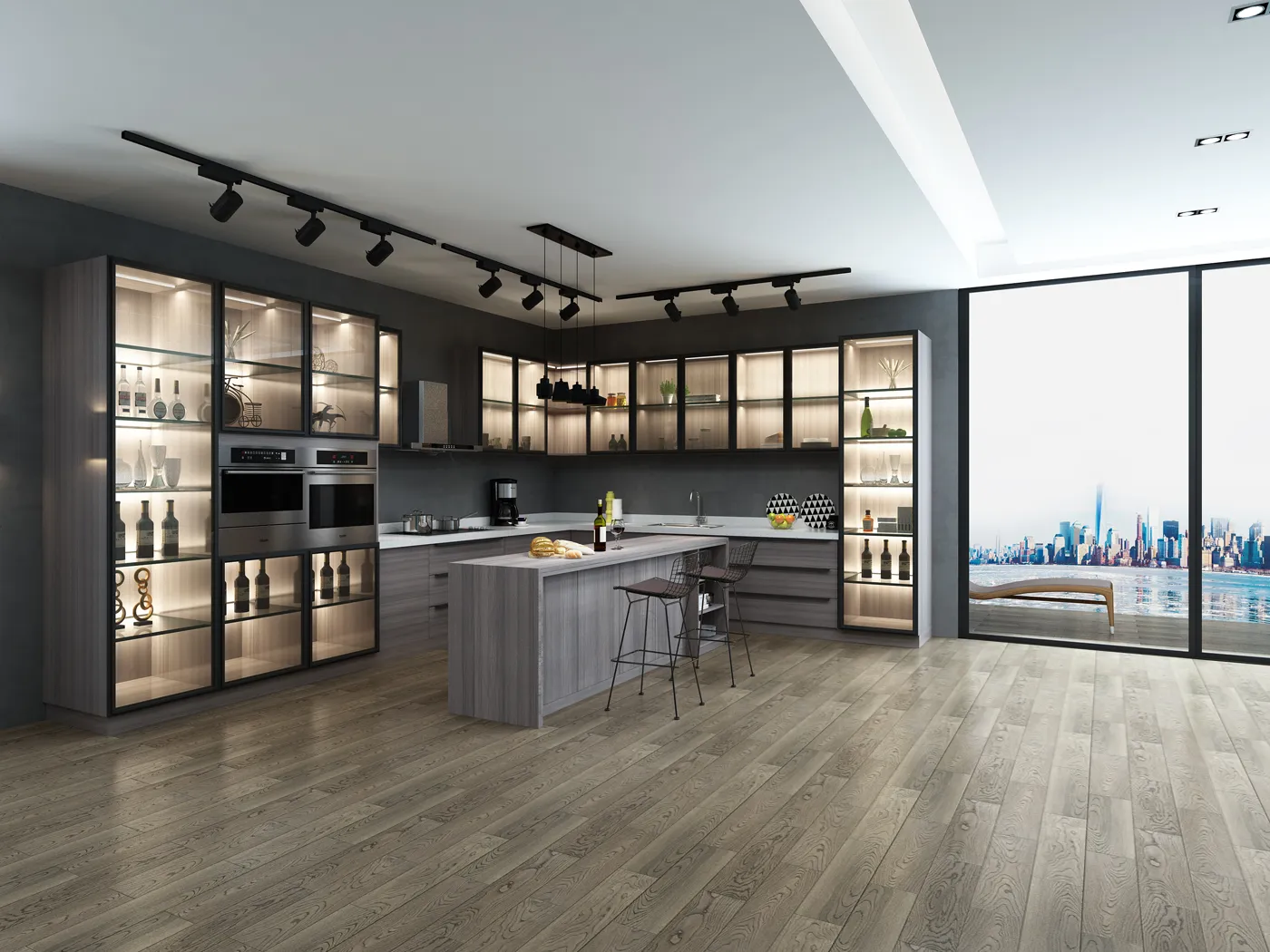
Picture this: You're standing in your dream kitchen, running your fingers along silky-smooth cabinetry that feels like it was made just for you. Not too long ago, Japanese kitchens were all about pure function, but today? They're emotional sanctuaries. That transformation didn't happen by accident. Behind every breathtaking kitchen in Japan are master craftsmen and visionary manufacturers weaving tradition with tomorrow. I've spent years studying these spaces – not just as rooms, but as living stories – and I'm thrilled to show you how Japan's cabinet makers create magic.
Walk into any contemporary Japanese home and you'll immediately sense something different. It's not just clean lines and minimalist aesthetics. There's warmth humming beneath the surface. Japanese designers have cracked the code: spaces that feel both profoundly peaceful and vibrantly alive. They treat kitchens like living ecosystems, where every hinge, handle, and hidden compartment has purpose. This philosophy springs from Japan's eco-friendly building materials movement – a nationwide commitment to sustainability that makes every choice matter.
I remember visiting a Kyoto workshop where artisans were fitting dovetail joints by hand – no machines in sight. "We're not building cabinets," the master told me, "We're building relationships between wood and people." That stayed with me. Japanese manufacturers blend ancient traditions with cutting-edge tech:
From legendary heritage brands to disruptors changing the game, here's who's defining Japanese kitchens:
| Rank | Brand | Signature Style | Game-Changing Feature |
|---|---|---|---|
| 1 | TOTO | Hydro-Elegance Fusion | Steam-cleaning integrated cabinetry |
| 2 | Nitori | Democratized Luxury | Modular bamboo systems |
| 3 | LIXIL | Smart-Space Revolution | AI-assisted storage optimization |
| 4 | Takara Standard | Zen-Tech Hybrid | Self-healing laminate surfaces |
| 5 | Cleanup | Industrial Poetry | Magnetic tool integration |
| 6 | Panasonic | Invisible Technology | UV sanitization drawers |
| 7 | Toshiba | Light Architecture | Energy-harvesting surfaces |
| 8 | Housetec | Flexible Geometry | Convertible island systems |
| 9 | Sanko | Warm Minimalism | Breathable wood membranes |
| 10 | Muji | Democratic Design | Flat-pack masterpiece assembly |
Walking through TOTO's showroom feels like touring a spa for your kitchen. Their HydroTech cabinetry line features touchless faucets that seem to anticipate your needs. But what really stole my heart? Their signature steam-cleaning cabinet system. "We approached cabinetry like onsen design," explains lead engineer Kenji Sato. "The steam gently cleans while preserving wood integrity." It's Japanese bath culture reimagined for cookware.
Nitori made me rethink sustainable design. Their rapid-growth bamboo cabinets have the warmth of walnut at half the environmental cost. During Kyoto Design Week, I watched families marvel at their modular systems – parents configuring layouts while kids played in demonstration kitchens. That's their magic: beautiful functionality that welcomes everyone in.
LIXIL didn't just squeeze storage into small kitchens – they reinvented the physics of space. Their AI-powered PreMist system learns your habits, suggesting optimal storage solutions. When their design team showed me prototypes responding to voice commands in seamless Japanese, I glimpsed the future: kitchens that don't just hold things, but understand lives.
Japanese kitchens are shedding pure minimalism for what I call "warmtech" – spaces that breathe:
After countless kitchen tours, I've learned choosing cabinets isn't about specifications – it's resonance. Consider:
When Osaka homeowner Mei Sato showed me her LIXIL kitchen, she teared up describing her first meal there: "The cabinets held space for my family's laughter." That emotional connection? That's what Japanese manufacturers deliver.
Our kitchens have become sanctuaries – places where we nourish bodies and souls. Japanese manufacturers understand this better than anyone, creating spaces that aren't just functional, but deeply humane. As Tokyo designer Yumi Tanaka told me during a tea ceremony in her showcase kitchen, "We're not building rooms, we're building vessels for life."
That philosophy transforms houses into homes, one cabinet at a time. When you choose Japanese craftsmanship, you're not just getting storage – you're inviting centuries of wisdom into your daily rituals.
Recommend Products












