


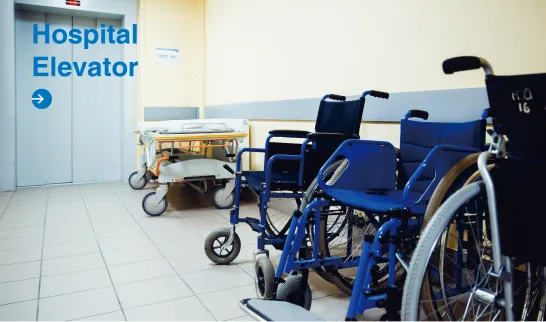
Ever find yourself waiting for an elevator in a busy Canadian hospital and wonder about the engineering marvels that make these crucial systems work? Hospital elevators aren't just about moving people between floors – they're lifelines moving patients, medical equipment, and staff through critical moments. In Canada's sprawling healthcare facilities, choosing the right elevator isn't a simple matter of preference; it's about safety, efficiency, and reliability that can literally be life-saving.
Why Hospital Elevators Are Different
Hospital elevators operate under pressures most commercial elevators never experience. They need to:
- Accommodate oversized medical equipment and stretchers
- Maintain precise leveling for smooth patient transfers
- Operate flawlessly 24/7 with minimal downtime
- Handle constant heavy traffic during emergencies
- Meet strict sanitary requirements
- Comply with Canadian accessibility standards
So how do Canadian hospitals make these critical decisions? It's all about partnering with the best elevator suppliers who understand healthcare infrastructure's unique demands.
The Top Contenders for Canadian Healthcare
1. Mitsubishi Electric
Mitsubishi's been creating vertical transportation magic since 1931. What makes their hospital elevators stand out? Whisper-quiet operation – crucial when you're transporting nervous patients through clinical environments. Their NEXIEZ-MRL elevators don't need a separate machine room, freeing up valuable real estate that could be used for patient care spaces.
Hospital Specialties: Energy efficiency meets infection control – Mitsubishi uses antimicrobial materials in cabin designs and touchless operation systems to reduce transmission risks.
2. Schindler
This Swiss engineering powerhouse, established in 1874, brings European precision to Canadian hospitals. Schindler understands hospital traffic flows like no one else – their PORT technology optimizes elevator dispatching to reduce wait times during shift changes or emergencies. Their modular shaft designs mean faster installations with minimal disruption to ongoing operations.
Why hospitals choose Schindler: Their elevators feature "clean mode" operation with enhanced air filtration and sanitation cycles, plus larger car sizes designed specifically for gurney transport.
3. Otis Elevator
The company that literally invented elevator safety mechanisms back in 1853 understands what hospitals need today. Otis's Gen2 elevators use flat belt technology that reduces vibration to nearly undetectable levels – crucial for patient comfort and delicate equipment transport. Their ReGen drives capture energy during descent to feed back into hospital power grids.
Hospital advantage: Otis ONE IoT platform enables real-time remote monitoring. Maintenance teams can predict issues before they happen, preventing those dreaded "elevator out of service" signs at critical moments.
4. KONE
Finnish innovation meets Canadian resilience in KONE's hospital solutions. Their MonoSpace elevators use ultra-compact machinery that fits behind the shaft wall, creating up to 25% more usable cabin space – meaning wider clearance for hospital beds and medical carts. Their destination control systems reduce travel times by grouping people going to the same floors.
Healthcare highlights: KONE HealthFlow technology includes ultraviolet sanitation cycles and hands-free operation using both gesture and voice recognition technology.
5. Thyssenkrupp
This German engineering giant is transforming hospital logistics with their MULTI elevator system. What makes it revolutionary? It's the world's first ropeless elevator that can move vertically AND horizontally. Imagine an elevator cab moving from surgery suites to patient towers without transferring – this technology is changing hospital design.
Future-forward features: MULTI uses maglev technology similar to high-speed trains, meaning smoother starts/stops and increased capacity without additional shafts.
6. Delta Elevator
Born in Kitchener, Ontario in 1967, Delta understands Canadian healthcare infrastructure challenges intimately. Their non-proprietary approach means hospitals aren't locked into expensive service contracts. Delta's hospital models feature oversized doors (up to 60" wide) for easy bariatric stretcher access and reinforced floors capable of handling heavy imaging equipment.
Canadian advantages: Delta's Diagnostic Indicator system provides clear troubleshooting codes, reducing downtime. Their manufacturing and parts depots across Canada ensure rapid response – critical when every minute matters.
7. Savaria Corporation
Savaria has specialized in accessibility solutions since 1979. Their hospital elevators feature integrated accessibility features that go beyond code requirements. Dual door configurations allow separate entry/exit points – crucial for maintaining isolation protocols during infectious outbreaks.
Standout features: Integrated air purification systems with dual-stage filtration and "clean cabin" indicators that reassure immunocompromised patients.
8. Garaventa Lift
Acquired by Savaria in 2018, Garaventa brings Swiss precision to Canadian healthcare. Their hospital lifts feature panoramic glass cabins that help reduce patient anxiety while improving staff visibility. Customizable control panels with color-coded buttons help reduce critical errors during emergencies.
Hospital benefits: Emergency communications systems with auto-location detection and two-way video capabilities, ensuring help arrives exactly where it's needed.
9. Global Tardif
This Quebec-based manufacturer offers bespoke elevator solutions for complex healthcare facilities. Their systems handle extreme Canadian temperature swings with ease. What sets them apart? Modular designs that simplify future expansions – essential for growing hospitals where adding wings is common.
Specialized solutions: Global Tardif offers "Code Blue" models designed specifically for trauma centers with wipe-down stainless steel interiors and floor-drain systems.
10. Cambridge Elevating
Specialists in Limited Use Limited Application (LULA) systems perfect for low-traffic areas like research wings or administration buildings within healthcare campuses. Their cost-effective solutions help hospitals direct budget toward patient care without compromising quality.
Practical advantages: Space-saving designs that work in renovation projects without major structural changes, plus multi-phase power options that integrate with backup generators.
Key Considerations for Canadian Hospitals
Selecting elevators for healthcare environments requires weighing more than just price tags. Here's what Canadian hospital administrators prioritize:
- Winter Resilience: Can systems operate flawlessly at -40°C? Critical for hospitals in Winnipeg or Edmonton where failure isn't an option
- Emergency Protocols: How quickly does the system transition to backup power? How many consecutive trips can it make during emergencies?
- Sanitation Engineering: Are corners and joints designed to eliminate debris traps? What antimicrobial coatings are used?
- Service Ecosystems: How close are certified technicians? Parts inventory availability within Canada?
- Future-Proofing: Can systems handle increased loads and smart upgrades as technology evolves?
Installation & Maintenance Realities
Nobody understands hospital elevator challenges like Canadian facilities managers. One Toronto hospital administrator shared: "We literally plan construction seasons around elevator work. Renovating an active hospital elevator bank is like performing open-heart surgery on the building – you need precise coordination between technicians, infection control teams, and clinical departments."
Leading hospital elevator suppliers now offer:
- Modular installations that reduce construction disruption by 60-70%
- Mobile command centers that provide temporary elevator service during major upgrades
- Customized maintenance plans with guaranteed response times
- Training programs for hospital engineering teams
- Remote monitoring that integrates with hospital building management systems
The Future of Hospital Vertical Transport
What's next for Canadian healthcare elevators? Expect innovations like:
- AI-powered predictive maintenance that learns from usage patterns
- Integrated robotic carts that automatically transport supplies between floors
- Touch-free biometric access control
- Solar-powered emergency operations
- Real-time air quality monitoring with automatic filtration adjustment
- AR-assisted maintenance through technician smart glasses
The elevator ride between floors might only last seconds, but behind that journey are thousands of engineering hours and Canadian operational expertise. As hospital infrastructure evolves, so will the elevator technologies that keep healthcare moving efficiently through emergencies, routine care, and everything in between.
Choosing the right elevator partner means more than installing machinery – it's building an infrastructure relationship that will support patients and healthcare professionals throughout Canada for decades. With these top manufacturers, hospitals aren't just going up and down – they're moving forward with innovative solutions for better healthcare delivery.










