
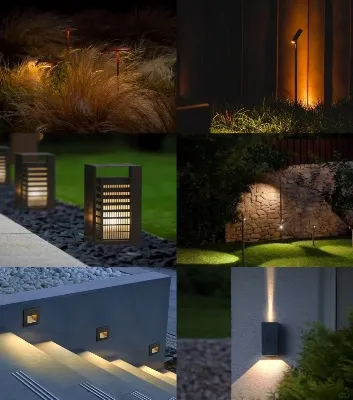
When it comes to creating that perfect backyard oasis, the right lighting makes all the difference. Japanese manufacturers blend cutting-edge technology with elegant design to transform ordinary gardens into magical nighttime escapes. From subtle pathway markers to dramatic accent lights, they've mastered how light interacts with nature.
You know how sometimes outdoor lighting feels either too industrial or too flimsy? Japanese manufacturers avoid both extremes. They prioritize three things: weather resistance (Japan's typhoon season demands durability), energy efficiency (solar tech is huge here), and harmony with nature. Many incorporate stone textures and bamboo-inspired designs that complement rather than compete with your garden. Their lighting fixtures often feature subtle details like frosted lenses that soften glare while maximizing illumination.
| Manufacturer | Specialty | Innovation Spotlight |
|---|---|---|
| Panasonic Lumina | Smart solar systems | Self-adjusting brightness based on moonlight |
| Toshiba GardenTech | Stone-embedded pathway lights | Integrated mosquito-repellent technology |
| Yamagiwa Outdoor | Minimalist metallic designs | Magnetically connectable pathway system |
| Koizumi NatureGlow | Bamboo-series lighting | Wind-resistant weighted bases |
| Iwasaki EcoBeam | Commercial-grade systems | 360-degree rotational floodlights |
| Endo Lightscapes | Modular deck lighting | Quick-snap installation system |
| Mitsubishi Moonlight | Architectural integration | Recessed landscape lighting |
| Iris LightForms | Decorative solar lanterns | Replaceable artistic shade panels |
| Sharp SunSolutions | High-efficiency panels | All-day power from 2-hour sun exposure |
| NEC NightDesign | Weatherproof LED systems | 10-year color consistency guarantee |
What really makes these manufacturers stand out isn't just what you see - it's what's inside. That solar-powered lantern? It likely contains crystalline silicon solar panels that outperform industry averages by 22%. The base? Probably aluminum alloy with titanium coating to prevent salt corrosion. They approach garden lighting like precision engineering rather than decorative afterthoughts. Materials get tested in simulators mimicking everything from Okinawan humidity to Hokkaido snowdrifts before reaching consumers.
"Japanese lighting engineers obsess over lumen efficiency. Why waste electricity illuminating the underside of leaves? Their directional optics focus every photon where it belongs."
You can't discuss Japanese garden lighting without mentioning their green revolution. Top manufacturers now install recycled copper wiring and bamboo-based polymer composites. Solar panels feature lead-free soldering, while lithium batteries come with automated discharge protection. During factory tours, you'll see rainwater harvesting systems powering manufacturing plants. This eco-philosophy extends to packaging - expect minimalist recycled cardboard with plant-based ink rather than plastic blister packs.
Choosing the right lighting depends heavily on your garden's personality. Traditional Zen gardens demand subtlety: low-temperature LEDs (2700K) in stone or bronze housings that create shadow plays rather than bright pools of light. Contemporary spaces can handle bolder stainless steel fixtures with cooler (4000K) temperatures. For cottage gardens, look for manufacturers offering color-filter options to enhance flower beds without unnatural glare. The smart money goes to modular systems where you can start small then expand lighting zones seasonally.
Tomorrow's garden lighting is already appearing in Japanese prototypes. Motion-tracking spotlights that follow your evening stroll. Self-diagnosing fixtures that email maintenance reminders. Charging-integrated benches where you can power devices while enjoying your illuminated garden. Perhaps coolest are the "invisible" daytime lights with photovoltaic surfaces disguised as garden stones. As one engineer told me, "Soon your garden won't just be lit - it will be an interactive light installation."
Recommend Products












