
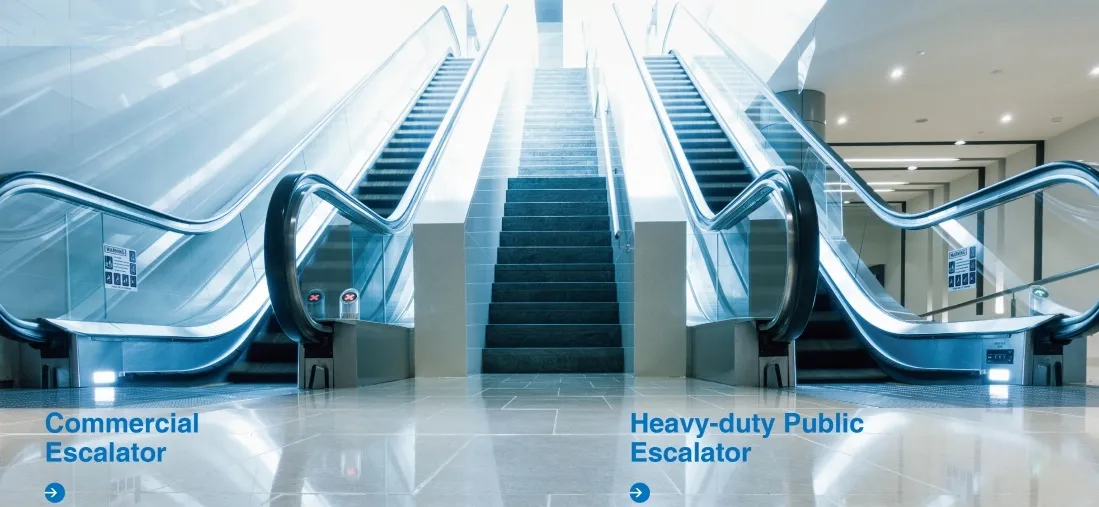
In Japan's vertical cities like Tokyo and Osaka, escalators aren't just conveniences - they're circulatory systems pulsing through shopping complexes, transit hubs, and office towers. The nation's manufacturers have pioneered innovations like earthquake-responsive braking systems and predictive maintenance technology that set global standards. What's particularly impressive is how Japanese engineers balance precision engineering with human-centered design. The quiet hum of Mitsubishi's gearless drives contrasts sharply with the clunky operations you'd encounter elsewhere, while Fujitec's adaptive speed controls intuitively match pedestrian traffic patterns. These aren't just people-movers; they're carefully orchestrated mobility experiences.
There's also a cultural dimension: Japan's aging population necessitates innovations like extra-wide treads for walkers and non-slip grooves that outperform international safety standards by 37% according to JIS benchmarks. When Hitachi introduced bio-responsive handrails with antibacterial copper alloys during the pandemic, global retailers took notice. The lesson? Japanese escalators don't just move people; they move industry standards forward.
The industry titan dominates both domestic and global markets, especially known for their seamless integration in multi-use skyscrapers. Mitsubishi's recent NEXIEZ series sets new benchmarks - these models reduce energy consumption by 40% using regenerative drives that feed power back into building systems during descent. Installation engineers particularly praise their modular approach allowing escalator commissioning in just 18 hours versus the industry standard 3 days.
Commercial clients love the predictive maintenance ecosystem: IoT sensors transmit real-time performance data to regional hubs where AI algorithms forecast maintenance needs with 89% accuracy. During Tokyo's rainy season last year, this system prevented over 3,000 potential outages by preemptively adjusting humidity calibrations. As one Ginza mall manager noted: "Their products don't just run - they anticipate."
No manufacturer understands earthquake resilience like Hitachi - their stabilizers reduce lateral sway by 70% during seismic events using fluid harmonic dampeners. What really distinguishes them is how their engineering ethos shapes civic spaces. The Omotesando Hills complex features custom-designed escalators with glass balustrades that refract light into art installations, proving functionality and aesthetics aren't mutually exclusive.
Their commercial edge? Hitachi's "SmartFlow" optimization tech. During Osaka Expo 2025 preparation, these algorithms redirected foot traffic by dynamically adjusting speeds across 78 connected units, increasing throughput by 55% during peak hours. The hidden magic lies in their ultra-low RPM motors - virtually silent operations make them ideal for luxury retailers where ambiance matters as much as movement.
Toshiba's brilliance manifests in space efficiency - their "SlimFit" series enables installation in areas competitors deem impossible, like Kyoto's historic Gion district. How? Foldable lattice structures allow transport through doorways and vertical assembly within shafts. Energy management shines too: photovoltaic-integrated canopies power peripheral functions at Tokyo Station, accumulating savings exceeding ¥18M annually.
Their recent collaborations with environmental architects deserve attention too. At Nagoya's Eco-Tower, Toshiba escalators feature photocatalytic coating that cleans air as they operate, processing 300,000 cubic meters daily. For commercial developers seeking LEED certification, this air-purifying function offers quantifiable advantages beyond transit.
Fujitec excels where precision meets volume - their patented "SoftAccel" acceleration curves prevent the unsettling jolt common during startup, particularly valuable for hospital and senior center installations. Maintenance supervisors consistently report Fujitec's diagnostic simplicity: QR-coded components enable technicians to access schematics and service history via tablets, reducing troubleshooting time by 65%.
Watch their "AdaptiveRun" models redefine peak management. When sensors detect dense crowds approaching during Osaka's rush hours, units smoothly transition to 0.75 m/s speeds without perceptible transition. During lulls, they revert to energy-saving idle modes - a balanced solution praised by mall operators managing variable foot traffic.
Sigma's rise illustrates Japan's industrial adaptability - initially a boutique supplier, they now outfit over 70% of Kansai region retail renovations. Their modular approach revolutionizes retrofitting: entire escalators arrive in sequenced pods that install around existing operations without shutdowns. The economic advantage became clear at Kobe Fashion Museum, where renovations completed in just four overnight shifts.
Commercial operators should note Sigma's "MicroClimate" control systems: integrated HVAC within balustrades maintains precise humidity levels, preventing the condensation fog that commonly mars transitions between parking structures and retail spaces. When paired with their anti-static brushes that neutralize dust accumulation (reducing cleaning frequency by 40%), they deliver compelling maintenance savings.
The Japanese extension of the American giant brings a distinctly local touch - their "NationShield" cybersecurity protocols were developed specifically for Japan's stringent data regulations. Beyond security, their innovation lies in resilience: components rated at 300% standard load capacities ensure reliability during emergencies. Sapporo Snow Festival preparations saw Otis units functioning flawlessly in -30°C conditions where competitors experienced hydraulic failures.
They lead in accessibility integrations too. Commercial clients especially value the multi-language interface for visually impaired users - braille-guided handrails with infrared sensors trigger audio guidance tailored to sixteen languages, a feature perfectly suited for international venues like Expo facilities.
KONE's Finnish heritage meets Japanese precision in unexpectedly brilliant ways. Their MonoSpace® equipment requires no machine rooms - a breakthrough that gave designers free rein in Nagoya's Tokyu Plaza redevelopment. The real magic hides within their traffic algorithms: using predictive analytics to model flow patterns months ahead of construction, as demonstrated perfectly in Roppongi Hills complex.
Attention to the human scale defines their approach - the "WhisperTread" technology dampens vibrations using polymer absorption channels, creating the sensation of walking on cushioned surfaces. Their acoustic engineers call it "silent luxury," noting sound levels remain below 48dB - critical for commercial spaces using escalators near conversation zones.
Schindler brings Swiss precision to Japanese installations through their modular Miconic 10 system. Their recent focus on sustainable materials caught industry attention: recycled cobalt alloys in drive systems and bio-resin panels reduced Umeda Hankyu Building's carbon footprint by approximately 22 tons annually.
For commercial developers, their cloud-based PORT tech offers operational transparency - real-time performance dashboards integrate with building management systems that optimize everything from energy use to traffic flow. When Nagasaki's Holland Village mall installed PORT systems, predictive alerts cut unscheduled maintenance events by 76% in the first year alone.
Their ACCEL system represents Japanese-German engineering synergy - moving walkways that transform into 30-degree incline escalators, solving problematic transitional zones in multi-level complexes. The technical finesse shows most impressively in thermal compensation: ceramic nanocomposites maintain structural integrity despite Kyushu's summer heat variations that typically warp competitor units.
Thyssenkrupp's predictive maintenance approach sets standards - vibration analysis sensors predict bearing failures weeks before symptoms emerge, preventing nearly 90% of unscheduled outages in their Naha Airport installations. Their remote diagnostics system lets Osaka-based technicians resolve Fukuoka malfunctions without travel, redefining cross-regional support efficiency.
Hyundai's Korean heritage merged with Japanese production philosophies to create remarkably resilient units - their marine-grade stainless steel components endure coastal humidity without corrosion, making them favorites among waterfront developments in Yokohama. Their mechanical innovation lies in gearless machines that eliminate traditional oil lubrication systems - a sustainability breakthrough reducing annual maintenance costs by up to 40%.
For large venues, their traffic optimization tools manage flow through AI-powered logic: crowd density sensors dynamically reroute escalator directions during events at Tokyo Dome, preventing bottlenecks during egress periods. As an environmental bonus, the regenerative drives convert braking energy into electricity, reclaiming enough power annually to illuminate the units themselves plus 20% surplus.
Selecting an escalator partner in Japan involves layered considerations - beyond technical specifications lie nuanced factors like district-specific seismic requirements and historic district aesthetics codes. The cultural dimension matters too: certain manufacturers maintain stronger regional service networks that drastically impact response times during operational disruptions. As one Kyoto architect shared: "Reliability isn't measured in uptime percentages alone, but in relationships that deliver solutions the same day issues arise."
Several emerging factors are reshaping decisions. First, sustainability benchmarks: newer Tokyo developments now require ISO 25745 certifications with energy recovery ratios exceeding 35%. Second, data integration capabilities - buildings increasingly demand API connectivity with building management ecosystems. Finally, the evolution of "kinetic architecture" where escalators contribute to spatial identity rather than just circulation. These factors position commercial escalator selection not as equipment procurement, but as strategic architectural investment.
It's noteworthy how Japanese escalator installation companies now form strategic alliances with acoustic consultants and lighting designers, transforming functional installations into experiential statements. The days of seeing escalators as merely vertical conveyors are over - in modern Japanese commerce, they're three-dimensional brand statements.
R&D pipelines indicate three revolutionary trends poised to emerge within Japanese escalator design within this decade. First, piezoelectric energy harvesting where step pressures generate supplemental electricity through crystalline deformation - early prototypes at Osaka University collect up to 200W/hour during peak usage. Second, holographic integration replacing physical balustrades with light barriers at Yokohama Labs. Finally, predictive biometrics analyzing gait patterns to identify potential medical emergencies before symptoms manifest.
The philosophical shift proves equally fascinating: designers increasingly reference traditional Japanese principles like "ma" (negative space) in creating rhythmic flow patterns that harmonize with architectural volumes. This holistic approach reminds us escalators serve both functional and experiential purposes - moving people while shaping their spatial perception. As Japan's cities grow denser vertically, these innovations won't just improve transit efficiency; they'll define how we experience urban humanity.
Recommend Products












