
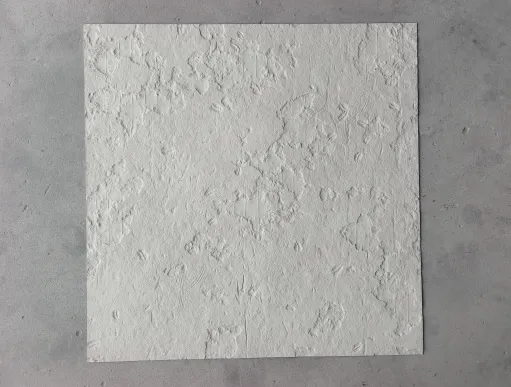
Ever run your fingers along a Bali stone wall? That rough yet soothing texture – it’s like touching ancient volcanic energy frozen in time. Bali's volcanic stone isn't just rock; it’s solidified poetry written by nature. The way it transforms spaces feels almost magical – one minute you’re looking at ordinary concrete, the next you’re transported to a serene Balinese courtyard under swaying palms.
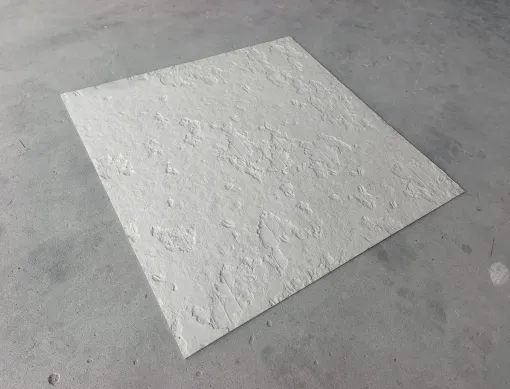
What makes Bali stone panels different? It’s their soulful imperfection. Unlike sterile, machine-made alternatives, these panels whisper stories through their unique patterns – streaks of iron oxide bleeding like watercolor, fossilized fragments preserved for millennia, mineral veins glittering like buried treasure. You don’t just install Bali stone panels; you inherit fragments of the island’s fiery heart.
By 2025, Bali stone wall factories won't just compete on price or volume. The winners will be those who master the art of harmonizing ancestral craftsmanship with digital precision, creating panels that feel hand-carved by the gods yet fit together with Swiss-watch accuracy. It’s a thrilling collision of ancient rock and modern imagination.
Let’s peel back the curtain. Bali stone craftsmanship isn’t taught in schools – it’s passed down like heirloom recipes. Picture I Ketut, whose grandfather quarried stone for temples, now operating 5-axis waterjet cutters that sculpt slabs with micro-precision. His calloused hands know when a stone "sings" – that subtle resonance revealing which panels will bear structural loads and which will shimmer as accent pieces.
These factories are ecosystems. Dewi in quality control can spot a hidden fissure invisible to scanners – “Like feeling the bone beneath skin,” she smiles. Meanwhile, tech teams are perfecting what they call "digital patina" – algorithms that scan genuine weathered stones to recreate their character on new panels. The result? You get the romance of centuried stone without the crumbling edges.
Tucked between Bali’s rainforests and a solar-powered workshop, Padas treats stone like sacred manuscript. Their USP? "Geo-resonance matching" – analyzing the mineral frequency of client locations to pair panels that subtly harmonize with local geology. A Dubai skyscraper gets obsidian-rich panels absorbing desert heat; Swiss chalets receive quartz-dense stones emitting gentle warmth.
eco-friendly building materials
Where vulcanology meets luxury. Merapi’s scientists harvest stones exclusively during Bali’s monsoon, believing rainwater saturation enhances elasticity. Their revolutionary "Breathing Panel" system features micro-grooves that expand/contract like volcanic fissures, preventing cracks in extreme climates. Recently commissioned for Antarctic research stations.
A coop factory preserving vanishing Balinese petroglyph techniques. Artisans hand-carve symbolic narratives inspired by Hindu epics onto panels. Their installation in Qatar’s National Museum features 2,300 panels telling the Ramayana through stone – each chapter flowing like a geological cinema.
Game-changing sustainability. Surya’s "stone recycling loops" reclaim 97% of quarry waste, crushing it into binder-free reconstituted panels. Their carbon-negative production actually sequesters CO2 through mineral carbonation. Already snapped up by eco-resorts across Costa Rica and Norway.
Going where no quarrier dared – 300ft subterranean galleries. These ultra-dense stones from Bali’s mantle feature mesmerizing crystal formations. Their vacuum-sealed "Deep Earth" panels maintain constant 65°F surface temperatures – cutting HVAC costs by 40% in Dubai tests.
Blind artisans are their secret weapon. Nawa employs visually impaired touch specialists who "read" stones like braille, matching panels through texture compatibility – ensuring seamless flow where machines see only color variance. Their Paris flagship installation feels like silk underhand.
Radical flexibility. Using Bali’s rare serpentine stones, Tirta produces panels thin as ceramic tiles yet unbreakably flexible. Revolutionizing curved architecture – their swirling installations at Singapore’s Gardens feel like frozen ocean currents.
Infusing stones with photoluminescent algae harvested from volcanic lakes. By day, classic grey basalt; at night, panels glow with soft blue constellations. No electricity, just living geology. Nightclubs and planetariums are going wild.
Micro-engineering at its finest. Keliki embeds nanoparticles creating hydrophobic surfaces that repel graffiti yet "sweat" during humidity to self-clean. Ideal for London facades. Bonus? Their fractal-patterned panels reduce wind resonance in skyscrapers.
Weaving stone with volcanic fibers into feather-light mesh panels. Half the weight, twice the strength. Their breathable system cools buildings through convection, cutting Singapore’s heat gain by 52%. Aviation industry is eyeing it for lightweight thermal shielding.
Where is this lava-born revolution heading? Picture stepping onto airport floors humming with geothermic energy, heated directly by the stone panels beneath. Or hospital walls imbued with antimicrobial zeolites naturally suppressing pathogens. Bali stone might soon be the medium for "architectural acupuncture" – conductive panels tapping into subtle earth currents to balance building energetics.
The smart money isn't just on aesthetics anymore. Goldman Sachs' 2024 mineral report highlights Bali stone's unique piezoelectric properties – future panels could generate power from structural stress, turning footsteps into LED sparks. Suddenly, your hallway isn’t just beautiful; it’s a battery.
What truly stirs me? Visiting these workshops feels like stepping into Balinese temples of innovation. Hindu statues stand beside 3D laser mappers; offerings of frangipani adorn CNC controls. This isn’t industry; it’s devotion. And when you later trace the grooves on your feature wall, you’re not just touching stone – you’re touching the place where faith and physics shake hands.
Recommend Products












