
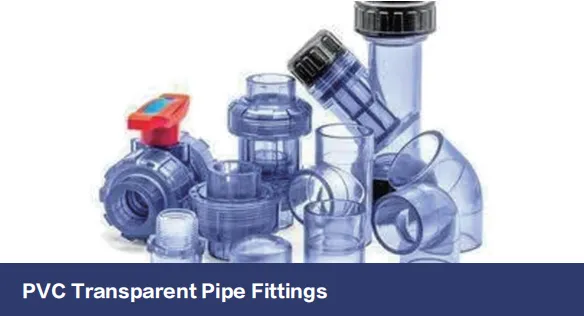
Hey there, DIY enthusiast! If you've ever found yourself staring at a mix of PVC transparent pipes and fittings alongside metal or other materials, wondering how to marry them without leaks, you're in the right place. Working with PVC may seem straightforward, but when you start mixing materials and sizes, things can get tricky. But don't worry – with the right approach, you'll be creating watertight connections that'll last for years.
First things first: let's get acquainted with the players. PVC pipes come in various sizes - typically 1.5", 2", and 3" are your household regulars. But the fun starts when you introduce:
Galvanized steel or copper pipes need special transition fittings. Metal's rigid nature means it won't "give" like PVC does during temperature changes.
These plastics have different expansion rates than standard PVC. Transitions require specific adapters and cement compatibility checks.
Old-school but still found in basements. Its rough interior surface demands smooth transitions to prevent debris catching.
You wouldn't bake a cake without a mixing bowl, right? Same principle here. Before starting, gather these essentials:
When connecting different pipe diameters, reducing joints (reducers) are your BFFs. Here's the drill:
Transparent fittings give you a huge advantage here – you can actually see the cement distribution and spot gaps or air pockets instantly.
This is where many DIYers hit snags. Metal doesn't play nice with PVC's flexibility, but you can make them cooperate:
| Metal Type | Best Transition Method | Pro Tip |
|---|---|---|
| Threaded Metal (Galvanized Steel) | Threaded PVC adapter + Teflon tape | Wrap tape clockwise for 5-6 wraps – this prevents unraveling when tightening |
| Non-Threaded Copper | Neoprene gasket + stainless steel clamp | Position clamp over pipe seam to avoid compression leaks |
| Cast Iron with Hub | Man-off sleeve + oakum/lead sealant | Pre-pack hub with oakum before pouring molten lead for historical accuracy |
| Brass Fittings | Brass-to-PVC threaded transitions | Use two wrenches – hold the brass steady while tightening the PVC to prevent twisting |
Low-pressure situations like drain lines? Clamps save you tons of time. Perfect for weekend warriors:
Why go see-through? Oh, let me count the ways...
Your job isn't done when the cement dries! Maintenance keeps everything flowing smoothly:
Sometimes stock fittings won't cut it. When faced with tricky situations:
Working with mixed materials doesn't have to be a plumbing nightmare. Remember: patience beats brute force every time with PVC. Embrace the transparency – it's like having X-ray vision for your pipes! The beauty of this approach is that you'll build confidence with each successful connection. Before you know it, you'll be eyeing that old cast iron drain line not with dread, but with the excitement of a plumber-turned-artist about to create their next masterpiece.
Now grab those pipe wrenches and reducers – your pipes are waiting for that professional touch. And remember, whenever you're tackling plumbing challenges, consider exploring innovative pipe fittings to enhance your system's efficiency and longevity.
Recommend Products












