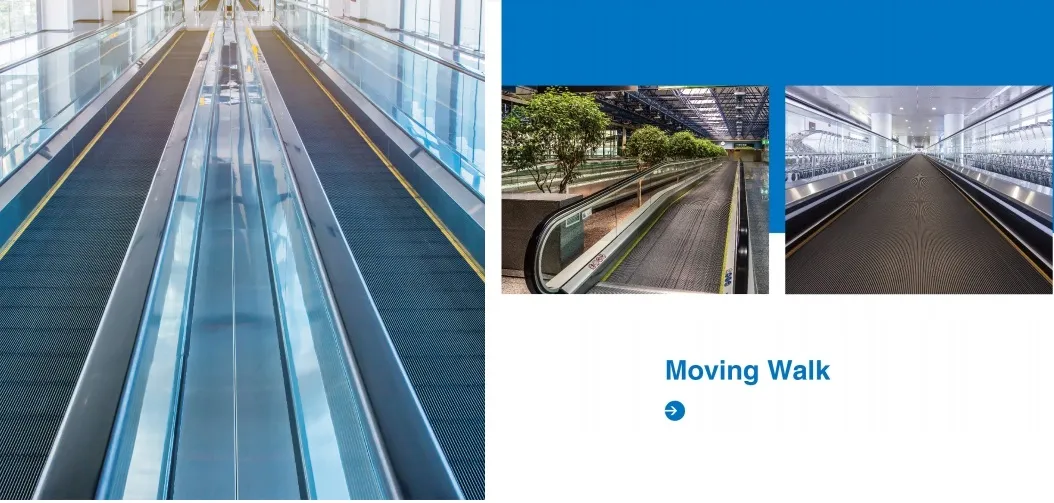
During peak hours at major transportation hubs or sprawling shopping malls, the challenge of moving large crowds efficiently becomes more than just a logistical concern—it directly impacts user experience, operational costs, and even safety. In such environments, where thousands of people converge daily, traditional pedestrian pathways often struggle to keep up, leading to bottlenecks, frustration, and wasted time. This is where moving walkways, often overlooked as mere "conveyor belts for people," emerge as transformative tools. More than just mechanical aids, they are engineered solutions that redefine how we navigate space, particularly in large-scale commercial and public facilities.
Beyond Speed: How Moving Walkways Transform Personnel Flow
At first glance, moving walkways might seem like simple devices—flat belts or treads that carry people at a steady pace. But their impact on personnel flow efficiency runs deeper than just saving a few steps. In facilities like international airports, where terminals can stretch over kilometers, the difference between walking and using a moving walkway can mean the difference between catching a flight and missing it. For example, London Heathrow's Terminal 5, one of Europe's busiest, integrates multiple moving walkways across its 350,000-square-meter layout. According to operational data, these systems reduce average walking time between gates by 40%, significantly lowering passenger stress and improving on-time departure rates.
The key lies in their ability to maintain consistent flow. Unlike traditional walkways, where speed varies based on individual pace, moving walkways create a uniform movement rhythm. This consistency prevents "stop-and-go" congestion, a common issue in crowded spaces where slower walkers block faster ones. In shopping malls, this translates to smoother transitions between floors or across large retail zones, encouraging visitors to explore more areas without feeling fatigued. A study by the International Council of Shopping Centers (ICSC) found that malls with strategically placed moving walkways saw a 22% increase in customer foot traffic to upper floors, directly boosting sales for retailers in those areas.
Reputable moving walk suppliers design solutions that adapt to different spatial constraints, whether it's the curved pathways of a historic train station or the straight, high-speed lanes of a modern airport. These suppliers prioritize not just raw speed but also synchronization with the facility's overall layout. For instance, in convention centers hosting large trade shows, moving walkways are often integrated with directional signage and seating areas, creating a seamless journey that guides attendees from entrances to exhibition halls without confusion. This level of integration turns a basic mobility tool into a strategic asset for event organizers, who report 30% faster attendee arrival times at key sessions compared to events without such systems.
User-Centric Design: Comfort and Inclusivity in Motion
Efficiency isn't just about moving people quickly—it's about moving them comfortably. Moving walkways excel here by reducing physical strain, particularly for vulnerable groups such as the elderly, parents with strollers, or travelers with heavy luggage. In healthcare facilities, for example, hospitals attached to large medical campuses often use moving walkways to connect outpatient clinics, diagnostic centers, and main hospitals. This not only speeds up patient transfers but also eases fatigue for visitors and staff who might otherwise need to walk long distances while carrying medical records or supplies.
Modern
moving walk solutions also prioritize accessibility. Features like non-slip treads, handrails with consistent grip, and clear visual indicators (such as LED strips showing direction) make them usable for people with mobility challenges. In compliance with global accessibility standards, top suppliers ensure their systems meet ADA (Americans with Disabilities Act) requirements, including low step heights and emergency stop buttons within easy reach. This inclusivity extends the facility's usability to a broader audience, reinforcing its role as a public-friendly space.
The psychological impact shouldn't be underestimated either. In stressful environments like transit hubs, the presence of moving walkways sends a subtle message: "We value your time." This perception enhances overall satisfaction, as seen in passenger surveys at Tokyo's Haneda Airport, where 85% of respondents cited moving walkways as a "key positive factor" in their travel experience. For commercial facilities like shopping malls, this translates to longer visit durations—customers who feel less rushed are more likely to browse, dine, and make impulse purchases, directly benefiting retailers and food service providers.
Safety, Sustainability, and Long-Term Value
When integrated correctly, moving walkways enhance safety by reducing overcrowding in high-traffic zones. In stadiums or concert venues during event exits, for example, strategically placed moving walkways can disperse crowds more evenly, minimizing the risk of stampedes or falls. Advanced systems now include sensors that detect obstacles or overcrowding, automatically adjusting speed or triggering alerts to staff. This proactive approach to safety is why major event organizers increasingly partner with moving walk suppliers that prioritize smart monitoring features.
Sustainability is another growing focus. Today's
moving walk solutions are designed with energy efficiency in mind, using regenerative drives that capture energy during deceleration (e.g., when the system is empty or slowing down) and feed it back into the facility's power grid. Some models also feature motion sensors that reduce speed or switch to standby mode during low-traffic periods, cutting energy consumption by up to 30%. For commercial building materials suppliers, these systems align with LEED (Leadership in Energy and Environmental Design) certification goals, making them a selling point for eco-conscious developers.
Durability is equally important. High-quality moving walkways, built with robust materials like corrosion-resistant metals and wear-resistant treads, require minimal maintenance even under heavy daily use. Suppliers often offer long-term service agreements, ensuring consistent performance over decades. This longevity makes them a cost-effective investment, as the initial installation cost is offset by reduced operational disruptions and lower replacement expenses. A case study by a leading
moving walk supplier showed that a major airport's investment in durable moving walk systems resulted in a 65% reduction in maintenance-related downtime over a 10-year period compared to older, less reliable models.
Case Study: Integrating Moving Walkways in Commercial Architecture
For commercial building materials suppliers, moving walkways are more than standalone products—they are part of a larger ecosystem of design elements that shape how people interact with space. Consider the example of a recently completed mixed-use development in a major global city, which combines a shopping mall, office towers, and a transit hub. The project's architects worked closely with moving walk suppliers from the early design phase to ensure the systems complemented the building's aesthetic and functional goals.
The result? A network of curved and straight moving walkways that connect the transit hub to the mall's entrance, and from there to upper-level dining areas and office lobbies. These walkways are integrated with the building's lighting and ventilation systems, creating a cohesive environment that feels intuitive rather than mechanical. Retailers on the mall's third floor, previously struggling with low foot traffic, reported a 45% increase in sales within six months of opening—attributed largely to the easier access provided by the
moving walk solutions.
Another notable example is Singapore's Changi Airport Terminal 4, where moving walkways are paired with lush indoor gardens and digital art installations. Far from being utilitarian, these systems become part of the airport's "experience economy," turning a routine walk into a visually engaging journey. Passengers spend an average of 15 extra minutes exploring these zones, boosting revenue from airport shops and restaurants. For the airport operator, this integration demonstrates how moving walkways can drive both functional efficiency and commercial success.
|
Facility Type
|
Challenge Addressed
|
Impact of Moving Walkways
|
|
International Airports
|
Long distances between gates; passenger fatigue
|
40% reduction in walking time; 85% higher passenger satisfaction
|
|
Shopping Malls
|
Low foot traffic on upper floors; customer fatigue
|
22% increase in upper-floor visits; 45% sales boost in case study
|
|
Convention Centers
|
Delays in attendee arrival at sessions; confusion in large layouts
|
30% faster session attendance; improved wayfinding
|
Looking Ahead: The Future of Moving Walkway Technology
As cities grow and facilities become more complex, the role of moving walkways will only expand. Emerging trends include the integration of AI-powered predictive analytics, where systems learn peak usage times and adjust speed proactively. Some moving walk suppliers are already testing such adaptive solutions, with pilot projects in European train stations showing a 25% reduction in energy consumption while maintaining optimal flow.
Customization will also play a bigger role. Facilities with unique architectural features, such as historic buildings or futuristic "smart cities," will demand
moving walk solutions that blend with their design language. This could mean transparent treads for museums, where visitors can see exhibits below, or modular systems that can be reconfigured for temporary events like festivals or trade shows. The goal is to make moving walkways feel less like "added equipment" and more like an organic part of the space.
Perhaps most importantly, the focus will remain on the human element. Even as technology advances, the core value of moving walkways lies in their ability to make large, busy spaces feel more manageable, inclusive, and welcoming. For commercial building materials suppliers and facility managers alike, investing in quality
moving walk solutions isn't just about improving metrics—it's about creating environments where people can move with ease, focus on what matters, and leave with positive memories.
Conclusion: More Than Mobility—A Catalyst for Better Spaces
In the grand scheme of facility design, moving walkways may seem like a small component, but their impact is far-reaching. They transform how we experience airports, malls, and public spaces, turning potential frustration into convenience, and inefficiency into opportunity. From reducing travel stress for millions of passengers to boosting sales for retailers and enhancing safety at large events, their value extends well beyond simple mobility.
As we look to the future of urban development, where facilities will only grow larger and more complex, the role of moving walkways will become even more critical. By partnering with innovative moving walk suppliers and prioritizing user-centric
moving walk solutions, designers and operators can create spaces that don't just accommodate crowds—they empower them to move, explore, and connect more effectively. In the end, the true value of moving walkways isn't measured in speed alone, but in the seamless, human-centered experiences they enable.