
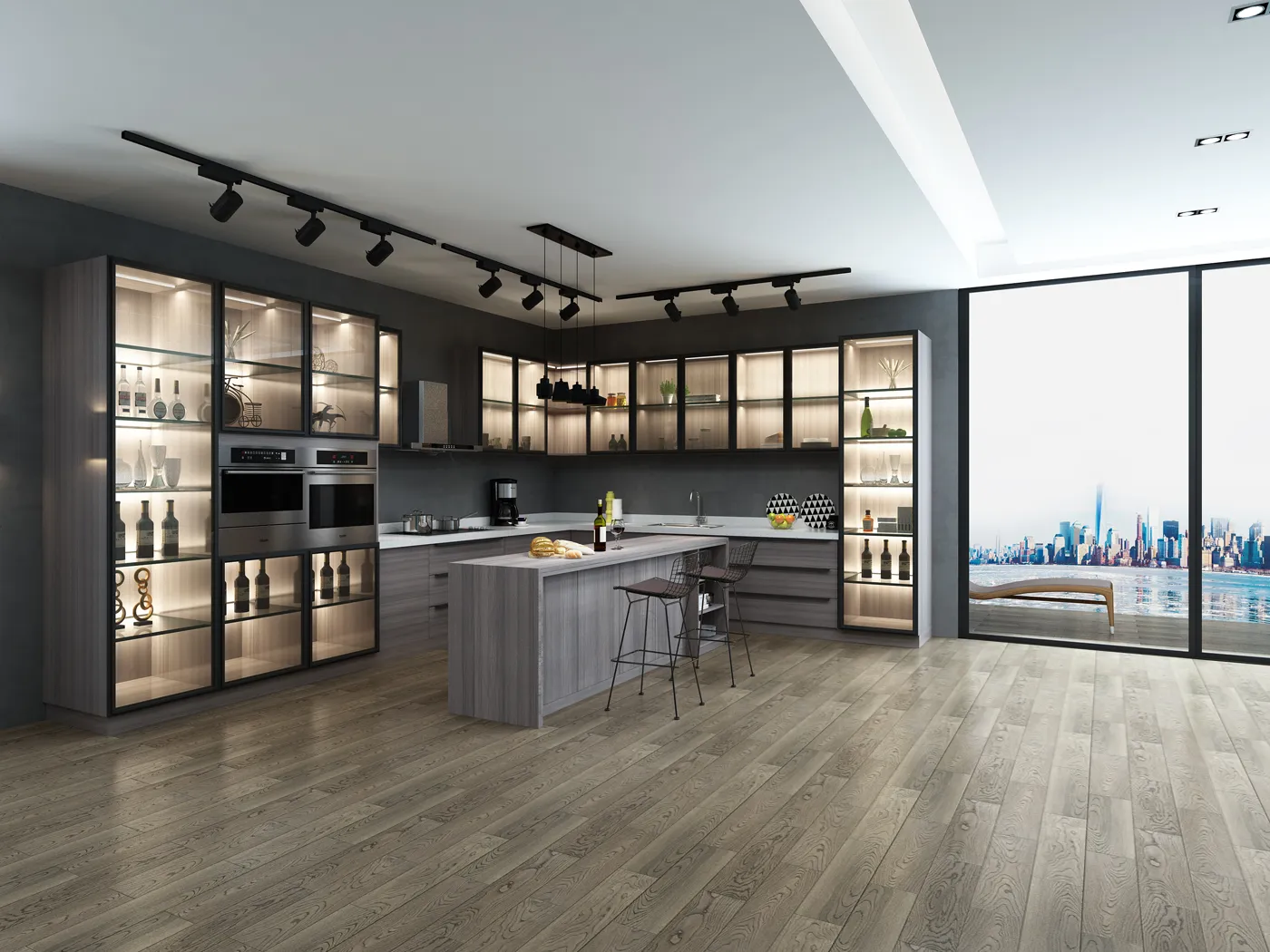
Where functionality meets artistry in the heart of your home
You know that feeling when you walk into a kitchen and it just feels... right ? That magical combination where everything seems to flow seamlessly – where the cabinets aren't just storage units but actually shape the entire mood of the space? That's the power of modern cabinet design working its magic.
Gone are the days when kitchen cabinets were purely utilitarian afterthoughts. Today, they're the showstoppers – the backbone of modern kitchen aesthetics that can turn your cooking space into a design sanctuary. Whether you're renovating or just dreaming about your perfect kitchen, let's unpack what makes contemporary cabinet design so irresistibly captivating.
Think back to your grandma's kitchen. Heavy, ornate cabinets that swallowed light and space. Now flash forward to today's sleek, handleless wonders that practically float on walls. What happened in between?
The transformation came in waves:
Fun fact: The term "kitchen cabinet" became popular during Andrew Jackson's presidency when advisors met in the White House kitchen. Today we're reclaiming it as the star of the space!
Modern kitchen cabinets whisper rather than shout. They embody that Scandinavian-inspired philosophy – not about being cold and sterile, but warm and intentional. Here's what defines contemporary cabinet design:
Designers today aren't choosing materials randomly - they're composing a material symphony:
The true magic is often in what you don't see:
Today's cabinets play with texture in subtle ways – matte finishes alongside reflective surfaces, smooth woods with tactile metals. This balance creates depth without clutter, visual interest without distraction.
Color isn't just about paint swatches anymore. It's about manipulating light and perception:
Designer secret: Notice how many modern kitchens feature cabinets that match wall colors? That's intentional – creating visual continuity to expand the space.
Modern cabinets have become architectural elements:
The trend? Cabinets aren't just furniture – they're becoming intrinsic parts of the architecture itself, blurring lines between built environment and interior design.
Recommend Products












