
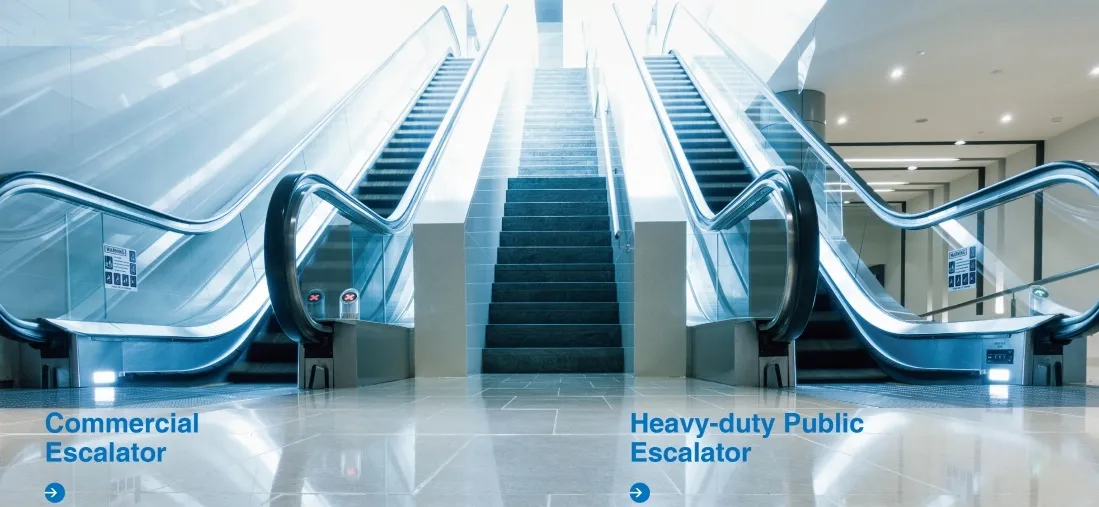
Walking through a shopping center or airport, most folks don't think much about what's moving them from floor to floor - but behind those humming steps is a world of engineering tailored to different spaces. Commercial escalators are like the arteries of public buildings; get them right and everything flows smoothly. Whether you're designing a new mall or upgrading a transit hub, understanding these machines saves headaches down the road. Let's break down the top 10 types transforming how we navigate buildings today.
These are the classic "up-and-down" pairs you see in department stores. Positioned side-by-side, they create a visual symmetry while handling large crowds efficiently. If you're working on projects like retail centers or metros, this layout cuts congestion through predictable traffic patterns.
Maintenance teams love these because servicing one unit doesn’t shut down the entire flow. For new constructions focused on building materials for commercial projects , parallel escalators adapt well to structural layouts since they don't require complex angles.
Ever noticed how escalators sometimes cross like an 'X' in tall atriums? That's not just for drama. By stacking units diagonally, this design slashes the floor space needed while connecting multiple levels visually.
When dealing with premium high-quality building materials like stone or metal finishes, crisscross escalators show off surfaces from every angle. But they’re not DIY installations - specialized elevator installation companies handle the precise alignment required.
From theme parks to stadiums, these are the tough guys built to shrug off rain and shine. Picture escalators climbing stadium bleachers or hillside shopping districts - they swap indoor parts for waterproof electronics and corrosion-proof materials.
Top elevator suppliers offer marine-grade stainless steel variants perfect for coastal zones. Just remember: drainage is non-negotiable, or you'll get a waterfall effect on rainy days.
When you've only got a small step between floors - like in restaurants or boutiques - full-height escalators would be overkill. These low-rise versions typically cover under 20 feet vertically while fitting into tight footprints.
For renovated spaces with floor-to-ceiling height constraints, this type proves you don't always need sweeping staircases to create flow.
Airports and stadiums demand machines that can log millions of passenger miles without flinching. These overbuilt units feature wider steps (up to 48 inches), double motors, and reinforced structures. A New York subway escalator alone handles over 15,000 users daily!
Collaborate early with elevator installation companies to verify foundation strength - vibration loads can surprise architects.
Not every incline needs steps. Airport concourses love flat moving walkways for transporting luggage-toting crowds over long distances. Hospitals and warehouses use them too for effortless cart movement.
Modern units now blend seamlessly with surrounding high-quality building materials - think marble-printed treads or wood-grain finishes.
These curved marvels turn transit into theater. Instead of boring right angles, they sweep upward in elegant spirals - perfect for luxury malls wanting that "wow" factor.
On major building materials for commercial projects , budgets can stretch for these statement pieces. But expect higher upkeep - dust tends to gather faster on curved sections.
Why stop at two floors? Casino complexes and large conference centers deploy "chained" escalators transporting people across three or more levels without changing devices.
Advanced elevator suppliers synchronize the speed across all units to avoid concertina-like bunching at transfer points.
Standard escalators climb at a steep 30 degrees, but these gentle risers work at just 15-20 degrees. Senior centers and hospitals use them extensively where stability matters.
Keep space allowances in mind - these escalators need longer runs to gain the same height as conventional ones.
The new frontier where escalators meet elevators. Designed for tight vertical shafts up to 100 feet, they move passengers along vertical tracks using modular platforms instead of steps.
Early adopters include universities and tech campuses where building materials for commercial projects must serve evolving spatial demands. Specialized elevator installation companies are still rare - research compatibility early.
| Type | Best For | Energy Use | Space Needs | Maintenance |
|---|---|---|---|---|
| Parallel Escalators | Retail centers | Moderate | Wide footprint | Low |
| Crisscross (X-Type) | Atrium buildings | Moderate | Compact vertical | Medium |
| Outdoor Escalators | Stadiums, parks | High | Standard width | High |
| Compact Short-Rise | Cafes, boutiques | Low | Minimal | Low |
| Heavy-Duty | Airports, metros | Very high | Wide footprint | High |
| Moving Walkways | Terminals, hospitals | Moderate | Long runs | Medium |
| Spiral Escalators | Luxury malls | High | Circular shaft | High |
| Multilevel | Casinos, malls | Very high | Vertical alignment | High |
| Shallow-Angle | Healthcare, seniors | Low | Extended run | Low |
| Hybrid Vertical | Tight retrofits | Moderate | Minimal footprint | Specialized |
With budgets and building constraints always playing tug-of-war, don't just grab the shiniest model. Start by mapping your passenger flows - a compact escalator might disappoint at a busy convention center, while heavyweight units waste energy in a boutique hotel.
Partner early with experienced elevator suppliers who'll give it to you straight about maintenance demands versus flashy designs. And involve elevator installation companies during planning phase - they'll spot foundation or power issues blueprints might miss.
Lastly, let your space dictate form. When high-traffic zones need building materials for commercial projects , choose components designed to age gracefully under millions of footsteps. Because whether shoppers realize it or not, how they move through your building shapes their whole experience.
Recommend Products












