
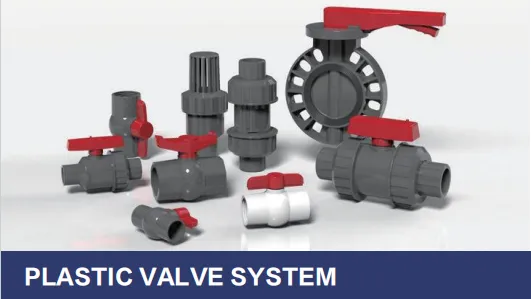
Walk into any home, office, or industrial facility, and you'll find a silent network working tirelessly behind the scenes: pipes, fittings, and valves. These unassuming components keep water flowing, chemicals contained, and systems running smoothly. But when a valve fails—sticking, leaking, or cracking—it's not just an inconvenience. It can lead to costly water damage, disrupted operations, or even safety hazards. That's why durability isn't just a buzzword in the world of plumbing and infrastructure; it's the backbone of reliable systems. And at the heart of that durability? Material science. Today, we're diving deep into the science behind durable plastic valve system solutions, exploring how innovative materials like UPVC and PPR are revolutionizing the industry, and why the right plastic valve system supplier can make all the difference in building resilient, long-lasting infrastructure.
Plastic valves haven't always been the go-to choice for durability. In the mid-20th century, early plastic valves were often dismissed as "disposable"—prone to cracking under pressure, warping in extreme temperatures, or degrading when exposed to harsh chemicals. Back then, metal valves (brass, iron, copper) dominated the market, prized for their strength but weighed down by drawbacks: corrosion, heavy weight, and high maintenance costs. But as material science advanced, so did plastics. By the 1980s, engineers began experimenting with modified polymers, adding stabilizers, reinforcing agents, and chemical blockers to create plastics that could stand up to the rigors of real-world use. Fast forward to today, and plastic valves are the backbone of modern plumbing, HVAC, and industrial systems. The shift wasn't just about cost—it was about performance. Today's plastic valve system solutions are designed to outlast their metal counterparts in many applications, offering a unique blend of durability, flexibility, and resistance that's hard to match.
Not all plastics are created equal, and when it comes to valves, the choice of material is make-or-break. Let's break down two of the most critical materials driving durability in today's plastic valve systems: UPVC and PPR. These aren't just random acronyms—they're the result of decades of material innovation, each engineered to solve specific challenges in plumbing and fluid control.
UPVC, or Unplasticized Polyvinyl Chloride, is the unsung hero of many commercial and industrial plumbing systems. Unlike regular PVC (which can contain plasticizers that make it flexible but less durable), UPVC is rigid, strong, and free of additives that might degrade over time. Its molecular structure is a tightly packed chain of vinyl chloride monomers, cross-linked with chlorine atoms to create a material that's inherently resistant to chemical corrosion. This makes UPVC valves and pipes ideal for transporting everything from drinking water to industrial chemicals. But what really sets UPVC apart is its pressure-handling capability. A high-quality UPVC pipe supplier will often highlight its ability to withstand pressures up to 16 bar (that's over 230 psi) in standard applications, thanks to its thick, uniform walls and precision manufacturing. Think about a busy shopping mall: hundreds of toilets, sinks, and sprinkler systems all relying on a network of pipes and valves. A UPVC-based system here doesn't just save on installation costs (it's lighter than metal, so easier to transport and install); it also resists the daily wear and tear of high water pressure, ensuring leaks are rare and maintenance is minimal.
While UPVC excels in rigid, high-pressure scenarios, PPR (Polypropylene Random Copolymer) takes the lead in applications where heat and flexibility matter most. PPR is a thermoplastic polymer made by copolymerizing propylene with small amounts of ethylene, creating a material with a more amorphous structure than pure polypropylene. This structure gives PPR two key advantages: excellent heat resistance and flexibility. Unlike UPVC, which can become brittle at temperatures above 60°C (140°F), PPR valves and fittings can handle continuous hot water at up to 95°C (203°F)—perfect for residential boilers, radiant heating systems, and even small-scale industrial processes. A reputable PPR pipe and fitting supplier will often emphasize its "memory" property: if bent or deformed under heat, PPR can return to its original shape, reducing the risk of cracks or leaks in dynamic systems. Imagine a family home with a hydronic heating system: the pipes run through walls, under floors, snaking around corners. PPR's flexibility makes installation a breeze, while its heat resistance ensures the system remains leak-free even after years of daily use. It's no wonder PPR has become a staple in modern residential plumbing—it's durable without being rigid, strong without being heavy.
Durability isn't just about "being strong"—it's a science. For plastic valves and pipes, durability is measured by how well they resist three common enemies: chemicals, temperature extremes, and mechanical stress. Let's unpack the science behind each.
Water isn't just H2O. It can contain minerals, salts, acids, or even disinfectants (like chlorine in municipal water). Over time, these substances can eat away at metal valves, causing rust, pitting, and leaks. Plastic valves, thanks to their non-porous polymer structures, are naturally resistant to most of these threats. UPVC, for example, is impervious to acids, alkalis, and salts at concentrations that would corrode brass or iron. PPR, while slightly less resistant to strong chemicals, holds up well to the mild acids and alkalis found in residential and commercial water systems. Material engineers test this resistance using ASTM standards, submerging samples in aggressive solutions for months and measuring weight loss or structural changes. A top plastic valve system supplier will invest in these tests, ensuring their solutions can handle the specific chemicals in their target markets—whether it's a hospital's sanitized water or a factory's industrial effluent.
Temperature fluctuations are another silent killer of valves. Metal expands and contracts with heat, leading to loose fittings and leaks over time. Plastics, when formulated correctly, have lower coefficients of thermal expansion, meaning they change shape less with temperature swings. UPVC, for instance, has a coefficient of around 70 x 10^-6/°C, compared to copper's 16.6 x 10^-6/°C—wait, that's higher? But here's the catch: UPVC's rigidity and uniform wall thickness prevent the warping that can occur with metal. In contrast, PPR's flexibility allows it to expand and contract without cracking, making it ideal for hot water systems where temperatures rise and fall daily. Both materials also undergo rigorous temperature cycling tests: exposing valves to extreme heat (95°C for PPR) and cold (-10°C for UPVC) for thousands of cycles to ensure they don't degrade. It's this testing that gives engineers confidence that a PPR valve won't fail in a home's hot water line or a UPVC valve won't crack in a freezing basement.
Finally, there's the daily grind of mechanical stress: water hammer (the sudden pressure spike when a valve closes), physical impact (from tools during installation), and even seismic activity in earthquake-prone areas. UPVC and PPR handle this differently but effectively. UPVC's rigid structure and high tensile strength (around 50 MPa) make it resistant to impact—drop a UPVC pipe on concrete, and it's more likely to bounce than shatter. PPR, with its lower tensile strength but higher elongation at break (it can stretch up to 200% before breaking), absorbs impacts by flexing rather than cracking. Both materials also undergo burst pressure testing: gradually increasing water pressure inside a valve until it fails, then ensuring the failure pressure is well above the maximum operating pressure specified. For example, a standard UPVC valve rated for 10 bar will typically burst at 30 bar or more—three times its intended use. This safety margin is what gives plumbers and engineers peace of mind, knowing the system can handle unexpected spikes without catastrophic failure.
Numbers and tests are one thing, but real-world performance is the ultimate proof of durability. Let's look at two case studies where material innovation in plastic valve systems and pipes has made a tangible difference—one in a bustling commercial complex, and another in a quiet residential neighborhood.
In downtown Riyadh, a leading plastic valve system supplier was tasked with equipping a new 50-story office tower with a plumbing system that could handle high water pressure, resist the city's hard water (high in calcium and magnesium), and minimize maintenance over the building's 50-year lifespan. The solution? A complete UPVC-based system, including ball valves, gate valves, and pressure-reducing valves, paired with UPVC pipes from a trusted UPVC pipe supplier. Five years after installation, the facility manager reports zero valve failures and only minor maintenance (replacing a few worn-out seals, a standard part of any system). The key, according to the supplier, was the UPVC's chemical resistance to hard water scaling—unlike metal valves, which would have developed mineral deposits over time, reducing flow and increasing pressure on the system. The result: lower energy costs (no need to overwork pumps to push water through scaled pipes) and happier tenants who never experience sudden water pressure drops.
On the outskirts of Jeddah, a residential developer needed a plumbing system for 200 townhouses that could handle both hot and cold water, resist corrosion from the coastal humidity, and be installed quickly to meet tight construction deadlines. A PPR pipe and fitting supplier stepped in with a solution: PPR pipes and brass-core PPR valves (the brass core adds strength to the valve seat, while the PPR body resists corrosion). Three years later, the homeowners' association reports only two minor leaks—both due to improper installation (a loose fitting), not material failure. The developer estimates they saved 30% on installation costs compared to metal systems (PPR's flexibility means fewer joints and faster connections), and residents enjoy consistent hot water without the metallic taste sometimes associated with copper pipes. It's a win-win: durability for the developer, comfort for the homeowners.
To truly understand why UPVC and PPR are the materials of choice for modern plastic valve systems, it helps to see them side by side. Below is a comparative analysis of these two materials, along with CPVC (Chlorinated Polyvinyl Chloride), another popular option, highlighting their key properties and ideal applications.
| Property | UPVC | PPR | CPVC |
|---|---|---|---|
| Material Composition | Unplasticized PVC (no plasticizers) | Polypropylene random copolymer (propylene + ethylene) | Chlorinated PVC (higher chlorine content than UPVC) |
| Max Continuous Temperature | 60°C (140°F) | 95°C (203°F) | 93°C (200°F) |
| Max Operating Pressure (at 20°C) | 16 bar (232 psi) | 10 bar (145 psi) | 12 bar (174 psi) |
| Chemical Resistance | Excellent (resists acids, alkalis, salts) | Good (resists mild acids, alkalis; poor with strong solvents) | Very good (resists most acids, alkalis, oils) |
| Flexibility | Low (rigid) | High (flexible, with memory) | Moderate (more flexible than UPVC) |
| Typical Applications | Commercial plumbing, industrial fluid transport, cold water systems | Residential hot water, radiant heating, small-scale industrial | HVAC systems, hot water lines in commercial buildings |
| Key Advantage | High pressure resistance, cost-effective | Heat resistance, flexibility, easy installation | Balanced heat and chemical resistance |
As the table shows, UPVC, PPR, and CPVC each have their strengths, but UPVC and PPR stand out for their versatility and real-world performance. UPVC is the go-to for high-pressure, cold-water applications, while PPR shines in hot-water and flexible systems. Together, they cover most residential, commercial, and light industrial needs—proof that material innovation isn't about one-size-fits-all, but about matching the right material to the right job.
Material science never stands still, and the future of plastic valve system solutions is looking brighter (and more durable) than ever. Here are three trends shaping the next generation of plastic valves and pipes:
As the world shifts toward eco-friendly materials, researchers are developing bio-based plastics derived from renewable resources like corn starch, sugarcane, and even algae. These polymers aim to match the durability of UPVC and PPR while reducing reliance on fossil fuels. Early tests show promise: a bio-based PPR alternative developed by a European lab has similar heat resistance and flexibility, with the added benefit of being fully recyclable at the end of its lifespan. While still in the prototype stage, it's only a matter of time before we see a "green" plastic valve system supplier enter the market, offering solutions that are kind to both infrastructure and the planet.
Imagine a valve that can "tell" you when it's about to fail—before a leak occurs. That's the promise of smart plastic valves embedded with micro-sensors. These sensors, made from conductive polymers, monitor pressure, temperature, and flow rate in real time, sending data to a central system. If a valve starts to degrade (e.g., the seal wears thin, causing a pressure drop), the sensor alerts maintenance teams, allowing for repairs before disaster strikes. Early adopters include hospitals and data centers, where downtime is costly, but the technology is quickly trickling down to commercial and even residential systems. A forward-thinking plastic valve system supplier might soon offer these smart valves as part of their standard solutions, blending durability with predictive maintenance.
Nanotechnology is also making waves in plastic valve materials. By adding tiny nanoparticles (like graphene or carbon nanotubes) to UPVC or PPR, engineers can create nanocomposites with enhanced properties: higher tensile strength, better heat resistance, and even self-healing capabilities (some nanoparticles can react to cracks, filling them in automatically). For example, a UPVC nanocomposite valve tested by a leading materials lab showed a 40% increase in impact resistance and a 20% higher melting point compared to standard UPVC. While production costs are still high, as manufacturing scales, these nanocomposite valves could become the new standard for extreme applications—think oil refineries, chemical plants, and offshore platforms.
At the end of the day, the science behind durable plastic valve system solutions is simple: it's all about the material. From the rigid strength of UPVC to the flexible resilience of PPR, these polymers are the result of decades of innovation, each engineered to solve specific challenges in plumbing and fluid control. They've transformed how we build, replacing heavy, corrodible metal with lightweight, long-lasting plastic that saves time, money, and headaches.
Whether you're a developer building a skyscraper, a plumber installing a home's water line, or a homeowner wondering why your new valve feels sturdier than the old one, understanding the materials behind plastic valves gives you the power to choose durability. And as material science continues to advance—with bio-based polymers, smart sensors, and nanocomposites on the horizon—we can expect even more resilient, efficient, and sustainable plastic valve system solutions in the years to come. After all, in the world of infrastructure, durability isn't just a feature; it's the foundation on which everything else is built.
Recommend Products












