
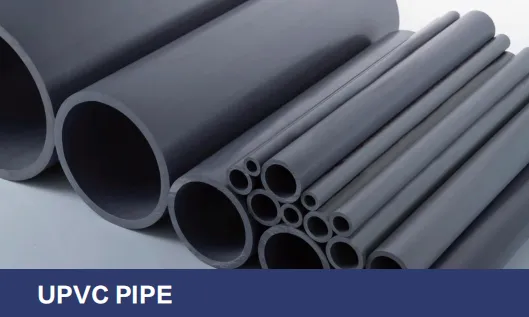
Picture this: It's a sweltering summer morning in Riyadh, and a construction crew is hard at work on a new residential tower. Cranes swing overhead, workers in hard hats hustle between concrete slabs, and the air hums with the sound of drills and saws. Among the chaos, a supervisor kneels down to inspect a stack of white pipes, nodding approvingly. "These UPVC pipes will hold up better than the old galvanized steel we used last year," he tells a junior engineer. "Less corrosion, easier to install, and they'll save us a fortune on maintenance down the line."
This scene is becoming increasingly common across the Middle East. As the region undergoes an unprecedented construction boom—driven by ambitious megaprojects, rapid urbanization, and a growing focus on sustainable infrastructure—builders and developers are turning to materials that can withstand the unique challenges of the environment while delivering long-term reliability and cost efficiency. Among these materials, UPVC (Unplasticized Polyvinyl Chloride) pipes have emerged as a quiet yet transformative force, reshaping how plumbing, drainage, and water management systems are designed and built. In this article, we'll explore why UPVC pipe solutions have become the backbone of modern construction in the Middle East, the challenges they address, and how suppliers are evolving to meet the region's ever-growing demand.
To understand the rise of UPVC pipes, we first need to grasp the scale of construction activity sweeping the Middle East. Countries like Saudi Arabia, the UAE, Qatar, and Oman are investing billions in residential complexes, commercial skyscrapers, hospitals, schools, and critical infrastructure—from airports and seaports to water treatment plants and metro systems. In Saudi Arabia, the Vision 2030 initiative has kickstarted projects like NEOM, the $500 billion futuristic city, and the Riyadh Metro, which alone requires thousands of kilometers of piping for utilities. In the UAE, Dubai's Expo 2020 legacy continues to drive development, while Abu Dhabi's "Plan Abu Dhabi 2030" focuses on sustainable urban growth.
At the heart of all these projects lies a fundamental need: reliable piping systems. Whether it's delivering clean water to homes, draining wastewater from hospitals, or managing irrigation in commercial districts, pipes are the circulatory system of any building or infrastructure. But for decades, the Middle East relied on traditional materials like galvanized steel, copper, and even cast iron for these systems—and they often fell short.
Galvanized steel, for example, is prone to rust and corrosion, especially in coastal areas where salt-laden air and brackish water deterioration. Copper, while durable, is expensive and requires skilled labor for installation, driving up project costs. Cast iron, heavy and brittle, struggles to withstand the region's frequent temperature fluctuations, leading to cracks and leaks over time. As construction timelines shortened and budgets tightened, developers began asking: Is there a material that can handle our climate, last longer, cost less, and be easier to work with?
Enter UPVC pipes. Unplasticized Polyvinyl Chloride is a rigid, strong thermoplastic material that's been used in construction globally for decades, but its adoption in the Middle East has surged in the last 15 years. What makes UPVC so well-suited to the region? Let's break it down.
The Middle East is no stranger to extreme conditions. Summer temperatures regularly soar above 45°C (113°F) in cities like Dubai and Kuwait City, while coastal areas like Doha and Jeddah face high humidity and salt spray. Traditional metal pipes expand and contract with heat, weakening joints and causing leaks. UPVC, however, is inherently resistant to UV radiation and temperature fluctuations—its molecular structure remains stable even in direct sunlight, ensuring the pipes don't become brittle or warp over time.
Corrosion is another non-issue. Unlike steel or iron, UPVC doesn't rust, pit, or degrade when exposed to chemicals, saltwater, or aggressive soils. This makes it ideal for both underground water supply lines and above-ground drainage systems. In fact, many upvc pipe supplier companies in the region now offer specialized "coastal-grade" UPVC pipes treated with extra UV stabilizers, tailored for projects near the sea.
In construction, every dirham or riyal counts—and UPVC pipes deliver significant cost savings at every stage. Compared to copper, UPVC is up to 60% cheaper upfront, and unlike galvanized steel, it doesn't require regular painting or coating to prevent corrosion. Installation is faster, too: UPVC pipes are lightweight (about 1/5 the weight of steel), so they're easier to transport and handle on site. They also use simple solvent cement or push-fit joints, eliminating the need for welding or soldering—a boon for labor efficiency, especially in a region where skilled tradespeople can be scarce.
Long-term savings are even more impressive. A typical UPVC pipe has a lifespan of 50–100 years with minimal maintenance, compared to 20–30 years for galvanized steel. For property owners, this means fewer repairs, less downtime, and lower replacement costs over the building's lifetime. It's no wonder that upvc pipe solutions are now a top choice for budget-conscious developers working on large-scale residential projects, where reducing lifecycle costs is a priority.
UPVC pipes aren't a one-trick pony. They come in a range of sizes, pressure ratings, and configurations, making them suitable for almost every piping need. For example:
As demand for UPVC pipes has grown, so has the ecosystem of suppliers and solutions. Today, the Middle East is home to dozens of local and international upvc pipe supplier companies, from global giants with regional offices to homegrown manufacturers producing pipes tailored to local standards. Many of these suppliers have expanded their offerings beyond basic UPVC pipes, providing end-to-end solutions that include fittings, valves, and technical support—earning them the title of "one-stop piping partners."
Take, for example, a large-scale hospital project in Riyadh. The plumbing system needs to meet strict hygiene standards, handle high water pressure, and resist bacteria growth. A reputable upvc pipe supplier might provide not just UPVC pipes for water supply, but also antimicrobial fittings, leak-detection systems, and on-site training for the installation team. This holistic approach ensures the project runs smoothly and the system performs as expected for decades.
Government initiatives have also played a role in boosting the market. Saudi Arabia's National Water Company, for instance, has mandated the use of corrosion-resistant pipes in new water distribution networks, directly benefiting UPVC suppliers. In the UAE, green building certifications like LEED and Estidama reward projects that use sustainable materials—and UPVC fits the bill, as it's recyclable and requires less energy to produce than metal pipes.
While UPVC is dominant, it's not the only player in the modern piping market. PPR (Polypropylene Random Copolymer) pipes, for example, are popular for hot water systems due to their heat resistance. But for most general applications in the Middle East, UPVC still holds the edge. Let's compare:
| Material | Initial Cost | Lifespan (Years) | Corrosion Resistance | Best For |
|---|---|---|---|---|
| UPVC | Low ($$) | 50–100 | Excellent (no rust, chemical-resistant) | Cold water supply, drainage (DWV), irrigation |
| Copper | High ($$$$) | 40–50 | Good (but prone to pinhole leaks in acidic water) | High-end residential hot water systems |
| Galvanized Steel | Medium ($$$) | 20–30 | Poor (rusts in humid/salty environments) | Older infrastructure, temporary projects |
| PPR | Medium-High ($$$) | 40–60 | Good (heat-resistant, chemical-resistant) | Hot water systems, industrial piping |
As the table shows, UPVC's combination of low cost, long lifespan, and corrosion resistance makes it the most practical choice for most Middle East construction projects—especially when budget and durability are top priorities.
To see UPVC pipes in action, let's look at a real-world example: Azure Residences, a 45-story luxury apartment building in Dubai's Business Bay. Completed in 2023, the project features 320 units, a rooftop pool, and a state-of-the-art gym—all requiring robust plumbing and drainage systems.
The developer, Al Masaood Properties, initially considered copper pipes for water supply and cast iron for drainage. But after consulting with their upvc pipe supplier , they switched to UPVC for both systems. "We were impressed by the cost savings and the fact that UPVC could handle Dubai's heat without warping," says Ahmed Hassan, the project's chief engineer. "Plus, the supplier offered a 50-year warranty on the pipes, which gave us peace of mind."
For the drainage system, the team chose PVC DWV pipe solutions —specifically, large-diameter UPVC pipes with sound-insulating properties to reduce noise from wastewater flow. "In a high-rise, nobody wants to hear their neighbor's shower draining at 6 a.m.," Hassan laughs. "The UPVC DWV pipes solved that problem."
The result? The plumbing installation was completed 20% faster than projected, saving over AED 1.2 million in labor costs. A year after occupancy, there have been zero leaks or maintenance issues—proof that UPVC pipes deliver on their promises.
Of course, the rise of UPVC pipe solutions hasn't been without challenges. As the market has grown, some low-quality suppliers have entered the fray, offering substandard pipes that don't meet pressure or durability standards. This has led to occasional failures, eroding trust in the material among some developers. To combat this, industry bodies like the Gulf Organization for Research and Development (GORD) have introduced certification programs, ensuring that only pipes meeting strict criteria carry their seal of approval.
Looking ahead, innovation will drive the next phase of UPVC's growth. Suppliers are developing pipes with higher pressure ratings for large-scale infrastructure projects, as well as "smart" UPVC pipes embedded with sensors to detect leaks or blockages in real time. There's also a push for more sustainable production methods—using recycled plastic in UPVC manufacturing, for example—to align with the Middle East's green building goals.
From the deserts of Riyadh to the skyscrapers of Dubai, UPVC pipes have quietly become the unsung heroes of Middle East construction. They've transformed how developers approach plumbing and drainage, offering a rare combination of durability, affordability, and versatility that traditional materials simply can't match. As the region continues to build toward a more sustainable, urbanized future, the role of upvc pipe solutions will only grow—supported by suppliers who are evolving to meet every challenge, from extreme heat to complex project demands.
So the next time you walk into a modern hospital, shop in a sleek mall, or relax in a new apartment in the Middle East, take a moment to appreciate the UPVC pipes working behind the scenes. They may not be visible, but they're there—strong, reliable, and helping build a better future for millions.
Recommend Products












