
In an industry where time is money and deadlines can make or break a project, construction teams are constantly searching for ways to streamline processes without sacrificing quality. From skyscrapers in Riyadh to residential complexes in Dubai, the pressure to deliver projects faster has never been higher. One area that's long been a bottleneck? Plumbing and piping systems. Traditional methods, reliant on heavy materials and painstakingly manual assembly, often drag out timelines, inflate labor costs, and leave room for costly errors. But today, a new player is changing the game: modular plastic valve system solutions. Let's dive into how these innovative systems are revolutionizing construction speed, and why they're quickly becoming the go-to choice for forward-thinking builders.
To understand the impact of modular plastic valve systems, it helps to first look at the challenges of traditional plumbing setups. For decades, construction projects relied on metal pipes (think copper or galvanized steel) and valves, which are durable but come with a host of drawbacks. Let's break it down:
1. Labor-Intensive Installation: Metal pipes are heavy, rigid, and require specialized skills to cut, thread, and connect. A single misalignment can mean reworking hours of progress, and each joint demands precise soldering or welding—tasks that slow down even the most experienced crews. On a typical mid-rise building, plumbing installation alone can eat up 15-20% of the total construction timeline, thanks to these manual steps.
2. Material Delays and Waste: Traditional systems often require custom-cut pipes and fittings, which means waiting for parts to be fabricated on-site or shipped in. In regions like Saudi Arabia, where construction booms are driving high demand, material shortages are common, leading to costly project delays. What's more, cutting metal pipes to size generates significant waste—scraps that can't be reused and end up in landfills, adding to project costs and environmental impact.
3. Corrosion and Long-Term Risks: Metal pipes are prone to rust and corrosion, especially in humid climates or when exposed to certain water chemistries. Over time, this leads to leaks, reduced water pressure, and the need for expensive repairs. For commercial projects like hospitals or schools, where downtime is not an option, these risks are even more critical.
4. Lack of Flexibility: Once installed, traditional metal systems are hard to modify. If a design change is needed mid-project (and let's face it, that's almost inevitable), crews often have to tear out existing pipes and start over—a nightmare for tight timelines.
These challenges have left construction teams stuck in a cycle: racing to meet deadlines while wrestling with systems that were never designed for speed. Enter modular plastic valve system solutions—a modern answer to these age-old problems.
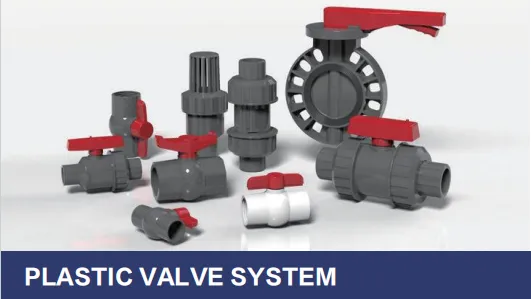
At their core, modular plastic valve systems are pre-engineered, pre-assembled plumbing components designed to snap together quickly and reliably. Unlike traditional setups, where each pipe and valve is installed individually, these systems come in standardized "modules"—think of them as building blocks for plumbing. Made from durable plastics like UPVC, PPR, and PEX (materials known for their corrosion resistance and flexibility), these modules include pre-fitted valves, connectors, and pipes that are designed to work seamlessly together from the start.
But "modular" isn't just about pre-assembly—it's about smart design. These systems are engineered with click-and-lock connections, push-fit fittings, and flexible pipes that bend without breaking, eliminating the need for welding, soldering, or complex tools. For example, a typical modular valve unit might include a pre-assembled manifold (a central hub) with outlets for different fixtures (sinks, showers, toilets), allowing crews to connect multiple lines in minutes instead of hours. It's like comparing building with Legos to building with bricks and mortar—both work, but one is infinitely faster.
And it's not just valves: modular systems often integrate with complementary pipes fittings solutions, upvc pipe solutions, and ppr pipe and fitting solutions, creating a one-stop plumbing ecosystem. This integration means fewer compatibility issues, fewer trips to the hardware store, and a more streamlined workflow from start to finish.
So, how exactly do these systems shave weeks (or even months) off construction timelines? Let's break down the key benefits:
1. Drastically Faster Installation – The biggest selling point is speed. With push-fit or snap-lock connections, modular systems can be installed up to 50% faster than traditional metal setups. Consider this: a crew installing traditional copper pipes might complete 20-30 linear feet per day. With modular plastic valves and pipes, that same crew could handle 60-80 feet—doubling productivity. On a 10-story building with 100 units, that's a savings of 4-6 weeks on plumbing alone. For contractors juggling tight deadlines, those weeks can mean the difference between a profitable project and a costly delay penalty.
2. Reduced Labor Needs – Since modular systems are designed for simplicity, they don't require highly specialized labor. A general construction worker with basic training can install them, freeing up skilled plumbers for more complex tasks. This is a game-changer in regions like Saudi Arabia, where skilled labor shortages are a constant challenge. On one recent project in Jeddah, a contractor reported cutting their plumbing crew size by 30% after switching to modular systems—without slowing down progress.
3. Minimized Errors and Rework – Traditional plumbing relies on human precision: a slight miscalculation in pipe length or a weak solder joint can lead to leaks, which often aren't discovered until after drywall is up. Fixing those leaks means tearing out walls, adding weeks to the timeline. Modular systems, with their standardized, pre-tested connections, drastically reduce these risks. Most manufacturers test each module for leaks before shipping, and the click-lock design ensures a tight seal every time. One study by the Saudi Construction Authority found that projects using modular plastic valve solutions saw a 70% reduction in plumbing-related rework compared to traditional builds.
4. Flexibility for Last-Minute Changes – We've all been there: a client decides to add a bathroom, or an architect adjusts a wall layout mid-project. With traditional metal pipes, this often means rerouting entire sections, cutting new threads, and re-soldering joints. Modular systems? They're flexible by design. PEX pipes bend around corners without elbows, and valves can be easily added or removed from manifolds. On a recent school renovation in Riyadh, the design team shifted three classroom layouts two months into construction. Thanks to the modular pex pipe and fitting solutions already in place, the plumbing crew adapted in just 3 days—instead of the 2 weeks it would have taken with metal pipes.
5. Lightweight and Easy to Transport – Plastic is far lighter than metal, which simplifies logistics. A truckload of modular plastic valve components can cover twice the area of a truckload of metal pipes, reducing delivery trips and storage space on-site. For projects in remote areas or with limited access (like urban high-rises with tight loading zones), this translates to fewer delays and lower transportation costs.
Let's put these benefits into context with a real-world example. In 2024, a leading Saudi developer broke ground on "Al Nour Heights," a 20-story residential complex in north Riyadh with 250 units. The project had a tight 18-month deadline, and the construction manager, Ahmed Al-Mansoori, knew plumbing could be a bottleneck. "We'd used traditional metal systems on past projects, and they always ran over schedule," he recalls. "This time, we decided to try modular plastic valve system solutions and upvc pipe solutions—mostly out of frustration, honestly. We needed to finish on time to secure our next contract."
The results were eye-opening. The plumbing team, which typically took 12 weeks to rough-in pipes and valves for 250 units, finished in just 7 weeks—a 42% time savings. "The installers loved it," Al-Mansoori says. "No more hauling heavy copper pipes up ladders, no more waiting for soldering torches to heat up. They just clicked the pieces together and moved on. We even had extra time to fix a few electrical issues that had cropped up—something we never would have had bandwidth for before."
The project finished 3 weeks ahead of schedule, and Al-Mansoori estimates the modular system saved them over SAR 200,000 in labor and material costs. "We're never going back," he says. "Modular is the future."
Still on the fence? Let's stack modular plastic valve system solutions against traditional metal systems in a head-to-head comparison:
| Feature | Modular Plastic Valve Systems | Traditional Metal Systems |
|---|---|---|
| Installation Time | 3-5 weeks for 250-unit building | 8-12 weeks for 250-unit building |
| Labor Requirement | General labor with basic training | Skilled plumbers (welding/soldering certified) |
| Material Cost | 10-15% lower upfront (no custom fabrication) | Higher (metal + custom cutting/welding) |
| Maintenance Needs | Minimal (corrosion-resistant, no rust) | Regular (rust checks, joint repairs) |
| Flexibility for Changes | High (easily rerouted/bent) | Low (requires cutting/re-soldering) |
| Environmental Impact | Lower (recyclable materials, less waste) | Higher (metal mining, fabrication emissions) |
While speed is the star, modular plastic valve solutions offer benefits that extend far beyond construction timelines:
Durability That Lasts – Don't let "plastic" fool you. Modern modular systems use high-grade plastics like UPVC, PPR, and PEX, which are resistant to corrosion, chemicals, and temperature fluctuations. UPVC pipes, for example, have a lifespan of 50+ years—comparable to copper. And since they don't rust, they maintain water pressure better over time, reducing long-term maintenance costs for building owners.
Sustainability Credentials – Plastic production uses less energy than metal, and modular systems generate less waste during installation (no scraps from cutting custom pipes). Many manufacturers also use recycled materials in their products, making them a greener choice for eco-conscious developers. In Dubai, where sustainability is a key focus for Expo 2020 legacy projects, modular plastic valve systems are now a requirement for LEED-certified buildings.
Cost Savings Over Time – While upfront material costs are slightly lower, the real savings come from reduced labor, faster project completion (lower financing costs), and minimal maintenance. A 2023 report by the Middle East Construction Journal found that projects using modular plumbing systems had 22% lower total lifecycle costs compared to traditional setups.
As construction technology evolves, modular plastic valve system solutions are only getting better. Here's what to watch for in the next few years:
Smart Integration – Imagine valves with built-in sensors that monitor water flow, pressure, and leaks in real time. Some manufacturers are already testing IoT-enabled modular systems that send alerts to project managers' phones, preventing small issues from becoming big problems. For hospitals and schools, where water safety is critical, this could be a game-changer.
Customization at Scale – While modular systems are standardized, 3D printing is opening the door to custom modules tailored to unique project needs. Need a valve manifold with an unusual angle for a historic building renovation? Soon, manufacturers could print it on-demand, combining the speed of modular with the flexibility of custom fabrication.
Wider Adoption in Industrial Projects – So far, modular systems have been most popular in residential and commercial buildings, but they're starting to make inroads in industrial settings like factories and oil refineries. With advances in heat-resistant plastics, we may soon see modular solutions replacing metal in high-temperature industrial piping.
In a construction industry where every day counts, modular plastic valve system solutions are more than a trend—they're a necessity. They address the biggest pain points of traditional plumbing: slow installation, high labor costs, and costly errors. And with benefits ranging from faster timelines to lower lifecycle costs, it's no wonder builders across Saudi Arabia and the Middle East are making the switch.
Whether you're building a residential tower in Riyadh, a hospital in Dubai, or a school in Kuwait, the message is clear: if you want to finish faster, reduce stress, and deliver a better product, modular plastic valve systems are the way to go. The future of construction is modular—and it's arriving faster than you think.
Recommend Products












