
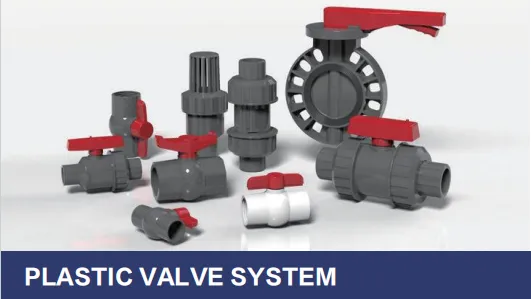
Behind the smooth flow of water in our homes, the efficient operation of industrial pipelines, and the safety of plumbing systems in hospitals and schools, there's an unsung hero: the plastic valve system. These unassuming components regulate pressure, control flow, and prevent leaks, making them indispensable in residential, commercial, and industrial settings. But what goes into creating a reliable plastic valve? To answer that, we turn to the experts—plastic valve system suppliers—who blend technical precision with years of hands-on experience to deliver products that stand the test of time. In this article, we'll walk through the manufacturing journey of plastic valve systems, from raw material selection to final quality checks, and explore how suppliers adapt to meet the diverse needs of clients, whether they're a residential building materials supplier or a commercial project manager.
For any plastic valve system supplier, the journey begins with choosing the right materials. "You can't build a durable valve with subpar resin," says Ahmed, a production manager at a leading Saudi Arabia building materials supplier specializing in plastic valves. "We source only high-grade polymers, because the material's integrity directly impacts performance—especially in critical applications like hospital plumbing or industrial pressure systems."
The most common materials include PVC (Polyvinyl Chloride), UPVC (Unplasticized Polyvinyl Chloride), PPR (Polypropylene Random Copolymer), and PE (Polyethylene). Each has unique properties: PVC is cost-effective and versatile, making it ideal for drain-waste-vent (DWV) systems (think PVC DWV pipe supplier solutions). UPVC, rigid and chemical-resistant, shines in high-pressure applications like water supply lines, which is why UPVC pipe supplier networks prioritize it. PPR, known for heat resistance, is a favorite for hot water systems, a key focus for PPR pipe and fitting supplier partners catering to residential and commercial projects.
Suppliers don't just stop at resin. Additives are critical too: stabilizers prevent degradation from UV light and heat, plasticizers (in flexible PVC) enhance malleability, and impact modifiers boost toughness. "We test every batch of raw materials in our lab," explains Maria, a quality control expert at a European plastic valve system supplier. "If the resin's melt flow index is off by even a point, it can affect molding precision. We reject shipments that don't meet our standards—no exceptions."
Once materials are approved, the design phase begins. Modern plastic valve systems aren't one-size-fits-all; a valve for a school's plumbing will differ vastly from one used in an industrial chemical plant. Suppliers work closely with clients—architects, contractors, even class a fireproof cpl inorganic board for hospital and school supplier partners—to understand project specifics: pressure ratings, temperature ranges, flow rates, and compliance requirements (like ASTM D2846 for CPVC or DIN standards for European markets).
"A hospital might need valves that resist corrosion and are easy to sanitize," notes Raj, an engineer at a commercial building materials supplier in Dubai. "We'll design with smooth internal surfaces to prevent bacterial buildup, and use UPVC or PPR for their non-reactive properties." For residential projects, cost and ease of installation take priority—hence the popularity of PVC ball valves, a staple for residential building materials supplier catalogs.
Computer-Aided Design (CAD) software is the backbone here, allowing engineers to model intricate components: the valve body, stem, ball, or butterfly disc. Prototypes are 3D-printed or CNC-machined for testing. "We once had a client request a custom valve for a high-rise's rainwater harvesting system," Raj recalls. "The space was tight, so we redesigned the handle to be foldable. It took three prototypes, but seeing it work on-site? That's the reward."
With designs finalized, production kicks into high gear. The manufacturing process typically involves two key steps: extrusion (for pipe bodies, though valves are often molded) and injection molding (for valve components). Let's break it down:
Most valve parts—bodies, bonnets, balls, seats, and handles—are made via injection molding. Here's how it works: Raw resin pellets are fed into a heated barrel, melted into a viscous liquid, and injected under high pressure into a steel mold shaped like the desired component. The mold cools, solidifying the plastic, and the part is ejected. "Mold temperature and injection pressure are critical," says John, a plant supervisor at a U.S.-based plastic valve system supplier. "Too hot, and the part warps; too cold, and it might have shrinkage gaps. We monitor these parameters in real time with sensors."
Automation plays a big role here. Modern factories use robotic arms to load/unload molds, reducing human error and increasing throughput. But some delicate components—like the soft rubber seats that ensure a tight seal—still require manual inspection. "A seat with a tiny nick can cause leaks," John adds. "Our technicians check every seat under magnification before assembly."
After molding, components move to assembly lines. Depending on the valve type (ball, gate, check, or butterfly), this involves fitting the stem into the body, attaching the handle or actuator, and inserting seals. For high-precision valves, computer-guided torque tools ensure bolts are tightened to exact specifications—no over-tightening (which can crack plastic) or under-tightening (which leads to leaks).
Some suppliers specialize in custom solutions, like whole-house customization projects where valves are color-matched to interior decor or branded with a client's logo. "A luxury hotel once asked us to make gold-plated handles for their bathroom valves," laughs Sarah, a sales manager at a sanitary fixtures/bathrooms supplier that partners with plastic valve system suppliers. "We sourced food-grade gold plating to ensure it was safe for water contact. It was a small detail, but it made their project stand out."
"If a valve fails, it's not just a product issue—it's a safety risk," emphasizes David, a compliance officer at a global plastic valve system supplier. "That's why testing is non-negotiable." Suppliers subject valves to a battery of tests before they leave the factory:
Third-party certifications add another layer of trust. Many suppliers pursue ISO 9001 for quality management, NSF/ANSI 61 for drinking water safety, or CE marking for the EU market. "Hospitals and schools demand Class A fireproof materials, which is why we work closely with class a fireproof cpl inorganic board for hospital and school supplier clients to ensure our valves meet their strict fire safety codes," David adds.
Manufacturing plastic valve systems isn't without hurdles. Suppliers often grapple with volatile raw material costs, supply chain delays, and evolving regulations. "Two years ago, resin prices spiked 40% due to a global shortage," says Lisa, a procurement manager at a Saudi Arabia plastic valve system supplier . "We had to renegotiate contracts with clients and invest in bulk storage to buffer against future shocks."
Sustainability is another growing focus. Many suppliers now use recycled plastics in non-critical components, or design valves for easy disassembly and recycling. "We're testing a valve made with 30% recycled UPVC," Lisa notes. "It performs as well as virgin material but reduces our carbon footprint."
Innovation is key to staying competitive. Smart valves with IoT sensors (to monitor pressure and send alerts) are gaining traction in commercial buildings. "A commercial building materials supplier client recently asked for valves that integrate with their building management system," says Mike, a product developer. "Now, facility managers can adjust water flow remotely—saving energy and reducing waste."
Plastic valve systems are everywhere, and suppliers tailor their offerings to match:
| Application Sector | Common Valve Types | Supplier Focus | Key Keywords |
|---|---|---|---|
| Residential Plumbing | Ball valves, gate valves, check valves | Cost, ease of installation, durability | Residential building materials supplier, PVC DWV pipe supplier |
| Commercial Buildings | Butterfly valves, pressure-reducing valves | High flow rates, smart tech integration | Commercial building materials supplier, whole-house customization |
| Hospitals & Schools | Sanitary valves, fire-safe valves | Corrosion resistance, fireproofing | Class A fireproof cpl inorganic board for hospital and school supplier |
| Industrial | Diaphragm valves, solenoid valves | Chemical resistance, high pressure | PPR pipe and fitting supplier, UPVC pipe supplier |
From a homeowner upgrading their kitchen plumbing to a contractor building a skyscraper, plastic valve system suppliers are the backbone of these projects. "We don't just sell valves—we solve problems," says Ahmed, the production manager we met earlier. "Whether it's a bamboo charcoal board wall panel supplier needing quiet, vibration-resistant valves for a hotel lobby or a farmer needing durable PVC well casing and screen pipes , we're here to deliver solutions that work."
The manufacturing process of plastic valve systems is a symphony of science, skill, and supplier dedication. From selecting the perfect resin to testing each valve under extreme conditions, every step reflects a commitment to quality. As one-stop architectural solution provider networks expand, plastic valve system suppliers continue to adapt—offering faster turnaround, greener materials, and smarter designs to meet the needs of a changing world.
So the next time you turn on a faucet or flush a toilet, take a moment to appreciate the valve behind the scenes. It's more than a piece of plastic; it's the result of a supplier's passion for excellence—ensuring that water flows, systems work, and buildings thrive. And in the end, that's the true measure of a great plastic valve system supplier: not just what they make, but the trust they build, one valve at a time.
Recommend Products












