
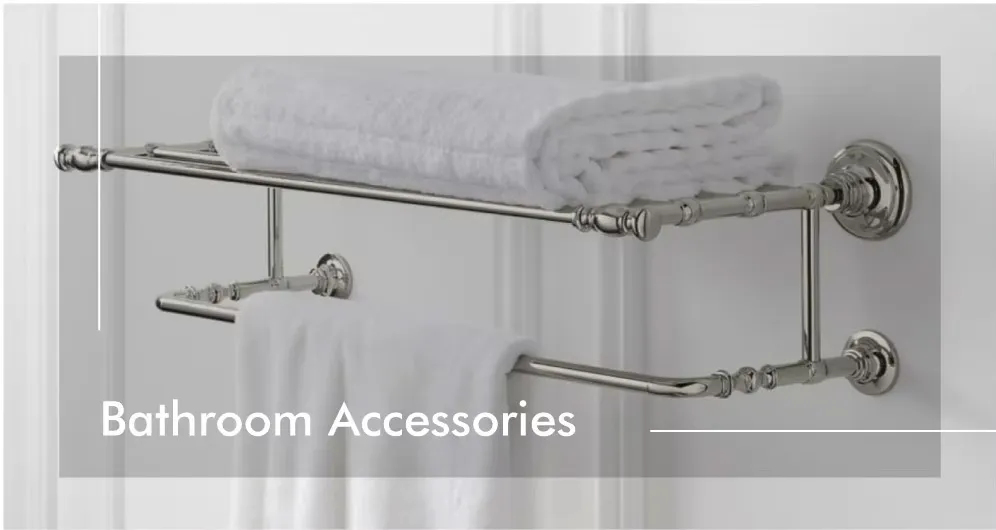
When designing or renovating a bathroom, the fixtures and accessories you select do far more than fill space — they define how the room looks, functions, and endures through years of daily use. Whether you are outfitting a single-family home, a hotel suite, or an entire apartment complex, the right bathroom accessories solutions can elevate a project from ordinary to exceptional. This guide walks you through what bathroom accessories encompass, how to choose them wisely, and why sourcing from a reliable building material supplier can make all the difference.
The term "bathroom accessories" covers a wide spectrum of products, from the purely functional to the distinctly decorative. Broadly speaking, the category includes:
These items are available in a broad range of materials and finishes — stainless steel, brass, aluminum alloy, chrome, matte black, and brushed nickel — allowing them to complement virtually any interior style, from modern minimalist to classic luxury.
For project managers, contractors, and developers, sourcing bathroom accessories piecemeal from multiple vendors creates unnecessary friction: fragmented communication, inconsistent quality, varying lead times, and ballooning logistics costs. This is where working with a one-stop architectural solution provider delivers tangible value.
Imagine needing bathroom accessories, wall panels, flooring, lighting, and plumbing pipes — all for the same project. Instead of managing five or six separate suppliers across different time zones, a single partner handles procurement, quality control, consolidation, and shipping. The result is fewer headaches, lower total cost, and a far smoother project timeline.
Key advantages of the one-stop model: unified quality standards across product categories, consolidated shipping that reduces freight expense, a single point of contact for after-sales support, and the ability to mix product types within one container load — which is especially valuable for mid-size projects that do not fill a full container with any single category.
Not all bathroom accessories are created equal. Here are the critical factors to assess when comparing suppliers:
Pro Tip
When ordering for a large project, always request physical samples before bulk production. Photos can be deceiving, and a sample lets you verify weight, finish quality, and feel — things no spec sheet can fully convey.
While bathroom accessories are important, they represent only one piece of a much larger puzzle. In any bathroom project — whether residential, hotel, or commercial — the accessories must coexist with a range of other elements: the vanity unit, the sink or basin, the toilet, the bathtub or shower enclosure, the taps and faucets, the lighting fixtures, the wall and floor tiles, and the plumbing infrastructure hidden behind the walls.
A capable sanitary fixtures/bathrooms supplier should be able to provide not just the small accessories, but also the larger sanitary ware — toilets, smart toilets, bathroom vanities, bathtubs, spa units, kitchen and bathroom sinks, shower enclosures, and taps and shower sets. When all of these items come from a single trusted source, the design language remains consistent, installation schedules align, and warranty claims become far simpler to manage.
COLORIA GROUP offers more than 400 products in the sanitary fixtures and bathrooms category alone, spanning nine sub-categories: bathroom accessories, bathroom vanities, bathtubs and spa units, taps and shower sets, sauna and steam room equipment, mirrors, kitchen and bathroom sinks, shower enclosures, and toilets including smart toilet models. This breadth means one purchase order can cover virtually every fixture in your bathroom — whether you are outfitting a single unit or a 200-room hotel.
Different project types call for different approaches to bathroom accessory selection:
Residential homes and apartments: Homeowners and residential developers typically prioritize aesthetic appeal alongside durability. Matte black and brushed gold finishes are trending, while concealed mounting gives a clean, modern look. Families with children or elderly residents may also want to incorporate grab bars and non-slip accessories without sacrificing style.
Hotels and hospitality: In the hospitality sector, consistency across rooms is paramount. Accessories must be easy for housekeeping staff to clean and maintain. Wall-mounted designs that minimize countertop clutter are preferred. Durability under heavy, repeated use is non-negotiable — a hotel towel bar that loosens after six months creates a poor guest experience and generates maintenance costs.
Commercial and public buildings: For offices, shopping malls, airports, and other public facilities, the priorities shift toward robustness, vandal resistance, and compliance with accessibility regulations. Stainless steel remains the material of choice for its strength, corrosion resistance, and ease of sanitation.
Even experienced buyers can stumble. Here are pitfalls to avoid:
Q: What is the best material for bathroom accessories in humid climates?
Stainless steel (grade 304 or 316) and solid brass are the top choices for humid and coastal environments. Both resist corrosion effectively. For budget-conscious projects, high-quality aluminum alloy with a proper anodized or powder-coated finish can also perform well. Avoid low-grade iron or untreated steel, which will rust quickly.
Q: How do I ensure finish consistency across different accessory types?
The most reliable approach is to source all accessories from the same supplier and from the same production batch when possible. Different factories may use slightly different plating formulas or powder-coat shades, even when the finish name is identical (e.g., "brushed nickel"). A supplier with quality control oversight across its entire catalog can guarantee better matching.
Q: Should I choose wall-mounted or freestanding accessories?
Wall-mounted accessories save floor and counter space, make cleaning easier, and create a cleaner visual line — ideal for modern bathrooms and hospitality projects. Freestanding accessories (such as floor-standing towel racks or shelf units) offer flexibility in placement and do not require drilling into walls, which can be an advantage in rental properties or spaces where wall alterations are restricted.
Q: How many bathroom accessories does a typical bathroom need?
A standard residential bathroom will minimally need a towel bar or ring, a toilet paper holder, a soap dispenser or dish, and a robe hook. Larger bathrooms, hotel bathrooms, and luxury suites may also include multiple towel bars, a shower caddy, a vanity tray set, a freestanding shelf unit, and decorative items such as coordinated lotion bottles and tissue box covers. The rule of thumb: equip for daily convenience without creating visual clutter.
Q: Can I get custom-designed bathroom accessories for a themed hotel or branded residence?
Yes, many manufacturers and suppliers — particularly those with in-house design and engineering teams — can produce custom bathroom accessories to match specific design briefs. This can include custom finishes, engraved logos, non-standard dimensions, and unique shapes. Custom orders typically have longer lead times and minimum order quantities, so plan accordingly.
Looking for a Reliable Bathroom Accessories Partner?
As a dedicated bathroom accessories supplier, COLORIA GROUP brings together an extensive catalog of bathroom solutions — from everyday accessories to complete sanitary ware collections — all backed by centralized quality control and efficient logistics. Whether your project is a single luxury villa, a multi-unit residential complex, or a hospitality development, our team is ready to support you from specification to delivery.
Browse our full range of sanitary fixtures and bathroom solutions, or get in touch directly to discuss your project requirements and request samples.
Recommend Products












