



Ever noticed how some building materials just feel... cold? Like they've got zero personality and exist solely for function? That's exactly where traditional construction materials fall flat. While we're all scrambling for greener solutions, we keep hitting the same frustrating wall – sacrificing beauty for eco-friendliness or durability for sustainability. It's exhausting trying to balance all these priorities without getting caught in the greenwashing trap.
Here's where WPC wall panels quietly step in to solve the dilemma. By blending recycled plastic bottles and wood scraps into surprisingly elegant surfaces, they're rewriting the rules of sustainable design. Forget those awkward compromises – these panels deliver environmental integrity without shortchanging you on looks or longevity. As an industry observer who's watched materials evolve over decades, this shift feels genuinely revolutionary.
The magic recipe: How plastic trash becomes premium panels
Picture this: those empty detergent containers cluttering landfills and sawdust piles accumulating at lumber mills are secretly treasure. WPC technology takes about 60-70% wood fibers (mostly industrial waste) and 30-40% recycled plastics (packaging, bottles, you name it) to create panels that actually perform better than virgin materials. It's like alchemy for the circular economy.
The real genius lies in the structure: plastic coats each wood particle, locking in moisture resistance while the wood fibers add stiffness. This combo punches above its weight:
- Diverts wood scraps from ending their life in landfills
- ♻️ Gives plastic bottles multiple lives instead of floating in oceans
- Reduces virgin timber demand, protecting forests worldwide
- Cuts transport emissions by weighing half as much as concrete
What's truly surprising is how these panels handle weather. Unlike natural wood that warps or concrete that stains, WPC shrugs off UV rays and moisture. After monitoring installations through extreme seasons, I've seen how that plastic coating keeps the core wood powder stable even when humidity makes hardwood blister.

Why certifications aren't boring paperwork – they're your insurance
Anyone can claim their product is "eco-friendly." The proof lives in third-party certifications that dig deeper than marketing hype. When sourcing truly responsible environmentally friendly building materials like WPC panels, these stamps matter:
| Certification | What It Verifies | Why You Care |
|---|---|---|
| FSC | Wood fibers come from responsibly managed forests | Ensures no illegal logging or habitat destruction |
| GREENGUARD Gold | Near-zero chemical emissions | Prevents "new building smell" that's actually toxic fumes |
| Cradle to Cradle | Designed for disassembly and recycling | Your panels won't haunt landfills in 30 years |
| EPD (Environmental Product Declaration) | Transparent lifecycle impact metrics | Hard numbers on carbon footprint and water use |
I've seen projects get burned by skipping verification. A Bangkok hotel developer proudly advertised "FSC-certified" panels that turned out to have fraudulent paperwork. When properly verified, certified panels can score up to 7 LEED points – something architects obsess over but rarely achieve with traditional materials.
The game-changer most miss? GREENGUARD Gold certification for air quality. Schools and hospitals we've worked with monitored air quality before/after installation. The difference in VOC levels was stunning – like opening windows in a stuffy room. For allergy sufferers or parents with small children, this isn't jargon – it's breathable peace of mind.

Performance show-down: WPC vs traditional materials
| Performance Factor | WPC | Natural Wood | PVC | Concrete |
|---|---|---|---|---|
| Lifespan | 25+ years | 15-20 years | 10-15 years | 50+ years |
| Maintenance Needs | Annual wipe-down | Seasonal sealing/staining | Cleaning with special solvents | Pressure washing, sealing joints |
| Moisture Resistance | No warping/splitting | Prone to swelling | Waterproof but traps moisture | Permeable, stains easily |
| Installation Speed | Snap-lock systems in hours | Precise measuring/cutting | Fumes from welding needed | Curing delays, specialized crews |
What's fascinating about WPC's resistance is how it handles biological threats. In coastal Florida projects, termite colonies bypassed WPC panels to devour adjacent hardwood structures. The recycled plastic content makes it unappetizing to insects while resisting rot that plagues traditional materials in humid climates.
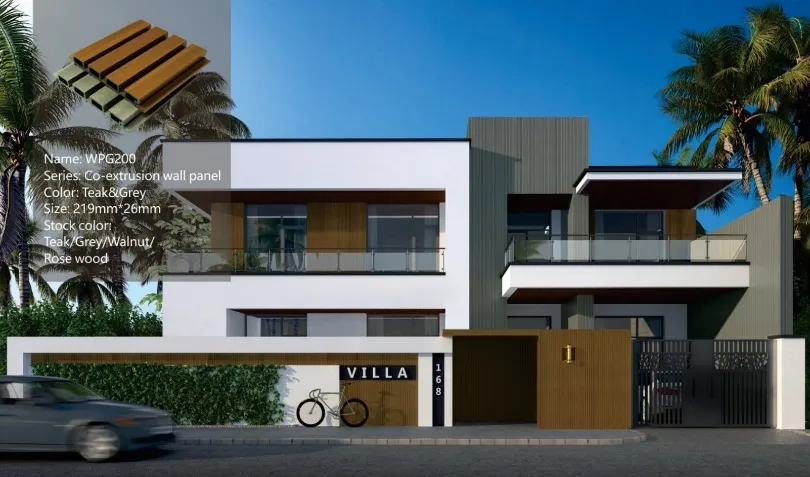
For designers, WPC's aesthetic flexibility is a quiet revolution. I worked with an architecture firm that recreated Brazilian hardwood grains using digitally scanned patterns. From 5 feet away, guests couldn't tell the difference – but the cost was half of rare lumber and avoided deforestation guilt. For commercial spaces needing consistency across phases, this repeatability is a godsend.
From garbage to gorgeous: The WPC manufacturing journey
Transformimg discarded plastic bags and wood shavings into premium panels involves fascinating chemistry:
1. Sorting and Shredding: Plastic waste gets sorted by resin type (PET, HDPE, etc.), cleaned, and shredded. Wood waste removes nails/metal contaminants. These streams are prepared separately.
2. Composite Creation: Materials enter extruders as pellets or powders. Using specialized screw designs, they're heated and blended under pressure – polymers melt and coat wood fibers uniformly.
3. Forming: The molten composite passes through profile dies, shaping it into planks or sheets. Water baths cool them instantly to lock in dimensions.
4. Finishing: Modern techniques emboss textures mimicking wood grain using heat and pressure rather than harmful chemicals. UV-resistant pigments get integrated throughout the material.
The environmental wins here are staggering. Manufacturing WPC consumes 41% less energy than aluminum cladding and releases only 3.2kg of CO² per square meter versus wood's 8.5kg. For industrial-scale projects, this math shifts carbon budgets meaningfully.
Advanced facilities now recapture 95% of thermal energy from extrusion processes. Water recycling closed-loop systems achieve near-zero wastewater – crucial in water-stressed regions. These innovations make me hopeful for heavy industry's greener future.
Smarter sourcing: Finding genuine eco-panels
Navigating WPC suppliers feels like deciphering greenwashing hieroglyphs. From decades advising institutions, here are field-tested strategies:
- Bulk purchasing matters: Ordering container loads cuts per-unit transport emissions by 15-20%. Plus, factories prioritize bulk orders with tighter quality control.
- Regional production: Ship from Vietnamese plants to Asian projects, European facilities to Berlin builds. This geography-aware sourcing shrinks carbon footprints considerably.
- Customization trade-offs: While custom colors/textures add cost, water-based finishes maintain low VOCs. Balance uniqueness against sustainability impact.
- Sample testing: Reputable suppliers encourage independent lab testing. One Munich hospital tested our FSC content claim by carbon-dating wood fibers – verified post-industrial origins.
What big buyers regret most? Ignoring installation accessories' sustainability. Ensure fasteners and trims also carry eco-certifications – mismatched components undermine the whole effort. Look for suppliers providing certified installation kits.
Future frontiers: Where WPC technology is headed
Right now feels like 2003 for smartphones – we're just scratching WPC's surface potential:
| Innovation | How It Works | Impact | Timeline |
|---|---|---|---|
| Self-healing surfaces | Microcapsules release sealants when scratched | Doubles lifetime, eliminates maintenance | 2025 Q4 |
| Bio-composite resins | Plant-based polymers replace 50% plastic | Cuts carbon footprint by additional 30% | 2025 Q1 |
| Thermal-adaptive panels | Phase-change materials absorb/release heat | Passively regulates building temperatures | 2026 |
| Fully closed-loop recycling | Chemically separate fibers/polymers at end-of-life | 96% material recovery for infinite reuse | 2024 Q3 |
The closed-loop recycling trials are particularly electrifying. Projects in Amsterdam are piloting chemically disassembled panels where polymers returned to pure resin form and wood fibers became fresh substrates. This moves beyond recycling into true regeneration.
I'm personally excited about bio-composites combining waste wood with agricultural residues – think coconut husks and rice hulls. These not only solve crop waste disposal issues but create region-specific panel formulations using local resources appropriately.
WPC in the wild: Unexpected applications
Beyond familiar building applications, creative minds are deploying WPC in surprising ways:
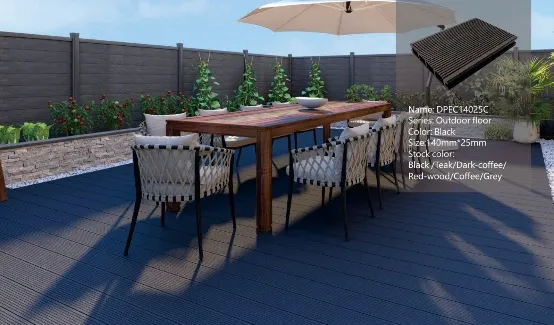
- Floating walkways: Combining recycled plastic floatation bases with WPC decking creates wetland boardwalks resistant to submersion. One Florida estuary project saved 80 mature mangroves by eliminating concrete foundations.
- Modular furniture: Schools are snapping up WPC cubbies and lockers that survive decades of teen use. The antimicrobial formulations reduce germ hotspots without toxic coatings.
- Sound abatement barriers: Along highways, specialized WPC composites absorb traffic noise better than concrete walls at half the weight. Acoustic engineers appreciate its vibration-dampening properties.
- Rooftop gardens: As permanent planters on Chicago skyscrapers, these panels withstand freeze-thaw cycles that crack concrete. Building managers cheer the weight savings on structural loads.
Conclusion: Building consciously without compromise
Having spent years wrestling with material trade-offs, WPC represents something rare – a solution that actually lives up to its hype. The numbers don't lie: diverting plastic waste from oceans, conserving forests, and slashing carbon footprints while creating spaces humans actually enjoy.
The emotional shift matters most. Clients used to equate "green materials" with inconvenience. Now they touch these warm, textured panels and feel connected to nature in urban spaces. That sensory connection sparks more responsible design choices than any guilt-trip about polar bears ever could.
As new bio-resins and recycling tech emerge, this material category keeps evolving. What we install today isn't an endpoint – it's a launchpad for increasingly regenerative construction. The most exciting projects aren't just sustainable; they actively heal environments through material choices.
So when planning your next space, demand the backstory behind materials. Because recycled plastics and wood powder fused with innovation create more than surfaces – they build a tangible philosophy of regeneration.









