
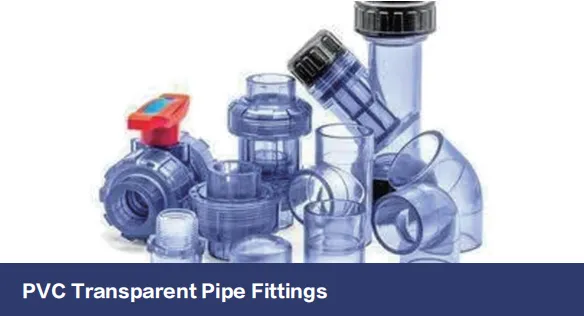
You know that moment when you're trying to troubleshoot a plumbing issue and wish you could see inside the pipes? That’s where transparent PVC fittings shine. Unlike traditional opaque pipes, these clear fittings let you watch fluids move through the system. Imagine running a lab experiment or managing an aquarium—you can spot clogs, contamination, or flow inconsistencies immediately.
Real-Life Application: In chemical processing plants, engineers avoid costly shutdowns by visually inspecting pipes for sediment buildup. Home aquarists love how they can monitor water quality without disassembling anything.
Don’t let the clarity fool you—these aren’t fragile glass tubes. Transparent PVC handles pressure, corrosion, and impact like a champ. They resist chemicals that would eat through metal pipes, and with UV-resistant coatings, they’re even outdoor-ready.
Cost Saver: Compared to stainless steel or copper, transparent PVC costs less upfront and lasts longer. No constant replacements or maintenance headaches.
Ever wrestled heavy pipes into place? Transparent PVC fittings weigh a fraction of metal alternatives. Cutting, joining, or repositioning them is straightforward—no welding torches or specialty tools needed.
DIY-Friendly: Homeowners upgrading irrigation systems or small-scale hydroponics appreciate how manageable they are. Less physical strain, faster projects.
Choosing transparent PVC isn’t just practical—it’s a nod to sustainability. These fittings are 100% recyclable, reducing landfill waste. Manufacturers increasingly use eco-friendly production methods, making them a guilt-free option for green projects.
Circular Economy Win: Schools and hospitals prioritize them for their low environmental footprint. Even industrial facilities are switching to meet sustainability targets.
From breweries to biolabs, transparent PVC fits everywhere. Here’s why:
Meet FDA standards without compromising visibility. Watch syrup flow in bottling plants or beer circulate in breweries—ideal for hygiene-focused environments.
IV drips, dialysis machines, and lab setups rely on these pipes. Sterility is non-negotiable, and you can’t inspect what you can’t see.
Modern buildings use transparent PVC in open-design bathrooms or display aquariums—functional and sleek.
Worried about toxins? Transparent PVC is free from BPA and phthalates. Its smooth interior resists bacterial growth—critical in medical labs or kitchens.
Peace of Mind: Parents installing hydroponic gardens for kids can relax knowing these pipes won’t leach harmful chemicals into water.
Who says pipes have to be eyesores? Transparent PVC adds a futuristic, clean look. High-end restaurants and tech offices use them visibly for their minimalist aesthetic.
Design Hack: Pair them with LED lights to turn functional plumbing into an art installation.
Transparent PVC fittings cost 40–60% less than metal counterparts. Factor in reduced installation labor and zero corrosion maintenance, and the savings add up fast.
Farmers’ Secret: Large-scale greenhouses save thousands yearly by switching from metal irrigation to durable, reusable transparent PVC.
Freezing winters or chemical spills? No problem. These pipes handle acids, alkalis, and solvents without degrading. Perfect for automotive fluids or outdoor agricultural setups.
Safety Net: Wastewater treatment plants use them because they withstand harsh chemicals while offering visual flow confirmation.
Need a 2-inch elbow for an industrial line or a tiny connector for a lab device? Transparent PVC comes in countless sizes and configurations—tees, couplings, reducers—all standardized yet adaptable.
Project Flexibility: Craft beer microbreweries mix and match fittings for compact setups while industrial factories scale seamlessly.
While UV-resistant coatings extend outdoor life, direct sunlight can still cause yellowing. Best practice? Paint exposed sections or sleeve them in protective casings. Indoors, longevity isn’t even a question.
Pro Tip: For permanent outdoor installations, opt for manufacturer-rated UV-resistant versions.
Expect smarter applications: IoT flow sensors integrated into transparent pipes or self-cleaning nano-coatings. Researchers are even testing bioactive versions that neutralize contaminants. As water scarcity grows, these innovations will be game-changers.
Sustainable Vision: Cities like Copenhagen and Seattle now mandate transparent piping in municipal water projects to boost public accountability.
Recommend Products












