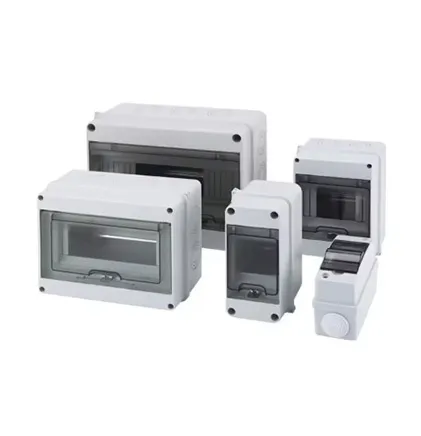
Every modern home depends on a safe and reliable electrical system. At the heart of that system sits a device many homeowners rarely think about until something goes wrong: the electrical distribution box. Also called a distribution board, breaker panel, or consumer unit, this box is the central hub that receives power from the main supply and routes it to every circuit in your house. Choosing the right
electrical distribution box for home use is not just a matter of convenience; it is a decision that directly affects the safety of your family and the longevity of your appliances.
Whether you are building a new house, renovating an older property, or managing a commercial construction project, the quality of the distribution box and its associated components matters. In this guide, we will walk through the essentials of home distribution boxes, what to look for when sourcing them, and how working with an experienced
one-stop building materials supplier can simplify your entire procurement process.
What Is an Electrical Distribution Box and Why Does It Matter?
An electrical distribution box is a metal or plastic enclosure that houses circuit breakers, busbars, and protective devices. It takes the incoming electrical supply from the utility grid and distributes it across multiple circuits, each serving a different area of the home, such as lighting, kitchen appliances, air conditioning, and power outlets.
The distribution box does more than just split power. It protects your home. When a circuit draws too much current, the corresponding breaker trips and cuts off the flow, preventing overheating and potential fires. This is why selecting a well-built distribution box from reputable
distribution box manufacturers is critical. A poorly made unit may fail to trip when needed, or worse, trip unnecessarily and disrupt your daily life.
Key Components Inside a Home Distribution Box
Understanding what goes into a distribution box helps you make informed sourcing decisions. Here are the main components you will find inside a quality unit:
Main Switch: The master control that can shut off power to the entire house. Essential for emergency situations and maintenance work.
Circuit Breakers (MCBs): These automatic switches trip when they detect an overload or short circuit, isolating the faulty circuit without affecting the rest of the home.
Residual Current Devices (RCDs): Safety devices that detect leakage current and disconnect power almost instantly, protecting against electric shock.
Busbars: Conductive metal strips that distribute electricity from the incoming supply to individual circuit breakers.
Neutral and Earth Busbars: Dedicated bars for connecting neutral and grounding conductors, ensuring fault currents have a safe path to the ground.
Enclosure: The outer casing that protects internal components from dust, moisture, and accidental contact.
Together, these components form a coordinated system that manages, protects, and directs electricity throughout the building. For new construction projects, sourcing all these items from a single supplier saves time and ensures compatibility.
Types of Distribution Boxes for Different Applications
Not all homes have the same electrical needs. A small apartment requires a different setup than a large villa with electric heating, a home office, and an EV charger. Distribution boxes generally fall into several categories:
Consumer Units: The most common type for residential use. Compact and designed to handle typical household loads with a mix of MCBs and RCDs.
Main Distribution Boards (MDB): Used in larger homes or multi-unit buildings, these distribute power to sub-boards on different floors or wings.
Sub-Distribution Boards (SDB): Secondary panels that receive power from the main board and serve a specific zone, such as a garage, workshop, or outdoor area.
Weatherproof Distribution Boxes: Designed for outdoor installation, with sealed enclosures that protect against rain and dust. Ideal for garden lighting, pool pumps, and external power outlets.
The choice depends on the size of the property, the number of circuits, and whether any outdoor power distribution is needed. A knowledgeable supplier can help you determine the right configuration.
Don't Overlook Switches, Sockets, and Cables
A distribution box is only as effective as the components connected to it. Once the power is safely distributed, it flows through
switches & socket units and travels along cables to reach every light, appliance, and outlet. Inferior switches and sockets can cause arcing, overheating, and premature failure, while low-quality cables may have inadequate insulation or undersized conductors that pose a serious fire risk.
For large-scale projects, sourcing
cables wholesale from a trusted supplier ensures consistent quality across the entire installation. Whether you need PVC-insulated building wire, armored cable for underground runs, or specialized fire-resistant cable for safety circuits, the materials must meet the relevant international standards. Cutting corners on wiring is never worth the risk.
How to Choose the Right Supplier for Your Electrical Materials
When sourcing distribution boxes and electrical components, working with a comprehensive supplier offers clear advantages over piecing together orders from multiple vendors. Here is what to look for:
Product Range: A supplier that carries distribution boxes, circuit breakers, switches, sockets, cables, and lighting under one roof eliminates the headache of coordinating multiple shipments.
Quality Assurance: Products should meet recognized international standards for electrical safety. Ask about certifications and testing procedures.
Customization Capability: Every project is different. The ability to provide custom configurations — whether a specific breaker arrangement or a bespoke enclosure size — is a valuable differentiator.
Export Experience: For clients sourcing from overseas, a supplier with established export logistics and familiarity with destination-country regulations makes the process smoother.
After-Sales Support: Technical guidance, installation documentation, and responsive communication are essential, especially for commercial and multi-unit residential projects.
COLORIA GROUP: Your One-Stop Solution for Building Materials
Based in Foshan, China, COLORIA GROUP is a leading provider of comprehensive interior and exterior building material solutions. With 13 product categories spanning walls, flooring, ceilings, pipes and fittings, sanitary fixtures, customized furniture, home appliances, windows and doors, decorative profiles, elevators, electrical fixtures and cables, lights, and solar panels, the company truly lives up to its tagline: "One-Stop Solution For Building Materials."
COLORIA GROUP supplies a full range of electrical products including distribution boxes, switches and sockets, and various cable types. Their electrical fixtures and cables category covers everything from residential consumer units to industrial-grade distribution panels, supported by an experienced team that understands the requirements of projects across the Middle East, Southeast Asia, Africa, and beyond. With an overseas agent in Saudi Arabia, the company is well-positioned to serve clients in the Gulf region with local support and fast response times.
Beyond electrical components, COLORIA GROUP's extensive product catalog means contractors and developers can source materials for the entire project — from structural pipes and wall panels to bathroom fixtures and kitchen appliances — through a single point of contact. This integrated approach reduces procurement complexity, shortens lead times, and helps ensure consistent quality across all building materials.
Installation and Maintenance Best Practices
Even the best distribution box will underperform if installed incorrectly or neglected over time. Keep these guidelines in mind:
Mount the distribution box in a dry, well-ventilated area away from water sources and flammable materials.
Ensure all wiring is done by a licensed electrician who follows local electrical codes.
Label each circuit clearly so anyone in the household can identify which breaker controls which area.
Schedule a visual inspection at least once a year. Look for signs of overheating such as discolored breakers, a burning smell, or buzzing sounds.
Keep the area around the distribution box clear of stored items. You need unobstructed access in an emergency.
If breakers trip frequently, do not simply reset them. Investigate the underlying cause — it may be an overloaded circuit or a faulty appliance.
Ready to source high-quality electrical distribution boxes and building materials for your next project? COLORIA GROUP offers a complete range of products backed by decades of industry experience. Whether you need a single distribution box for a home renovation or a full container of electrical fixtures and building materials for a large-scale development, our team is ready to help.
Visit
www.coloriagroup.net to explore the full product catalog, or contact us directly at
+86-13630185350 (WhatsApp/WeChat) to discuss your requirements. Together we build the future.