
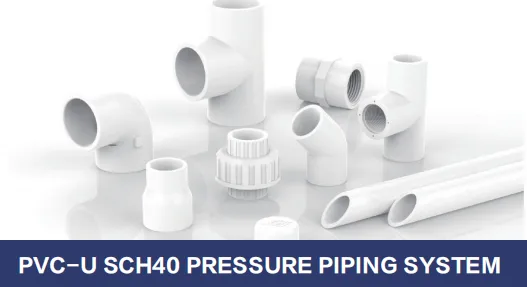
Hey there! If you're knee-deep in a plumbing project or designing an industrial system, you've probably realized that not all PVC pipes are created equal. With options like Schedule 40 and Schedule 80 staring back at you in the hardware aisle, it's easy to feel overwhelmed. Don't sweat it – we're diving deep into the world of PVC-U SCH40 pressure piping systems to help you make the smartest choice for your needs.
Picture this: You're building an irrigation system for your backyard garden, setting up a new pool filtration system, or maybe even working on a light commercial project. What you need is something reliable but not overkill – enter Schedule 40 PVC. This is the workhorse of the piping world, and for good reason.
Why folks love SCH40: It hits that sweet spot between durability and affordability. The walls are thinner than Schedule 80 (we'll get to that later), which makes it lighter and easier to handle. Plus, it's got this great flexibility when it comes to installation – whether you're using solvent welding, threaded connections, or mechanical fittings, SCH40 plays nice.
Where does it shine? Think residential plumbing, pool and spa setups, irrigation systems, and aquariums. Basically, anywhere the pressure stays under 150-200 PSI and the temperature doesn't go crazy high (we're talking below 140°F). It's like that dependable friend who's always there but doesn't make a fuss about it.
Now, let's talk about SCH40's bulkier cousin. Imagine you're working with high-pressure water lines, chemical processing equipment, or industrial systems that push the limits. That's when Schedule 80 steps into the spotlight.
Schedule 80 PVC is the heavyweight champion – literally. Those walls are about 25-30% thicker than SCH40's, which translates to serious pressure handling (we're talking 250-300 PSI) and extra durability. It laughs in the face of harsh chemicals and higher temperatures.
Don't mix them up! While SCH40 wears white, SCH80 rocks a distinct gray color – nature's way of preventing installation oopsies. That industrial-grade industrial pvc pressure pipes project you've been planning? This might be your match.
| Feature | Schedule 40 PVC | Schedule 80 PVC |
|---|---|---|
| Wall Thickness | Thinner walls (standard duty) | Thicker walls (heavy duty) |
| Pressure Rating | 150-200 PSI (depends on pipe size) | 250-300 PSI (handles high pressure) |
| Weight & Handling | Lighter and more flexible | Heavier but extremely durable |
| Temperature Tolerance | Handles moderate temperatures well | Better performance in high-heat situations |
| Material Cost | Budget-friendly (less material) | More expensive (extra material) |
| Common Applications | Homes, gardens, pools, light commercial | Factories, water treatment plants, chemical labs |
| Visual Identification | White color | Gray color |
Seeing them side-by-side really puts things in perspective, right? It's not about which is "better" – it's about which is better for you . Kinda like choosing between hiking boots and running shoes – both are great footwear, but you wouldn't wear either to the wrong event.
Let me paint a picture: You're renovating your bathroom and need to reconfigure some pipes. Or maybe you're installing a new sprinkler system to keep that lawn lush. This is SCH40 territory. Here's why:
Heck, if you're building a koi pond or aquarium setup, SCH40 is practically made for it. It's the Goldilocks of pipes – not too heavy, not too light, just right for everyday jobs.
Now imagine: Your factory needs new lines for moving chemicals between vats. Or you're setting up a high-pressure irrigation system for a commercial farm. This is where SCH80 earns its keep.
Sure, it'll cost more upfront, but when you're dealing with hazardous materials or high-pressure systems, that extra investment pays for itself in reliability and safety. It's like buying a work truck instead of a sedan – both get you there, but one's built for heavy lifting.
Listen, even the best pipe won't save you from a botched installation. Here's how to avoid rookie mistakes:
Pro tip: Always match your joining method to your pipe's thickness. Trying to thread SCH40? Use extra caution – those thinner walls can crack if you overtighten.
PVC has this quirk – its pressure rating drops as temps climb. That pipe rated for 200 PSI at room temperature? Might only handle 100 PSI at 140°F. Always check the manufacturer's charts for your specific conditions. Nothing ruins a project faster than a burst pipe you thought could handle it.
Let's talk about those "I wish I'd thought of that" moments that haunt DIYers and pros alike. A little foresight goes a long way:
And for heaven's sake, label your pipes! Nothing's more frustrating than tracing lines years later trying to remember what goes where. A little masking tape and sharpie today saves hours of headache tomorrow.
So where does this leave us? Here's the cheat sheet:
️ Choose SCH40 When: You're working on residential or light commercial projects, budget matters, and pressures stay under 200 PSI. Think gardens, pools, home renovations, and small business setups.
️ Choose SCH80 When: You're dealing with industrial applications, harsh chemicals, high pressures (250+ PSI), or situations where failure isn't an option. Factories, chemical plants, and high-pressure municipal systems fit here.
Both types have their place in the piping universe. It's not about declaring a winner, but about matching the right tool to your specific job. Like choosing between a scalpel and a machete – both cut, but you know which one you'd want for surgery.
At the end of the day, whether you're building a dream greenhouse or setting up manufacturing equipment, understanding these differences means you'll sleep better at night – no worrying about leaks, bursts, or costly do-overs. Now go forth and pipe confidently!
Recommend Products












