


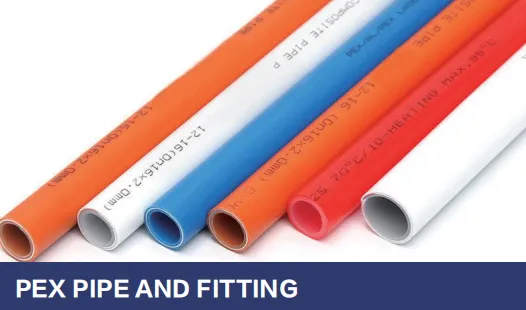
Stop guessing about your plumbing project – we'll help you choose the perfect system
Decoding the PEX Puzzle
If you're staring blankly at rows of plastic tubing in the hardware store wondering, "What's the real difference between these PEX types?", relax – you're not alone. Most homeowners feel just as confused when it comes to plumbing upgrades. Think of me as your personal plumbing translator, here to turn technical jargon into everyday understanding.
Picture this: you're renovating your basement and need reliable pipes that won't freeze during winter storms. Or you're installing that dream radiant floor heating system. These aren't just theoretical decisions – they're choices that determine whether you'll be enjoying cozy toes or dealing with flooded floors years down the road.
After thoroughly reviewing materials from plumbing specialists like PlumbingNav and 247Garden, plus insights from building material suppliers like Colorria Group, I've distilled the must-know information into this plain-English guide. We'll explore brass vs. plastic fittings, expansion vs. crimp connections, and the critical differences between PEX-A and PEX-B. By the end, you'll feel confident choosing plumbing materials like a pro – no hard hat required.
Breaking Down PEX: The Three-Tiered Reality
PEX-A: The Flexible Performer
Manufactured using the Engel method (a peroxide process), PEX-A has more cross-linking – that's engineering speak for "bends without breaking." Imagine unfurling a garden hose versus trying to bend a PVC pipe. That's the difference we're talking about.
Key advantages:
- ☀️ Withstands freezing without bursting – ice cubes inside your pipes? No problem
- Easily navigates tight corners without elbow joints
- Uses expansion fittings that maintain full pipe diameter for better flow
- "Memory" that self-seals around connections
But consider this:
- Requires pricey expansion tools ($100-$500)
- ⏱️ Takes longer to seal than crimp connections
- ️ Less resistant to chlorine degradation in hot water lines
PEX-B: The Cost-Effective Standard
Created through the moisture-cure process, PEX-B functions like a stiff, resilient drinking straw. It's the workhorse you'll find at most hardware stores.
Key advantages:
- Budget-friendly materials and tool investment
- Superior resistance to chlorine and chemical corrosion
- Excellent burst strength under static pressure
- Simple crimp connections that DIYers master quickly
But consider this:
- ⚠️ Crimp rings create flow restrictions at each connection
- Lacks flexibility – tight bends require special fittings
- Once kinked, it can't recover its shape (you'll need to replace damaged sections)
The Forgotten Sibling: PEX-C
While less common, PEX-C is the "microwave dinner" of plumbing options – quick to produce but not as durable. Its inconsistent cross-linking throughout the pipe creates potential weaknesses.
Quick assessment: It's less expensive initially but more prone to ruptures over time. Most professionals avoid it for pressurized systems. Unless you're making decorative projects, steer toward PEX-A or B.
Brass vs. Plastic Fittings: Decoding Metal vs. Plastic
Brass Fittings: The Premium Choice
- Lifespan: Outlasts plastic by decades (often 50+ years)
- Thermal stability: Won't expand/contract dramatically with temperature changes
- Reliability: Less susceptible to impact damage during installation
- Compatibility: Works seamlessly with all PEX types
Ideal for: Underground lines, hot water applications, high-pressure systems
Considerations:
- ⚠️ Potential dezincification issues with low-quality brass (look for lead-free, DZR-marked fittings)
- 3-5x more expensive than plastic counterparts
Plastic Fittings: The Budget Builder
- Corrosion-proof: Impervious to acidic water conditions
- Lightweight: Easier to install overhead
- Cost-friendly: Saves 60-80% over brass
- Flow advantage: Smooth interior walls reduce friction
Ideal for: Short-term projects, low-pressure systems, areas with aggressive water chemistry
Considerations:
- More fragile during installation – requires careful handling
- ️ Thermal expansion can create leaks over cycles
Professional Tip: When installing plastic fittings, always lubricate with plumbing-grade silicone. This creates a better seal and prevents scoring during installation.
Expansion vs. Crimp Connections: Beyond Basic Hardware
Expansion Method (PEX-A)
This works like buttoning a shirt one size too small: expand the collar so you can slip the button through, then it contracts snugly around the fitting.
Why pros love it:
- Creates the only joint that maintains 100% flow capacity
- ️ Tolerates freeze-thaw cycles better than crimps
- Self-sealing design simplifies leak detection
The catch:
- $300+ tool investment (but rentable for $30/day)
- ♂️ Requires specific technique mastery
- ⏳ Slow cure time in cold environments (30+ minutes)
Crimp Method (PEX-B)
Think of this like attaching a hose clamp: slide a metal ring over the pipe and compress it tightly around the fitting.
Why DIYers choose it:
- $25 tool kit makes it accessible
- ⚡️ Near-instant seals for quick progress
- Standardized design – all rings fit all tools
Know these limitations:
- ⚠️ Flow reduction (30-40% at each joint!)
- ️ Vulnerable to cracks during freeze events
- Caliper checks required for every connection
| Project Type | Recommended Method | Critical Considerations |
|---|---|---|
| Whole-house repiping | PEX-A Expansion | Optimal flow, freeze tolerance worth investment |
| Single fixture upgrade | PEX-B Crimp | Cost-effective for small spaces |
| Radiant floor heating | PEX-A Expansion | Continuous loops without flow restrictions |
| Exterior hose bibs | PEX-A Expansion | Superior freeze resistance in vulnerable areas |
Real-World Recommendations: Choosing Your Solution
-
️ For freeze-prone regions:
Choose PEX-A expansion systems every time. That self-healing feature around fittings prevents microscopic leaks after winter freezes.
-
Whole-house plumbing upgrade:
Combine PEX-A pipes with brass fittings. The long-term reliability justifies the upfront cost – think of it as buying peace of mind.
-
Renovating a basement bath:
PEX-B with crimp connections offers sufficient performance without breaking the budget for limited fixture runs.
-
Radiant floor heating systems:
PEX-A expansion joints shine here, with continuous loops maintaining optimal water flow and heat distribution.
The Critical Upgrade Rule: Use ONE PEX type throughout your entire system. Mixing types sets you up for maintenance nightmares when connections fail unpredictably. Whichever you choose – commit to it exclusively.
The PEX Horizon: Emerging Options for 2025
The latest innovations focus on solving historic weaknesses:
- Odor-free formulations: Some manufacturers now solve "plastic pipe smell" issues in drinking lines
- Antimicrobial linings: Specialty coatings reduce biofilm buildup in warm water systems
- Transition fittings: Simplified adapters make upgrading partial systems more reliable
- Reduced leeching: New certifications address chemical migration concerns
For building materials in residential and commercial projects, selecting proper piping plays a critical role in your building's longevity. Always choose suppliers with certification documentation readily available.
Making Your Choice Simple
When standing in the plumbing aisle, remember this simple mantra: "Flexible needs? Go PEX-A. Budget project? Choose PEX-B."
The plumbing decisions you make today determine whether you'll enjoy trouble-free showers tomorrow or end up tearing down drywall chasing leaks. While PEX-B offers an affordable entry point, investing in PEX-A with expansion fittings brings resilient, maintenance-friendly performance that saves money across decades of use.
For radiant floor heating projects, prioritize uninterrupted flow with expansion joints. For tight retrofit spaces, embrace crimp connections where flow restrictions won't impact performance. And always – always – maintain consistency throughout your system.
Remember: Good plumbing hides quietly in your walls. Great plumbing lets you forget it even exists.










