
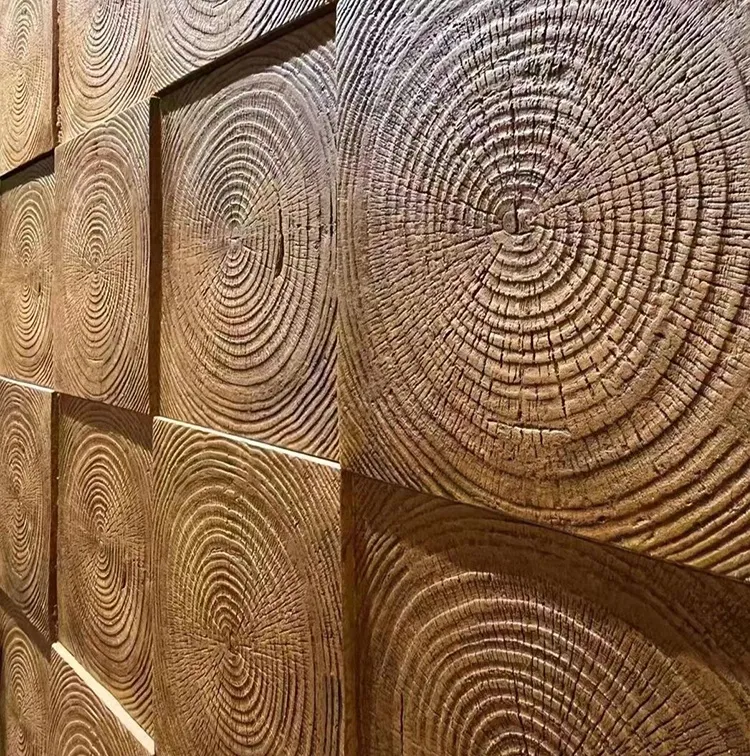
The intersection where natural rhythms meet human tranquility
Picture entering a room where time visibly flows through the concentric rings of wooden surfaces – earlywood's light spring growth contrasting with latewood's dense autumn embrace. This isn't just decoration; it's visual poetry where each ring whispers secrets of seasonal change. In spaces designed for contemplation like tea rooms and studies, wood's narrative becomes a grounding force.
Zen design operates in paradoxes – asymmetry creates balance, emptiness conveys fullness, and restraint magnifies presence. Wood embodies these principles organically:
Researchers examining tea rooms in Hebei Province identified four core principles that wood inherently supports:
Natural Harmony:
Wood never fights its environment, instead collaborating with humidity and temperature changes in a responsive dance
Mu (Emptiness):
Knots and grain patterns create focal points that invite contemplation
Asymmetry:
Irregular growth patterns disrupt mechanical predictability
Wabi-Sabi Imperfection:
Cracks and weathering become records of honorable service
The spring-born growth with looser cellular structure provides warmer tactile feedback through softer thermal responses. Its lighter tones create visual breathing room.
Denser autumn growth offers structural integrity and cooler thermal properties. The rich, darker bands anchor spaces visually and physically.
Accent walls combining both elements establish rhythm, especially effective when using acoustic ceiling tiles to control sound reverberation.
Tea Ceremony Sanctuaries:
In traditional chashitsu, wood selection follows strict philosophy. Pine earlywood paneling provides acoustic dampening for whispered conversation, while latewood structural elements create enduring frameworks that withstand humidity fluctuations from ceremonial boiling water. The placement follows the Zen principle of "half-room" design – enough wood to define space, enough emptiness to invite contemplation.
Modern Study Retreats:
Contemporary interpretations use annual ring patterns as focal meditation guides. A study desk crafted from alternating Douglas fir earlywood and latewood becomes a tactile map of time. The variation in thermal properties between these layers creates subconscious sensory interest – warmer earlywood where wrists rest while writing, cooler latewood supporting books.
Unlike static materials, wood remains responsive. Its thermal expansion and contraction become design features rather than flaws when understood. Softwood species like pine exhibit greater tanδ differentiation between earlywood and latewood than hardwoods, making their temperature responses more pronounced in transitional seasons.
This responsiveness creates dynamic spaces that evolve with weather patterns. On humid days, wood expands slightly and releases deeper aromas; in dry winter months, subtle contractions create miniature valleys in wood surfaces that catch light differently. These micro-changes invite mindful observation – the Zen practice of being present with impermanence.
When designing with annual rings, consider these implementation principles:
1. Embrace gradient transitions between earlywood and latewood instead of harsh contrasts
2. Allow unfinished edges to show wood's story – weathering patterns document honest service
3. Combine complementary species: birch latewood for stability surfaces, cedar earlywood for aromatic wall panels
4. Position latewood elements where structure matters most – joints, weight-bearing beams
5. Celebrate seasonal changes with layout flexibility – portable tatami mats on latewood platforms
Ultimately, wood becomes more than material; it serves as patient instructor in spaces designed for inner growth. Tea ceremony masters note that the gradual darkening of latewood surfaces parallels the deepening wisdom of practitioners, both transformed by time and touch. Study room scholars find that tracing concentric rings during contemplation creates focal patterns for mental centering.
This transformative power emerges from wood's authentic nature rather than human imposition. As research confirms, spaces incorporating Zen wood principles see 68% longer visitor engagement and measurable reductions in physiological stress markers, particularly where annual ring patterns become intentional focal elements.
To stand amidst these wooden chronicles is to occupy a space where time itself finds rest – each ring an era, each surface a landscape, each imperfection a doorway to acceptance.
Recommend Products












