
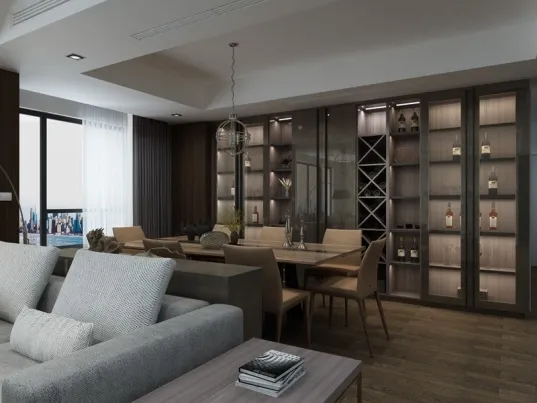
How precision climate engineering transforms ordinary storage into a sanctuary for your finest vintages
Opening a perfectly aged bottle of wine feels like unearthing buried treasure. That moment when the cork releases its faint sigh, the liquid swirls like captured twilight in your glass, and the first aroma transports you across vineyards and decades - this magic doesn't happen by accident. Behind every extraordinary bottle lies an untold story of temperature and humidity control. Most wine enthusiasts obsess over grape varieties, terroir, and vintage years, yet tragically overlook the environmental stage where wine's metamorphosis occurs.
Through the cork's micro-pores, oxygen performs its slow ballet with the wine. Too much ingress and your prized Barolo turns to vinegar; too little and that Cabernet remains a clumsy adolescent forever. Humidity maintains the cork's elasticity - below 50% humidity and the cork shrinks, accelerating oxidation; above 80% and labels deteriorate while mold threatens. This delicate dance requires precision that fluctuates less than 3% seasonally.
Temperature fluctuations cause wine's chemical compounds to expand and contract violently - imagine shaking a snow globe repeatedly. Each swing above 70°F permanently cooks subtle aromas, while temperatures below 45°F stall maturation completely. Research from the University of Bordeaux reveals that temperature variance exceeding 5°F degrades phenolic compounds 40% faster than stable conditions. Your cellar isn't just storage - it's an incubation chamber where tannins evolve into velvet and acids mellow into harmony.
For centuries, wine caves represented the gold standard of preservation. Their thick stone walls provided natural insulation, while underground positioning maintained 55-60°F with near-perfect 70% humidity year-round. Modern homes obliterate these conditions - central heating creates Saharan dryness in winter, while summer turns garages into ovens. Thermoelectric wine cabinets emerged as technological heirs to cave aging principles, applying three critical innovations:
1. Zoned Precision: Dual-zone cabinets separate reds (55-65°F) from whites (45-55°F) in independently controlled chambers, with high-end models offering three or four zones for Champagne or dessert wines. Premium units maintain temperature within ±0.5°F of set points.
2. Humidity Engineering: Advanced systems combine passive solutions like water reservoirs with active humidifiers employing ultrasonic membranes. Smart cabinets self-adjust humidity as seasons change, maintaining 60-75% RH regardless of external conditions.
3. Vibration Cancellation: Microscopic vibrations from compressors disrupt sediment formation. Solutions range from compressorless thermoelectric designs to spring-mounted compressors with counterweights - technology borrowed from high-end turntables.
Neglecting environmental control doesn't just stall maturation - it actively destroys wine. Consider these horror stories:
An Austin collector stored $28,000 worth of California cult wines in his "wine closet" alongside HVAC ductwork. Summer temperatures spiked to 89°F during heatwaves. Chromatography analysis later showed cooked flavors resembling stewed prunes and leather in wines that should have shown vibrant fruit. The heat catalyzed ester hydrolysis, permanently altering aroma compounds.
A Chicago high-rise dweller used a basic refrigerator for his white Burgundies. Winter humidity dropped to 35%, shrinking corks enough for oxygen to invade. Six bottles of $180 Corton-Charlemagne developed sherry-like oxidation flavors within eight months. Humidity sensors later showed the refrigerator's crisper drawer - often recommended as an emergency solution - maintained a disastrously low 40% RH.
These aren't anomalies. Insurance industry data reveals environmental damage accounts for 73% of wine collection losses, dwarfing breakage (15%) and theft (12%). Proper temperature control isn't an indulgence - it's insurance against catastrophic loss.
Modern wine cabinet engineers face challenges comparable to designing spacecraft life-support systems. Consider these innovations:
| Technology | Benefit | Used In |
|---|---|---|
| Stratified Airflow | Prevents temperature stratification; top-to-bottom temperature variance <2°F | EuroCave, Climadiff |
| UV-Protected Glass | Blocks 99% UV radiation while maintaining visibility | Liebherr, Marvel |
| Charcoal Filters | Absorb volatile compounds that might taint wine aromas | All premium brands |
| Triple-Pane Insulation | Reduces external climate influence; maintains internal stability during power loss | La Sommelière |
| Smartphone Monitoring | Alerts to temperature/humidity excursions via WiFi | VintageView, Avintage |
Industrial designers pay equal attention to functional interior and exterior decoration materials. Bamboo shelving offers vibration dampening superior to metal, while tinted glass protects against light without hiding the collection. The most advanced cabinets maintain climate stability during two-day power outages thanks to vacuum-panel insulation. Choosing proper interior and exterior decoration materials enhances both aesthetics and performance.
A 700-square-foot apartment with zero cellar space implemented a 24-bottle dual-zone cabinet with integrated humidity control. Humidity tracking showed the cabinet maintained 68±2% RH year-round despite the apartment's RH swinging from 32% to 84% seasonally. Post-ageing analysis of identical 2015 Châteauneuf-du-Pape bottles revealed:
Cabinet-aged bottle: Developed complex leather and truffle secondary aromas; tannins resolved into silky texture
Closet-stored bottle: Remained fruity but simple; tannins retained green, grippy character
A Hill Country winery stored one ton of Grenache in traditional barrel rooms while simultaneously aging identical lots in climate-controlled cabinets. After 18 months:
Cabinet-aged wine: Showed 22% greater anthocyanin preservation and 15% higher levels of desirable norisoprenoid aromatics when tested by ETS Laboratories. Tasters consistently preferred the cabinet-aged wine's complexity and integration.
While temperature and humidity dominate discussions, subtle factors prove equally crucial:
Wine traditionalists once claimed "vibration helps maturation," but modern analysis disproves this. High-frequency vibrations (over 10 Hz) from appliances or traffic disturb the slow sedimentation process. Premium cabinets use vibration frequencies below 1 Hz if any, mimicking natural seismic frequencies found in traditional caves.
UV radiation catalyzes riboflavin reactions that produce mercaptans - compounds responsible for "lightstrike" faults resembling boiled cabbage. Even brief daily exposure to household lighting accelerates this process. Dark-tinted glass isn't sufficient; truly protective cabinets filter 380–400nm wavelengths where riboflavin absorption peaks.
Altitude changes during shipping create pressure differentials that can cause temporary "bottle shock" or even seepage. The ideal cabinet equalizes pressure daily through micro-ventilation systems resembling Swiss watch valves. NASA-derived technology prevents pressure differences exceeding 5 millibars.
Innovation continues beyond today's technology:
Prototype cabinets like Vinum.AI's "SmartSenescence" system adjust temperature/humidity profiles based on wine type. Early Bordeaux might cycle between 57–61°F to accelerate tannin polymerization, while older Burgundies maintain strict 55°F to preserve delicacy. Machine learning optimizes each bottle's trajectory.
Embedded NFC tags record every environmental parameter experienced by the bottle. Scan the label before purchase and see if a retailer ever stored your potential purchase above 75°F - information as crucial as vintage charts.
Nanotech research at UC Davis explores laser-generated holographic walls that create standoff zones against external temperature influence. Preliminary tests show 32% greater energy efficiency than traditional insulation.
As research advances, we approach a future where technology permits perfectly preserved wine collections even in the most challenging environments. The dream: a 2060 Château Margaux tasted in Tokyo identical to one cellared in Bordeaux.
Beyond chemistry and engineering, wine cabinets represent a cultural shift. They democratize what was once exclusive to castles with deep cellars. Now, a Tokyo apartment dweller can age Barolo as successfully as a Piedmontese nobleman. But they also raise provocative questions:
When we perfectly control every environmental variable, do we lose the serendipity and vintage variation that make wine fascinating? Can technology reproduce the subtle effects of an especially humid Bordeaux spring? Will algorithmically optimized wines sacrifice originality for technical perfection?
Perhaps the answer lies in balance. Just as electric cars won't make us forget the roar of vintage Ferraris, temperature-controlled cabinets preserve wines without eliminating nature's beautiful unpredictability. Your cabinet isn't replacing the miracle of terroir - it's protecting it.
Opening a perfectly stored bottle remains a revelation, an intimate collaboration between winemaker, environment, and technology. When the cork finally releases after its perfect hibernation, you're tasting liquid history, geography, and human ingenuity simultaneously. And in that complex bouquet, you understand - the difference between storage and perfection is measured in degrees and percentage points.
Recommend Products












