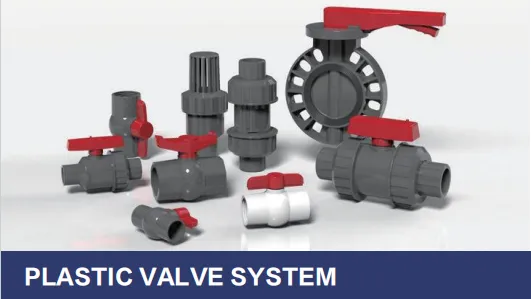
In the dynamic world of building materials, where innovation often feels like a race to keep up with evolving needs, there's a quiet revolution happening—one that's reshaping how suppliers create, customize, and deliver the components that hold our structures together. At the heart of this shift lies the intersection of 3D printing and custom plastic valve systems, a pairing that's not just changing manufacturing processes but redefining what's possible for everyone from a small-scale contractor to a large Saudi Arabia building materials supplier. Let's dive into how this integration is breaking down traditional barriers, unlocking new levels of efficiency, and putting the power of customization directly into the hands of those who need it most.
The Traditional Landscape of Plastic Valve Systems
Not long ago, if you walked into the warehouse of a plastic valve system supplier, you'd likely find rows upon rows of standardized components—valves, fittings, and pipes designed to fit "most" projects. For decades, the industry operated on a one-size-fits-all model, driven by the limitations of traditional manufacturing. Creating a custom valve or a unique pipe fitting meant investing in expensive molds, waiting weeks (or even months) for production, and accepting that small-batch orders were often cost-prohibitive. This was especially challenging for specialized sectors: hospitals needing fire-resistant materials, schools requiring non-toxic components, or commercial buildings with unconventional layouts that demanded tailored solutions.
Take, for example, a ppr pipe and fitting supplier working with a client in Saudi Arabia. The client's project—a modern shopping mall with curved architectural elements—needed pipe fittings that could bend at specific angles without compromising water flow or structural integrity. Under the old model, the supplier would have to either modify existing parts (risking leaks or inefficiencies) or commission a custom mold, driving up costs and delaying the project. For smaller suppliers, especially those focused on niche markets like upvc pipe solutions or ppr pipe and fitting solutions, this rigidity often meant losing business to larger companies with the resources to absorb mold costs—even if their products weren't a perfect fit.
The problem wasn't just about customization, though. Traditional manufacturing also left a trail of waste: excess material from cutting and shaping, discarded prototypes, and obsolete inventory when project requirements changed. For a plastic valve system supplier committed to sustainability—a growing priority in today's building industry—this was a significant pain point. Clients, too, felt the strain: over-ordering parts to avoid delays, settling for suboptimal components, or incurring unexpected costs when last-minute design tweaks required entirely new orders.
The 3D Printing Revolution: A New Era of Possibility
Enter 3D printing, or additive manufacturing—a technology that's been around for decades but has only recently matured enough to disrupt industries like building materials. Unlike traditional subtractive manufacturing, which cuts away material from a block, 3D printing builds objects layer by layer, using digital designs to guide the process. For plastic valve system suppliers, this has been a game-changer. Suddenly, creating a custom valve no longer requires a mold; it requires a digital file, a 3D printer, and the right material. The implications are profound, especially for those in the business of providing plastic valve system solutions.
Consider the design phase alone. With 3D printing, engineers can draft a valve or fitting on a computer, tweak it in real time based on client feedback, and have a prototype printed within hours. No more waiting for mold shops or guessing if a design will work in practice. This speed is transformative for suppliers, who can now respond to client requests with "yes, we can" instead of "we'll see." For a Saudi Arabia building materials supplier catering to fast-track construction projects—where deadlines are tight and designs often evolve mid-build—this agility is a competitive advantage.
Material flexibility is another key benefit. 3D printers can work with a range of plastics, from durable UPVC to heat-resistant PPR, allowing suppliers to match materials to specific project needs. Need a valve that can withstand high temperatures for a commercial kitchen? Use a heat-resistant filament. Require a lightweight fitting for a hospital ceiling where weight is a concern? Opt for a reinforced but low-density material. This level of precision wasn't feasible with traditional manufacturing, where material choices were often limited by mold compatibility.
Traditional Manufacturing vs. 3D Printing: A Side-by-Side Look
|
Factor
|
Traditional Manufacturing
|
3D Printing
|
|
Lead Time for Custom Parts
|
4–8 weeks (mold creation + production)
|
1–3 days (design + printing)
|
|
Cost for Small Batches
|
High (mold costs dominate)
|
Low (no mold fees; cost scales with material use)
|
|
Design Flexibility
|
Limited (molds restrict complex geometries)
|
Unlimited (supports intricate shapes, hollow structures, and unique angles)
|
|
Material Waste
|
20–30% (scrap from cutting/shaping)
|
5–10% (only material needed for the part is used)
|
|
Prototyping Iterations
|
Expensive and time-consuming (new molds needed for changes)
|
Fast and affordable (digital tweaks, no mold changes)
|
Custom Solutions in Action: From Hospitals to High-Rises
The true power of 3D-printed custom plastic valve systems lies in their ability to solve real-world problems. Let's take a hospital project, for instance. Hospitals require plumbing systems that are not only reliable but also easy to clean and resistant to corrosion—factors that directly impact patient safety. A traditional plastic valve system might meet basic standards, but what if the hospital's design includes a narrow utility closet where standard valves won't fit? Or a specialized treatment room that needs a valve with extra ports for monitoring water pressure? With 3D printing, a plastic valve system supplier can create a valve that's precisely sized for that closet, with custom ports and a smooth, bacteria-resistant surface—all without the need for a mold.
Schools present another set of challenges. Many educational facilities are now built with sustainability in mind, aiming to reduce water waste and energy consumption. A ppr pipe and fitting supplier using 3D printing can design fittings that minimize pressure drops, ensuring water flows efficiently through the system and reducing the load on pumps. For a school in a remote area, where shipping large, standardized parts is costly, 3D printing also offers the possibility of on-site production: a local supplier could download a digital design, print the needed valves and fittings, and have them installed the same day. This not only cuts down on shipping emissions but also eliminates delays caused by supply chain disruptions.
Commercial buildings, too, are reaping the benefits. Imagine a luxury hotel with a rooftop pool that requires a custom drainage system to handle heavy rainfall. The pool's unique shape—curved to match the building's architecture—needs drains and valves that follow its contours. A 3D-printed solution allows the plastic valve system supplier to create components that fit the pool's exact dimensions, preventing leaks and ensuring efficient water flow. For the hotel's owners, this means fewer callbacks for repairs, lower maintenance costs, and a finished product that aligns perfectly with their design vision.
To understand the real impact of this integration, let's look at a hypothetical but realistic example: a mid-sized Saudi Arabia building materials supplier specializing in plastic valve system solutions and ppr pipe and fitting solutions. Three years ago, the company was struggling to compete with larger suppliers who could afford to produce standardized parts at scale. Their clients—mostly contractors working on commercial and residential projects—often requested custom components, but the cost of molds made these orders unprofitable.
Everything changed when they invested in a small fleet of industrial 3D printers. Initially, they used the technology for prototyping, but soon realized its potential for production. One client, a contractor building a high-rise apartment complex, needed 50 custom angle valves for a narrow plumbing chase between walls. Under the old system, this would have required a $10,000 mold and a 6-week lead time. With 3D printing, the supplier designed the valves in 2 days, printed them in 3 days, and delivered them for a fraction of the cost. The client was so impressed that they expanded their order to include custom ppr pipe fittings for the entire project.
Today, the supplier reports a 40% increase in repeat business, thanks to their ability to offer tailored solutions. They've also reduced material waste by 60%, a selling point for eco-conscious clients. "We're no longer just a supplier—we're a problem solver," says the company's operations manager. "Clients come to us with challenges, and we can say, 'Let's design a solution together.' That's the power of 3D printing."
Benefits for Suppliers and Clients Alike
For plastic valve system suppliers, the shift to 3D printing isn't just about keeping up with trends—it's about survival in an increasingly competitive market. By embracing customization, suppliers can differentiate themselves from larger, one-size-fits-all competitors. Smaller suppliers, in particular, can carve out niche markets by specializing in unique solutions: think custom valves for historic buildings, eco-friendly fittings for green construction projects, or compact components for urban high-rises with limited space. This ability to niche down also strengthens client loyalty; when a client knows they can get exactly what they need from a supplier, they're less likely to shop around.
Cost efficiency is another major win. Traditional manufacturing requires suppliers to maintain large inventories of standardized parts, tying up capital and risking obsolescence. With 3D printing, suppliers can adopt a "print-on-demand" model, producing parts only when ordered. This reduces storage costs and minimizes waste from unsold inventory. For clients, this translates to lower prices for small orders and the freedom to adjust designs mid-project without incurring massive retooling fees. A contractor working on a residential renovation, for example, can realize halfway through the project that a valve needs to be slightly larger—and have the revised part printed and delivered within days, rather than weeks.
Perhaps most importantly, 3D printing fosters collaboration between suppliers and clients. In the past, the relationship was often transactional: a client ordered a part, and the supplier delivered it. Now, suppliers act as partners, working alongside architects, engineers, and contractors to design components that meet specific project needs. This collaborative approach not only leads to better outcomes but also builds trust—a valuable currency in an industry where reputation matters.
Overcoming the Hurdles: Challenges in Integration
Of course, integrating 3D printing into plastic valve system production isn't without its challenges. For one, there's the initial investment in technology. Industrial-grade 3D printers, specialized software, and training for staff can be expensive, especially for small suppliers. However, as the technology becomes more mainstream, prices are dropping, making it accessible to a wider range of businesses. Many suppliers are also finding creative ways to offset costs, such as partnering with other businesses to share printer time or starting with small, high-margin custom orders to fund expansion.
Material limitations are another hurdle. While 3D printers can work with a variety of plastics—including UPVC and PPR—some high-performance materials (like those needed for extreme temperatures or chemical resistance) are still difficult to print with. However, material science is advancing rapidly; new filaments are being developed that mimic the strength and durability of traditional plastics, and in some cases, even exceed them. For example, a recent breakthrough in reinforced PPR filaments has made 3D-printed ppr pipe and fitting solutions as strong as their traditionally manufactured counterparts.
Regulatory compliance is also a concern, especially in sectors like healthcare and construction where safety standards are strict. Suppliers must ensure that 3D-printed components meet the same certifications as traditionally made parts—testing for pressure resistance, chemical compatibility, and durability. While this adds a layer of complexity, it's not insurmountable. Many industry bodies are now updating standards to include 3D-printed materials, and third-party testing labs are offering specialized services to verify compliance.
Future Trends: What's Next for 3D Printing and Custom Solutions?
As 3D printing technology continues to evolve, the possibilities for custom plastic valve system solutions are only expanding. One emerging trend is the use of AI-driven design tools, which can analyze a project's requirements (water flow, space constraints, material preferences) and automatically generate optimized valve or fitting designs. This would allow suppliers to turn around custom orders even faster, reducing the time from client request to delivery from days to hours.
On-site printing is another area to watch. Imagine a construction site where a truck equipped with a 3D printer arrives, downloads the necessary designs, and prints valves, fittings, or even small pipes on demand. This would eliminate shipping delays entirely and allow for real-time adjustments as the project progresses. For remote areas or emergency situations—like a natural disaster where infrastructure needs to be rebuilt quickly—this could be a game-changer.
Sustainability will also play a bigger role. As the building industry moves toward net-zero goals, 3D printing's ability to reduce material waste will become even more valuable. Some suppliers are already experimenting with recycled plastics as printing materials, turning waste from traditional manufacturing into high-quality filaments. This not only lowers costs but also aligns with the growing demand for eco-friendly building solutions.
Conclusion: A New Era of Collaboration and Creativity
The integration of 3D printing and custom plastic valve system solutions is more than just a technological upgrade—it's a shift in mindset. For too long, the building materials industry was constrained by the limitations of traditional manufacturing, forcing clients to compromise on design and suppliers to prioritize scale over service. Today, thanks to 3D printing, that's no longer the case.
Whether you're a plastic valve system supplier looking to stand out in a crowded market, a contractor tackling a one-of-a-kind project, or a homeowner dreaming of a space that fits your exact needs, this integration offers something for everyone. It's about putting creativity back into construction, empowering suppliers to be problem solvers, and giving clients the confidence that their vision can become reality—one layer, one valve, one custom solution at a time.
As we look to the future, it's clear that the partnership between 3D printing and custom plastic valve systems will only grow stronger. The question isn't whether this technology will transform the industry—it's how quickly suppliers and clients will embrace it. For those who do, the rewards are clear: more efficient projects, happier clients, and a front-row seat to the next chapter in building materials innovation.