
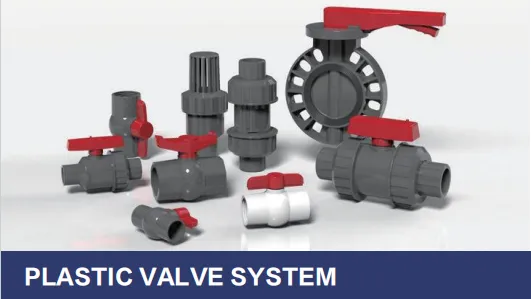
In the intricate web of modern infrastructure, where water flows through cities, chemicals course through industrial plants, and sterile fluids circulate in hospitals, one component quietly holds the line against chaos: the seal. In plastic valve systems—ubiquitous in plumbing, construction, healthcare, and manufacturing—sealing mechanisms are the unsung heroes that prevent leaks, ensure efficiency, and safeguard public health. A single faulty seal can lead to catastrophic consequences: water contamination in residential buildings, equipment damage in factories, or compromised sterility in hospitals. For plastic valve system supplier and industries reliant on these systems, the evolution of sealing technology isn't just a matter of innovation—it's a commitment to reliability, safety, and sustainability.
Over the past decade, the demand for more durable, versatile, and cost-effective plastic valve systems has surged. Urbanization, stricter environmental regulations, and the need for energy-efficient infrastructure have pushed manufacturers to rethink traditional sealing methods. What once relied on basic compression gaskets or rubber O-rings now incorporates cutting-edge materials, precision engineering, and even smart technology. This article explores the technological leaps transforming sealing mechanisms in plastic valves, why they matter, and how they're reshaping industries from water management to healthcare.
To appreciate today's advances, it's helpful to look back at the challenges of traditional sealing mechanisms. Early plastic valves, popularized in the mid-20th century for their corrosion resistance and low cost, often used simple compression seals: a rubber or neoprene gasket squeezed between metal or plastic components to block fluid flow. While effective in low-pressure, ambient-temperature applications, these seals had critical flaws. Over time, exposure to chemicals, UV radiation, or temperature fluctuations caused the gaskets to harden, crack, or degrade, leading to leaks. In high-pressure systems—common in upvc pipe supplier projects for municipal water distribution—compression seals often failed due to uneven stress distribution, especially at joint connections.
O-rings, introduced later, improved flexibility but still struggled with compatibility. Standard rubber O-rings, for example, couldn't withstand the harsh chemicals in industrial wastewater systems or the extreme temperatures of hot water lines in residential buildings. For ppr pipe and fitting supplier serving the plumbing industry, this meant frequent callbacks for repairs and a reputation for unreliability. "We used to field complaints about leaks in PPR systems within 5–7 years," recalls a technical director at a leading pipe manufacturer. "The O-rings would degrade from constant exposure to chlorinated water, and by then, the valve seats were already worn. It wasn't just a product issue—it was a trust issue."
Another pain point was installation error. Traditional seals relied heavily on human precision: overtightening could warp plastic components, while undertightening left gaps for leaks. In large-scale projects, like commercial buildings using upvc pipe supplier materials, inconsistent installation across hundreds of valves led to unpredictable failure rates. The industry needed a solution that minimized human error, adapted to varying conditions, and lasted longer than the systems themselves.
Today's sealing innovations address these historical challenges through a combination of material science, design engineering, and manufacturing precision. Here are the breakthroughs driving the next generation of plastic valve systems:
At the heart of any seal is its material, and recent advances in polymer science have yielded elastomers that redefine durability. Traditional rubber seals, prone to oxidation and chemical attack, are being replaced by blends like fluorinated elastomers (FKM) and perfluoroelastomers (FFKM) , which resist oils, acids, and temperatures from -20°C to 260°C. For industries handling aggressive chemicals—such as mining or pharmaceutical manufacturing—these materials are game-changers. A pex pipe and fitting supplier specializing in underfloor heating systems now uses FFKM seals, which withstand the high temperatures of hot water circulation without hardening or leaking, extending system lifespans from 10 to 25 years.
Another innovation is thermoplastic elastomers (TPEs) , which combine the elasticity of rubber with the processability of plastic. TPE seals can be molded into complex shapes with tight tolerances, making them ideal for irregular valve geometries. For pvc-u sch40 pressure piping system supplier serving municipal water projects, TPE-based seals offer superior flexibility, reducing the risk of cracks during installation or ground movement.
Gone are the days of one-size-fits-all seals. Advanced manufacturing techniques like 3D printing and computer numerical control (CNC) molding now allow for seals with intricate, application-specific designs. For example, multi-lip seals —3D-printed with overlapping, flexible lips—create multiple barriers against leaks, even if one lip wears down. This is particularly valuable in high-vibration environments, such as industrial pumps, where traditional flat gaskets would fail quickly.
CNC molding takes precision further by ensuring consistent thickness and compression properties across every seal. A leading plastic valve system supplier reports that CNC-molded seals reduce dimensional variation to less than 0.02mm, compared to 0.1mm with traditional molding. This precision minimizes installation errors: contractors no longer need to over-tighten valves to compensate for uneven seals, reducing stress on plastic components and extending their lifespan.
One of the biggest challenges in sealing is maintaining performance as systems age. Valves expand and contract with temperature changes; pipes shift due to ground settlement; connections loosen over time. Enter self-adjusting seals , designed to compensate for these variables. These seals use spring-loaded cores or shape-memory alloys that "push back" when compression decreases, ensuring a tight seal even as components wear. For upvc pipe supplier projects in earthquake-prone regions, self-adjusting seals have been a revelation: they maintain integrity during ground movement, preventing leaks that could lead to water service disruptions.
In residential plumbing, self-adjusting seals in ppr pipe and fitting supplier systems have reduced maintenance calls by 40%, according to a 2024 industry report. Homeowners no longer face sudden leaks from loose valve connections after years of temperature cycling.
The rise of the Internet of Things (IoT) has brought "smart" technology to sealing mechanisms, turning passive components into active monitoring tools. Sensor-integrated seals embed microchips or conductive materials that detect changes in pressure, temperature, or electrical resistance—early signs of a failing seal. These sensors wirelessly transmit data to a central system, alerting maintenance teams to potential issues before leaks occur.
For example, a plastic valve system supplier partnered with a municipal water authority to install smart seals in a 50km upvc pipe network. Within six months, the system identified 12 developing leaks—including two in critical hospital supply lines—allowing repairs to be made during off-hours, avoiding service interruptions and contamination risks. In commercial buildings, smart seals in HVAC systems have cut energy waste by 15% by preventing air leaks that force systems to work harder.
Even the most durable elastomers can struggle with highly corrosive substances, such as industrial solvents or saltwater. To address this, manufacturers now apply nanocomposite coatings —thin layers of materials like graphene or ceramic—to seal surfaces. These coatings act as a barrier, preventing chemicals from reaching the seal material while maintaining flexibility. A pex pipe and fitting supplier serving marine applications reports that graphene-coated seals have doubled the lifespan of valves in saltwater desalination plants, where traditional seals degraded within 2–3 years.
To quantify the impact of these advances, let's compare traditional and advanced sealing mechanisms across key performance metrics. The table below, compiled from data by leading industry associations and plastic valve system supplier case studies, highlights the tangible benefits of modern sealing technology:
| Metric | Traditional Seals (e.g., Rubber O-Rings, Compression Gaskets) | Advanced Seals (e.g., Multi-Lip TPE, Smart Seals) |
|---|---|---|
| Average Lifespan | 3–5 years (residential), 1–2 years (industrial) | 10–15 years (residential), 5–8 years (industrial) |
| Temperature Range | -10°C to 80°C | -40°C to 200°C (FKM blends) |
| Chemical Resistance | Limited (degrades in oils, acids, UV exposure) | High (resists most industrial chemicals, saltwater, chlorine) |
| Installation Tolerance | Low (requires precise tightening; prone to human error) | High (self-adjusting; forgiving of minor installation variations) |
| Leak Detection | Reactive (detected only after visible leaks) | Proactive (smart seals alert to issues before failure) |
| Total Cost of Ownership | Higher (frequent replacements, repair costs) | Lower (fewer replacements, reduced downtime) |
Advanced sealing mechanisms aren't just technical achievements—they're solving real problems for industries worldwide. Here's how they're making an impact:
Municipal water systems rely on upvc pipe supplier and pvc-u sch40 pressure piping system supplier to deliver clean water to millions. Leaks in these systems waste billions of gallons annually and risk contamination from soil or bacteria. Advanced multi-lip TPE seals, paired with smart leak detection, have reduced non-revenue water loss by 25% in pilot projects in Riyadh and Dubai. "In one district, we installed smart-sealed valves and detected a hidden leak under a school playground within 48 hours," says an engineer at a Saudi-based water authority. "Repairs were made before the leak could reach the groundwater."
Hospitals demand zero tolerance for leaks, especially in systems carrying sterile water, pharmaceuticals, or medical gases. ppr pipe and fitting supplier now offer valves with silicone-blend seals that meet ISO 10993 biocompatibility standards, ensuring no leaching of harmful substances. Additionally, chemical-resistant coatings protect seals from frequent exposure to disinfectants like hydrogen peroxide. A hospital in Dammam upgraded its plumbing system with these seals and reported a 60% reduction in microbial growth at valve connections, a critical factor in preventing healthcare-associated infections.
High-rise buildings face unique challenges: varying water pressure across floors, temperature fluctuations between indoor and outdoor pipes, and limited access for repairs. pex pipe and fitting supplier have responded with self-adjusting seals that maintain pressure consistency, even in 50-story towers. In Jeddah's King Abdullah Economic City, a commercial complex using these seals has operated leak-free for seven years, despite extreme summer temperatures reaching 50°C.
In factories, downtime from valve failures can cost thousands of dollars per hour. Advanced seals with nanocomposite coatings have become indispensable for plastic valve system supplier serving chemical and food processing plants. A petrochemical facility in Jubail replaced traditional seals with FKM-coated multi-lip seals and saw unplanned shutdowns drop by 70%. "We used to replace valves every 18 months; now they last 5+ years," notes the plant manager.
As industries push for greater sustainability and efficiency, the future of sealing mechanisms in plastic valves promises even more innovation. Here are three trends to watch:
For plastic valve system supplier , these trends mean collaboration across disciplines: material scientists, data analysts, and engineers working together to create seals that are not just barriers, but active contributors to system performance.
Technological advances in sealing mechanisms have transformed plastic valve systems from simple flow controllers to sophisticated, reliable components that underpin modern infrastructure. What began as a quest to fix leaks has evolved into a mission to build safer, more efficient, and sustainable systems. For industries, this means lower costs, reduced risk, and greater peace of mind. For the public, it means cleaner water, safer hospitals, and more resilient cities.
As plastic valve system supplier continue to innovate, one thing is clear: the seal will remain the heart of these systems. And in that heart, technology, precision, and care will continue to drive progress—one leak prevented, one system protected, one community served.
Recommend Products












