
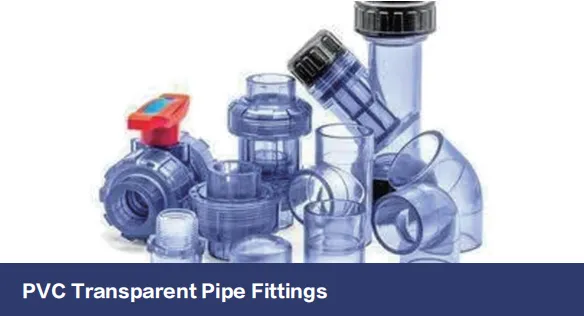
Hey there, fellow makers and educators! Let's chat about one of the most versatile materials hiding in plain sight at your local hardware store. You've probably walked past them dozens of times – those clear PVC pipes in the plumbing aisle. But what if I told you these humble tubes aren't just for carrying water? They're a goldmine for creating incredible teaching tools and experimental devices!
I've spent years helping educators transform ordinary materials into extraordinary learning experiences, and clear PVC pipes hold a special place in my toolkit. Their transparency combined with their structural integrity makes them perfect for science experiments, physics demonstrations, engineering prototypes – you name it!
Hot Tip: Look for Schedule 40 or Schedule 80 clear PVC pipes. The clarity varies by brand, so ask to see samples before buying in bulk!
Unlike their opaque cousins, transparent pipes let students actually see the action happening inside. Imagine showing fluid dynamics principles where kids can witness vortex formation in real-time. Or creating pneumatics demonstrations where air flow becomes visible. That "aha!" moment when abstract concepts become tangible? That's the magic of transparent PVC.
Here's what makes them so great:
Before we dive into projects, let's talk gear. You don't need fancy equipment to start creating these experimental devices. Here's what I always keep in my educational prototyping kit:
Now let's get to the good stuff - projects that turn abstract concepts into hands-on learning experiences!
This crowd-pleaser helps students visualize viscosity, laminar vs turbulent flow, and Reynolds numbers. The transparency lets learners track dye injection patterns.
Educational Focus: Physics principles, engineering concepts
Build Steps:
Introduce automation concepts with this air-powered logic system. Transparent pipes let students see actuator movement sequencing.
Educational Focus: Automation principles, control systems
Build Steps:
Demonstrate Pascal's law with this hands-on engineering model where students can calculate pressure multiplication.
Educational Focus: Mechanical advantage, fluid power transmission
Build Steps:
Perfect for environmental science classes to study filtration rates with different media.
Educational Focus: Environmental engineering, water treatment
Build Steps:
Visualize sound transmission through air with this fascinating device using suspended particles.
Educational Focus: Acoustics, wave mechanics
Build Steps:
This device helps students visualize centrifugal force principles with variable speed control.
Educational Focus: Rotational dynamics, force vectors
Build Steps:
Show students how different materials transfer heat at varying rates using thermal imaging.
Educational Focus: Thermodynamics, material science
Build Steps:
Pro Tip: Always pressure test your systems at 1.5x expected operating pressure before student use! Add safety relief valves to pressurized systems.
Classroom safety is non-negotiable. Through trial and error, I've developed these golden rules:
Consider scaffolding your projects - build basic versions first before adding complex instrumentation. Start with qualitative demos before adding quantitative measurement tools.
These aren't just cool demos - they're powerful teaching tools when integrated properly:
Predict-Observe-Explain Framework:
Have students predict outcomes before demonstrations
Data Journaling:
Incorporate measurement recording and graph creation
Engineering Challenges:
"Can you modify this system to move 20% more water?"
Failure Analysis:
Purposely create failures for troubleshooting exercises
Align projects with NGSS standards or your local curriculum. For example, the fluid dynamics demonstrator beautifully addresses HS-PS2-1 (Motion and Stability: Forces and Interactions).
Educational budgets are always tight. Here's how I maximize value:
For environmental consciousness, remember PVC can be recycled through specialized programs. Or better yet - design projects to last years through rugged construction.
Over the years, I've seen these creations spark incredible student engagement moments. Like when Maria in my physics class shouted "I finally get Bernoulli!" while tweaking her PVC wind tunnel. Or watching Jaden's team troubleshoot their fluidic logic circuit for three straight hours after school - not because they had to, because they were hooked.
That's the real magic. When abstract concepts from textbooks transform into concrete understanding through clear pipes and colored water. When that quiet student suddenly starts explaining pressure differentials with hand gestures because they actually get it.
And here's the beautiful part - you don't need fancy equipment to start. Grab some clear pipes, a few fittings, and let the experiments begin. Your students' curiosity will do the rest.
Now go make something amazing! I'd love to hear what teaching devices you create - tag me online with your PVC masterpieces.
Warmly,
Your fellow educational maker
Recommend Products












