
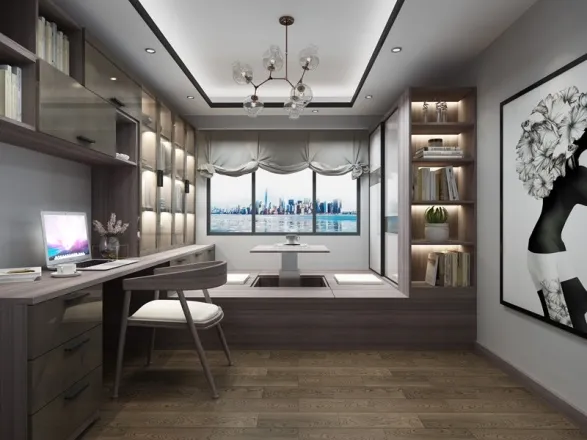
Imagine stepping barefoot onto a surface that breathes with the seasons—cool in summer, insulating in winter, carrying the subtle scent of dried grass. This isn't just flooring; it's tatami, Japan's thousand-year-old secret to harmonious living. Traditionally confined to washitsu (Japanese-style rooms), tatami mats are staging a global design revolution. As we seek authenticity in our living spaces, these eco-friendly flooring solutions bridge cultures and aesthetics with surprising versatility.
Tatami isn't about recreating a Japanese tea house in your apartment—it's about borrowing its soul. The magic happens when East meets West, when tradition shakes hands with modernity. Nordic minimalism discovers a kindred spirit in tatami's simplicity. Wabi-sabi finds its perfect canvas in the mat's natural imperfections. Industrial lofts gain warmth through this unexpected organic texture. This cultural remix creates spaces that feel both grounded and groundbreaking.
Forget everything you know about rigid design rules. We're entering an era of aesthetic alchemy where Scandinavian furniture sits happily beside tatami, where exposed steel beams frame rush-grass mats, where Marie Kondo's "spark joy" meets wabi-sabi's beauty-in-decay. The journey begins with understanding tatami's DNA then recombining it with your existing space through fearless mixing and matching.
Tatami speaks in whispers, not shouts. Its power lies in subtlety—textural rather than chromatic, atmospheric rather than ornamental. Each mat comprises three essential elements: the doko (compressed rice straw base), the omote (woven igusa rush cover), and the heri (border fabric). Together they create a sensory experience:
Traditional sizing varies regionally—Kyoto's kyoma (0.95m x 1.91m) differs from Tokyo's edoma (0.88m x 1.76m). Modern design takes liberties with scale:
Contemporary tatami evolved beyond traditional forms. Foldable rush mats transform from sleeping surfaces to meditation corners. Tatami rugs create portable zen zones. Water-resistant versions even venture onto balconies. Manufacturers now offer customization—extra-thick mats for enhanced insulation, stain-resistant treatments, and hypoallergenic weaves.
Scandinavian design's love affair with natural materials makes tatami a soulmate. Both prioritize texture over color, comfort over ostentation. The magic lies in their tactile synergy:
Avoid matching tatami with blonde wood—create contrast instead. Dark walnut or ebony pieces create elegant silhouettes against the mat's pale surface. Float a single tatami platform beneath a reading nook by window, framed with sheer curtains dancing in Nordic light.
Tatami serves as the physical embodiment of wabi-sabi—appreciating impermanence and imperfection. As rush mats age, their color deepens from fresh bamboo green to honeyed amber:
Traditional tatami borders showcase Japanese artistry—indigo-dyed cottons, gold-leaf patterns, or subtle geometric kasuri weaves. These become framed art pieces when juxtaposed with rammed-earth walls or tarnished copper light fixtures.
The ultimate yin-yang partnership. Tatami introduces organic warmth to spaces defined by steel, concrete and glass:
Industrial spaces benefit from tatami's acoustic dampening—counteracting the echo chamber effect. Modern hybrids with charcoal-infused igusa grass or darker weaves bridge aesthetic gaps.
Modern tatami aligns perfectly with the sustainable design ethos through its eco-friendly flooring credentials. Unlike synthetic alternatives, quality igusa rush matting:
Blending tatami successfully requires rethinking conventional decorating rules. Follow these actionable strategies:
Tatami excels at creating functional zones within open-plan spaces. Elevate sections 15-30cm to define areas:
Contemporary tatami withstands modern furniture when properly protected:
Tatami's texture transforms under different lighting:
Tatami thrives with simple seasonal rhythms:
Oslo Micro-Loft : Combined tatami with Nordic design principles:
Brooklyn Artist Studio : Industrial-tatami fusion:
Kyoto Modern Machiya : Reinventing tradition:
Tatami's true power lies beyond visual aesthetics. Its multi-sensory appeal transforms spatial experiences:
Barefoot Connection : The subtle resilience underfoot creates grounding intimacy—wood planks feel inert by comparison.
Seasonal Dialogue : Notice how mats feel cooler than hardwood in summer yet warmer in winter. This responsive quality makes interiors feel alive.
Biophilic Bridge : The grassy scent stimulates olfactory memories of nature. Studies show igusa rush purifies air better than many houseplants.
Sound Sculpting : Absorbs harsh frequencies in echo-prone modern spaces, creating intimate sonic cocoons. Notice how voices soften.
"Walking on tatami after removing my shoes became a transition ritual—shedding the outside world's chaos for domestic calm. That first step onto the mat signaled my nervous system: you're home." — Mika, Osaka-born designer in Copenhagen
We stand at the intersection of cultural preservation and creative reinvention. Tatami evolves from cultural artifact to design collaborator when we honor its essence while reimagining its applications.
The most successful integrations balance:
So take the leap. Place that Foldable Rush Mat beside your Eames lounge. Lay Tatami Rug under industrial shelving. Frame vintage Heri borders as minimalist art. This cultural dialogue between tatami and global design languages creates something greater than the sum of its parts—a visual dialect that speaks of rootedness and possibility simultaneously.
Your space deserves this layered conversation between materials that span centuries and continents. Where tradition and modernity intersect, true originality lives.
Recommend Products












