
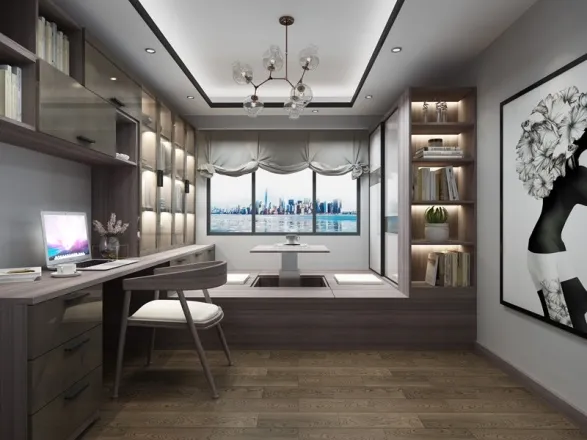
Picture this: You step into a serene hotel lobby, and instead of cold marble underfoot, your feet meet springy rush grass that somehow feels both sturdy and gentle. That faintly sweet, grassy aroma transports you to the Japanese countryside. This isn't just flooring – it's an experience. Tatami mats, those iconic woven wonders from Japan, have leaped far beyond traditional homes into commercial spaces where they're creating unforgettable atmospheres.
Forget sterile hotel corridors and cookie-cutter decor. More hotels, B&Bs, and tea houses worldwide are discovering how tatami transforms ordinary spaces into immersive cultural journeys. But it's not just about aesthetics; these mats bring surprising practical benefits to commercial settings too.
Originally reserved for nobility in Japan's Heian period (794-1185), tatami gradually spread to tea houses and temples. By the Edo period (1603-1868), they became standard in Japanese homes, evolving from luxury to cultural staple. That transition from exclusivity to accessibility mirrors what's happening today in commercial spaces.
The magic starts with construction: A traditional tatami features a rice straw core ("doko") wrapped in soft rush grass ("igusa"), bordered by cloth edging ("heri"). This natural composition creates its signature resilience and climate-regulating properties. Modern variations might use compressed wood chips or foam cores, but premium commercial installations still favor natural materials where possible.
Fun fact! Tatami sizes vary regionally across Japan – Kyoto mats (京間畳) are largest at ~0.95m x 1.91m, while Tokyo mats (江戸間) are more compact at ~0.88m x 1.76m. In commercial projects, these dimensions matter because they literally define space. Rooms get measured in "jo" – the number of tatami mats they hold. Ever stayed in an 8-jo suite? Now you know what that means!
From Tokyo skyscrapers to Bali retreats, hotels are reimagining tatami beyond just sleeping surfaces. At Kyoto's Hoshinoya resort, tatami-lined corridors muffle footsteps, creating silent transitions between spaces. "Guests immediately relax when they feel that gentle bounce underfoot," notes manager Kenji Tanaka. "It physically signals they're entering a sanctuary."
High-end properties leverage tatami as premium differentiators:
For B&Bs, tatami solves three key challenges: creating distinctiveness on a budget, ensuring memorable guest experiences, and maintaining practicality. Unlike hotels, most B&Bs incorporate tatami selectively rather than throughout.
Creative B&B tatami implementations include:
"Will guests ruin them?!" is the #1 B&B owner fear. Solutions? Commercial-grade igusa mats with antimicrobial treatments in high-traffic areas, plus simple care cards: "Please enjoy barefoot! Shoes damage our grass mats" with cute feet icons. Most guests respect this tradition once educated.
In tea houses – from Kyoto's historic gems to Portland's modern interpretations – tatami isn't just decor. It's central to the ritual. Traditional tea ceremonies unfold on specific tatami arrangements following centuries-old rules where mat joins create auspicious patterns.
| Traditional Tea House | Modern Adaptation |
|---|---|
| Exclusively natural materials | Hybrid materials for humidity control |
| Strict 4.5-mat layouts | Flexible mat sizing for accessibility |
| No seating alternatives | Discreet leg wells under tables |
Chicago's "Matcha Modern" cafe exemplifies evolution: removable tatami panels cover concrete floors during tea ceremonies, then store compactly. "We preserve authenticity without sacrificing versatility," explains owner Lisa Chen. "Guests get tradition without knee pain."
Tatami engages multiple senses – the springy feel, earthy fragrance, even the soft rustling sound. This creates stronger memory triggers than visual-only spaces.
Natural igusa regulates humidity and absorbs VOCs. Hotels marketing "clean air rooms" see 22% higher bookings when tatami is featured (source: Global Wellness Institute).
Thatch density absorbs sound waves – no more echoing lobbies! Noise reduction hits 30% versus hard floors in B&B common areas.
Rice straw cores provide insulation. Tea houses report 15% lower HVAC costs in tatami areas compared to stone floors.
Western businesses sometimes stumble when adopting tatami. Key considerations:
Traditional layouts avoid four-mat corners meeting (considered unlucky). Modern businesses adapt by:
Misrepresenting synthetic mats as "authentic tatami" backfires. Best practices:
Commercial innovators are pushing tatami boundaries:
Kyoto's "Smart Stay Inn" embeds heating coils beneath tatami – traditional warmth meets modern comfort. Pressure sensors also alert staff when mats need rotation.
Interlocking tatami tiles allow hotels to convert spa relaxation rooms into event spaces daily. "Like cultural LEGO," quips designer Mei Lin.
At end-of-life, natural tatami biodegrades completely. Portland's "Eco-Inn" partners with local farms: retired mats become garden mulch, completing an elegant sustainability loop guests adore.
Upfront costs give pause: Premium natural tatami runs $150-$300/m² installed versus $50-$80 for commercial carpet. But the math shifts dramatically over time:
Factor in intangible returns like premium pricing capabilities and social media appeal ("Check out the amazing tatami at..."), and ROI gets compelling. One Aspen B&B reported 37% Instagram engagement increases featuring their tatami nooks.
What's next? Luxury co-working spaces now offer tatami pods for deep-focus work. "The slight give reduces back strain during long sessions," notes ergonomic researcher Dr. Evan Park. Upscale airport lounges have begun testing anti-fatigue tatami paths in queue zones.
The most unexpected evolution? Sommelier rooms pairing Japanese ceramics with rare sakes on specialized non-absorbent tatami. As designer Takeshi Yamada observes: "Tatami stopped being 'just flooring' when businesses realized it changes how people interact with spaces – and each other."
Incorporating tatami into hotels, B&Bs, or tea houses isn't merely an aesthetic choice. It's an experiential strategy that appeals to travelers seeking authenticity and businesses pursuing sustainable distinction. The mats become silent ambassadors of mindfulness, grounding guests (literally!) while supporting architectural narratives of calm and care.
Whether you install full washitsu suites or subtle tatami accents beside reception desks, this ancient craft offers modern solutions: forging deeper connections with guests while honoring timeless craftsmanship. Just remember to place that shoe rack thoughtfully!
Recommend Products












