
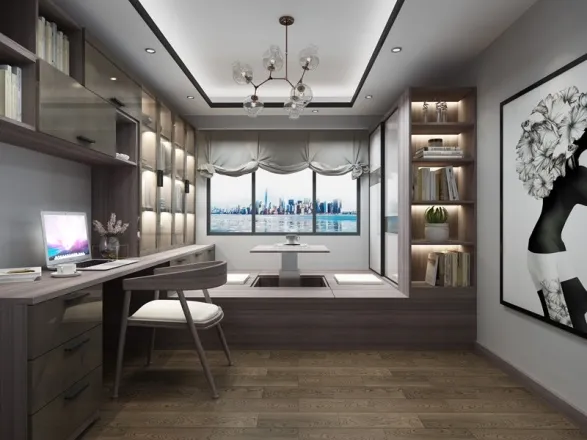
In our quest to create living spaces that nourish both productivity and peace, the ancient Japanese tradition of tatami flooring and modern lift-table technology emerge as unexpected soulmates. This is the story of how centuries-old wisdom harmonizes with contemporary innovation to craft environments where focus flows freely and relaxation comes naturally.
If you've ever stepped barefoot onto a tatami mat and felt that quietening jolt of grounded tranquility, you'll understand why this humble flooring material has endured for over a millennium. That distinctive scent of rush grass - earthy, grassy, subtle - isn't just a sensory pleasure but an invitation to breathe deeper. Meanwhile, the ergonomic flexibility of height-adjustable tables transforms our workspaces into dynamic zones that honor physical health alongside mental productivity.
When combined, these two elements create more than functional spaces - they create sanctuaries. The union of tatami's natural embrace with the transformative lift-table creates home offices that feel less like workstations and more like personal retreats designed to support your whole life experience.
To understand the magic of tatami, we must journey back through time. The earliest known tatami mats appeared in Japan's oldest written records from 712 AD, mentioned in the Kojiki (Records of Ancient Matters). But these weren't yet the complete floor coverings we know today. The name itself reveals its origins - derived from the verb "tatamu," meaning "to fold," because early versions were thin mats that could be stacked or folded away when not in use.
For centuries, tatami remained a luxury reserved for nobility. Picture an Edo-period aristocrat unrolling a precious mat for meditation or tea ceremony while servants walked on bare wooden floors. Gradually though, tatami evolved from portable furnishing to essential architecture. By the 17th century, nearly every Japanese home contained at least one "washitsu" - a traditional room defined by its tatami flooring.
A traditional tatami is a multi-layered masterpiece:
Dimensionally, tatami became so fundamental that rooms are still measured in "jo" - the standard size of a tatami mat (though these vary regionally from Tokyo's compact 0.88m x 1.76m to Kyoto's more spacious 0.95m x 1.91m). The layout carried spiritual significance too, with "auspicious arrangements" ensuring no four corners met - believed to invite misfortune. For those embracing Japanese style room concepts, considering custom tatami allows perfect integration in contemporary Western homes.
Beyond physical construction, tatami embodies principles that resonate deeply today:
Transitioning from tradition to technology, the modern height-adjustable table represents an evolutionary leap in ergonomics. Early iterations were simple crank-operated mechanisms, but today's lift-tables incorporate fluid electric actuators with programmable memory positions that transform a workstation as easily as adjusting your car seat.
The science behind them is compelling: research demonstrates that alternating between sitting and standing during the workday reduces back pain by 32% and boosts productivity by 10-15%. Beyond physical benefits, this positional flexibility creates psychological shifts - standing during video calls subtly enhances authority, while seated positions invite deeper focus during complex tasks.
Yet most contemporary standing desks feel like technological islands - functional but disconnected from their surroundings. When placed directly onto hard floors or carpets, they're rootless objects rather than integrated environments. This is where the synergy with tatami begins...
At first glance, traditional tatami and modern lift-tables seem unlikely partners. But like tea ceremony and mindfulness, their fusion creates something greater than either could achieve alone:
Bare feet on tatami create a subtle grounding connection missing from socks or shoes on hard floors. This isn't just poetic metaphor - studies show grounding practices reduce inflammation markers. Lift-tables complement this by encouraging physical engagement rather than sedentary disconnect.
Working atop a lift-table on tatami means experiencing natural temperature regulation. Unlike chilly tile floors in winter, tatami maintains around 15-20% higher surface temperature, while summer brings its distinctive cooling sensation through rush grass's evaporative properties.
Tatami's dense straw core reduces sound reflection better than any synthetic mat. Combined with the quieter operation of modern desks (below 40dB), this creates acoustically peaceful workspaces ideal for calls or concentration.
At standing height, the desk serves focused work; at its lowest setting, the area beneath transforms into a comfortable floor-sitting spot for reading or relaxation.
Adjusting desk height becomes a conscious ritual rather than thoughtless action - aligning with Japanese concepts of mindfulness in everyday activities.
After work hours, simply lower the table entirely to transform a work corner into a serene Japanese-style room for meditation or company.
Imagine your workday experience transformed: beginning seated with the desk low in traditional Zazen posture, feeling the gentle support of tatami beneath the cushion. As morning progresses, smoothly raise to standing position while phone rings - ready to engage while keeping energy high. Afternoon brings the table down to its middle height for collaborative sketching sessions seated on comfortable floor chairs. When work ends, transform the entire corner into an uncluttered oasis by lowering the desk surface flush with decorative storage boxes.
Creating your ideal tatami office requires thoughtful integration:
Tatami Selection: For home offices, modern modular tatami mats are ideal - they preserve traditional materials while offering practical benefits. Consider:
Lift-Table Considerations: Look beyond basic functionality to find:
Complementary Elements:
While personal testimonials abound ("My afternoon work fatigue disappeared!"), the benefits of tatami/lift-table combinations have scientific underpinnings:
Biomechanical Advantages:
Studies of Japanese sitting posture show that "seiza" (kneeling) position distributes weight more evenly across shins than chair sitting concentrates in the sacrum. Frequent position changes reduce static loading on the spine regardless of posture.
Hygrothermal Comfort:
Tatami's natural materials maintain optimal humidity balance (50-60% RH) without mechanical systems. Research indicates this humidity range minimizes respiratory symptoms while inhibiting viral transmission.
Cognitive Performance:
Participants using height-adjustable workstations showed measurable improvement in both convergent thinking tasks and creative divergent thinking tests according to University of California ergonomics studies.
Emma K.: Tokyo-based digital marketer faced recurring back pain until replacing her plush carpet with tatami mats and installing a minimal lift-table. "Within three weeks, I could actually feel my body unwinding. The greatest surprise was how lowering the desk after work signaled my brain it was leisure time."
Mikael & Sons Architecture: This Stockholm studio renovated their creative space with tatami zones and custom standing-sitting stations. Project manager Henrik Olsen notes: "Beyond health improvements, clients comment how different our meeting spaces feel. There's a unique intimacy when everyone sits at the same low level rather than around a high board table."
Mindful Tech Collective: This Silicon Valley startup created their entire office around tatami and lift-table integrations. CEO David Chen shares: "Initially people thought we were trying too hard to be zen-chic. But six months later, the results speak for themselves - 43% reduction in ergonomic complaints and an unexpected drop in employee turnover."
Implementing this union needn't require drastic renovation:
Room within a Room: Create a defined tatami zone in part of an existing space using simple border definitions rather than walls
Transitional Flooring: Modular tatami allows conversion only where the desk sits - the surrounding space can keep existing flooring
Tatami Platform Bed Inspiration: Taking design cues from tatami platform bed solutions that elevate flooring for visual separation without construction
The cultural exchange enriches both traditions. Japanese designers increasingly incorporate standing desks into washitsu rooms, while Western ergonomic experts now study tatami's benefits beyond the obvious comfort.
Embrace the integration - where tradition elevates modernity
Recommend Products












