
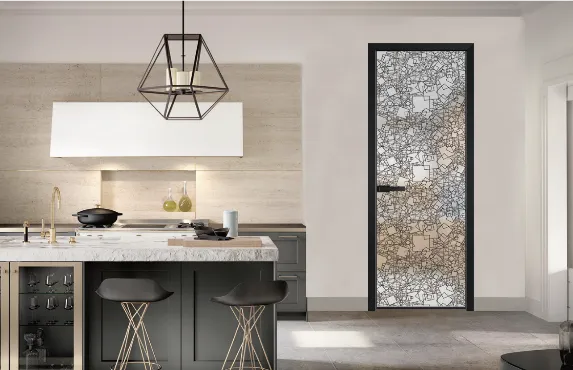
Understanding swing door types, materials, and installation considerations for residential and commercial construction
Doors are among the most frequently used elements in any building, yet they are often treated as an afterthought during the design and procurement phase. A well-chosen swing door does more than open and close — it defines the flow of a space, contributes to acoustic insulation, affects energy efficiency, and makes a lasting impression on everyone who walks through it. For contractors, developers, and architects sourcing materials at scale, finding the right swing door series solutions can be the difference between a smooth project delivery and costly rework down the line.
A swing door is the most traditional and widely used door type — hinged on one side, it rotates open along a vertical axis. But a professional swing door series is far more than a slab of wood on hinges. Modern swing door systems encompass the door leaf, frame, hinges, handles, locks, seals, and often integrated accessories such as closers or stoppers — all engineered to work together for specific performance requirements.
In the context of large-scale construction, swing door series solutions refer to a curated range of door products that are pre-designed for compatibility across rooms, floors, and even entire building complexes. Whether for a hotel corridor, a hospital ward, an office building, or a residential villa, the right series ensures consistency in aesthetics, durability, and functionality.
Most people interact with doors dozens of times a day without giving them a second thought — until one sticks, slams, warps, or fails to latch properly. In commercial and residential projects, door failures translate into maintenance calls, tenant complaints, and safety hazards. A quality swing door should perform reliably for years with minimal intervention.
Beyond reliability, doors play a significant role in fire safety compliance. Many building codes require fire-rated doors in specific locations, and swing doors are commonly used in such applications because their hinged design allows for effective sealing against smoke and flames when properly installed with the right frame and intumescent strips.
Acoustic performance is another factor. In hotels, offices, and multi-family residential buildings, the ability of a door to block sound transmission directly impacts occupant comfort and satisfaction. Solid-core swing doors with proper perimeter seals can achieve significantly higher sound transmission class (STC) ratings compared to hollow-core or sliding alternatives.
Not all swing doors are created equal. The material, construction, and finish should align with the intended use case. Here are the main categories found in professional windows & doors solutions portfolios:
Solid wood doors remain a popular choice for residential interiors and high-end commercial projects. They offer natural beauty, excellent acoustic insulation, and a premium feel that engineered alternatives often struggle to match. The key is sourcing from suppliers who properly kiln-dry their timber to prevent warping in different climate conditions.
For projects where budget matters but quality cannot be compromised, engineered wood and composite doors offer an attractive middle ground. These doors use a multi-layer construction — often a solid or semi-solid core wrapped in wood veneer or laminate — to deliver stability and a consistent appearance at a more accessible price point. They resist warping better than solid wood in humid environments.
For exterior entrances, industrial facilities, and locations requiring enhanced security, steel doors are the go-to choice. Modern manufacturing techniques allow steel doors to be thermally broken and insulated, making them suitable even for exterior applications in extreme climates. They can be finished with wood-grain textures or powder coating to match architectural aesthetics.
Framed or frameless glass swing doors bring natural light into interior spaces while maintaining visual connectivity. Common in office lobbies, retail stores, and modern residential designs, glass doors require precision engineering to ensure safety, thermal performance, and ease of operation over thousands of opening cycles.
Choosing the right supplier for your door requirements goes beyond comparing unit prices. Construction professionals should evaluate potential partners across several dimensions:
Product range breadth: Can the supplier provide matching doors for different functions — fire-rated doors, acoustic doors, exterior entrance doors, and interior passage doors — all within a consistent design language?
Customization capability: Does the supplier offer custom sizes, finishes, hardware configurations, and pre-finishing options? Standard sizes rarely fit every opening in a real-world project.
Quality certifications: Look for compliance with international standards such as ISO certification and relevant fire-rating certifications. These are not just paperwork — they reflect a manufacturer's commitment to consistent quality control.
Logistics and lead time: For international procurement, the supplier's ability to manage container loading, shipping documentation, and on-time delivery is as important as the product itself.
After-sales support: Doors are mechanical products. Installation guidance, spare hardware availability, and warranty terms should be clearly defined before placing an order.
When sourcing from international markets, working with a one-stop building materials supplier can dramatically simplify procurement. Instead of coordinating with separate factories for doors, windows, flooring, and fixtures, a single partner consolidates sourcing, quality control, and logistics — reducing both administrative burden and supply chain risk.
Doors do not exist in isolation. On any construction site, the door schedule must align with wall systems, flooring transitions, hardware standards, and overall architectural design. This is where a comprehensive windows & doors solutions approach pays dividends. When the same supplier provides windows, swing doors, sliding doors, and even curtain wall components, you gain consistency in profiles, finishes, and performance specifications.
For example, the thermal break technology used in a supplier's casement window series may share design principles with their thermally insulated swing door frames. The hardware finishes — whether brushed nickel, matte black, or polished chrome — can be matched across all door and window products. This level of integration is difficult to achieve when sourcing from multiple disconnected vendors.
Other door types in a comprehensive series often include hanging sliding doors for spaces where swing clearance is limited, heavy sliding doors for grand entrances, and specialized products like sun room enclosures that blur the line between interior and exterior living. Having all these options from one supplier streamlines both specification and procurement.
Construction procurement can be chaotic. A typical mid-size project may require coordinating with dozens of individual suppliers — one for doors, another for windows, several for different flooring types, separate vendors for sanitary fixtures, lighting, and appliances. Each additional supplier adds communication overhead, increases the risk of scheduling conflicts, and complicates logistics.
This is why more developers and contractors are turning to integrated building materials partners. COLORIA GROUP, for instance, operates as a comprehensive provider of interior and exterior solutions, covering everything from walls, flooring, and ceilings to sanitary fixtures, customized furniture, home appliances, elevators, electrical systems, and of course, doors and windows. By consolidating procurement under one roof, project managers gain better visibility into their supply chain and can negotiate more favorable terms through volume aggregation.
For international buyers — particularly those in markets like Saudi Arabia where COLORIA maintains a local presence — the value of a single-source partner extends to simplified import documentation, consolidated container loading, and a single point of accountability for quality and delivery.
Even the finest swing door will underperform if improperly installed. Key factors to manage on site include:
Rough opening preparation: The wall opening must be plumb, level, and square. Even minor deviations can cause the door to bind or leave uneven gaps around the frame.
Hardware alignment: Hinges must be mortised to consistent depth and aligned precisely. Misaligned hinges create stress points that lead to premature wear and door sagging.
Clearance management: The gap between door edge and frame must accommodate seasonal expansion and contraction of materials, floor finishes, and any planned under-door air transfer.
Seal integrity: For fire-rated and acoustic doors, the integrity of perimeter seals and the proper installation of door bottoms are critical to achieving rated performance.
Hardware compatibility: Closers, panic bars, and access control systems must be compatible with the specific door weight, thickness, and frame type.
A supplier that provides detailed installation documentation, pre-hung door options (where the door is pre-mounted in its frame at the factory), and responsive technical support can save countless hours on site and significantly reduce callbacks.
Several trends are influencing how swing doors are manufactured, specified, and used in contemporary construction:
Sustainability and green building: As dual carbon targets drive the building materials industry toward lower embodied carbon, door manufacturers are adopting more sustainable materials, improving production efficiency, and designing for recyclability. FSC-certified timber and low-VOC finishes are becoming standard requirements in many markets.
Prefabrication and modular construction: The increased penetration rate of prefabricated buildings means doors are increasingly being installed off-site in factory-controlled conditions before modules are transported to the construction site. This requires doors with precise dimensional tolerances and robust packaging for transit.
Smart integration: Access control systems, electronic locks, and sensor-based automation are being integrated directly into swing door systems, particularly in commercial and multi-family residential projects. Doors are becoming nodes in building management networks.
Urban renovation demand: Urban village renovation and expansion programs in many countries are driving sustained demand for building materials, including doors and windows. Renovation projects often require custom-sized products to fit existing openings, making supplier flexibility a critical factor.
It is tempting to select door suppliers based primarily on unit price, especially when dealing with large quantities. However, experienced project managers know that the total cost of ownership extends well beyond the initial purchase. A door that costs less upfront but requires frequent adjustments, develops finish defects within the first year, or fails to meet fire or acoustic ratings will ultimately cost far more in rework, complaints, and potential liability.
When evaluating swing door series solutions for your project, consider requesting physical samples before committing to a bulk order. Examine the quality of edge banding, the consistency of finish application, the smoothness of hinge operation, and the fit of the door within its frame. Ask about the supplier's quality control process, factory audit history, and reference projects similar to your own.
Swing doors are fundamental to the functionality, safety, and aesthetic coherence of any building. Taking the time to identify the right swing door series — one that matches your project's performance requirements, design language, and budget — is an investment that pays dividends throughout the building's lifecycle. By working with an experienced supplier that offers comprehensive solutions across multiple product categories, you gain not just better doors, but a more streamlined and reliable procurement experience.
Ready to source quality swing doors for your next project?
COLORIA GROUP offers a complete range of swing door series solutions, backed by extensive experience in international building materials supply and a commitment to quality that spans 13 product categories. From solid wood interior doors to heavy-duty steel exterior doors, our team can help you specify the right products for your residential or commercial project.
Contact us today to discuss your requirements, request samples, or receive a tailored quotation for your project.
Recommend Products












