
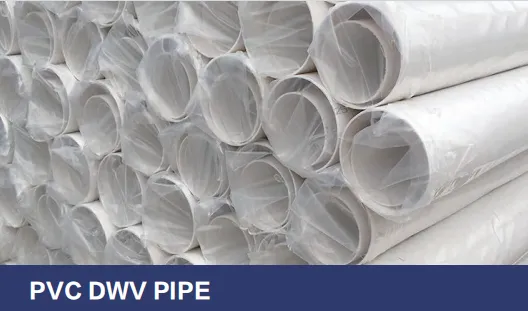
Walk into any construction site today, and you'll notice a quiet revolution unfolding. Builders, architects, and project managers aren't just talking about deadlines and budgets anymore—they're debating recycled content percentages, carbon footprints, and the lifecycle impact of every material that goes into the walls, floors, and foundations of our homes, offices, and public spaces. At the heart of this shift lies a critical but often overlooked component: the humble pipes that keep our buildings functional. Among these, PVC DWV (Drain, Waste, Vent) pipes are workhorses, quietly carrying away water and waste in nearly every residential and commercial structure. But as the world wakes up to the urgency of sustainability, the question isn't just which PVC DWV pipe to install—it's who supplies it. Enter the eco-conscious PVC DWV pipe supplier: a new breed of building material partner redefining what it means to deliver reliable, high-performance solutions without costing the planet.
Let's start with the basics. PVC DWV pipes are the unsung heroes of modern construction. They snake through walls and under floors, ensuring that sinks drain, showers flush, and stale air vents out, keeping indoor spaces healthy and dry. Traditionally, these pipes have been praised for their durability, affordability, and resistance to corrosion—qualities that make them a staple for builders. But here's the catch: conventional PVC production relies heavily on non-renewable fossil fuels, releases harmful emissions during manufacturing, and often includes additives that raise concerns about long-term environmental and health impacts. When these pipes reach the end of their lifespan, many end up in landfills, where they can take centuries to break down, leaching chemicals into soil and water in the process.
For years, this trade-off—functionality versus sustainability—felt inevitable. But today, that's changing. As cities and countries tighten environmental regulations, and as consumers demand greener buildings, the construction industry is being pushed to rethink every link in its supply chain. This is where the role of the
Sustainability isn't a buzzword for these suppliers—it's a core value embedded in every step of their operations. To understand what sets them apart, let's pull back the curtain on their practices. It starts long before the first pipe is extruded, with how they source raw materials, and continues through manufacturing, distribution, and even end-of-life management. Here's a closer look at the traits that define a truly eco-conscious partner:
Traditional PVC DWV pipe production starts with virgin resin, made from petroleum—a finite resource with a heavy carbon footprint. Eco-conscious suppliers, however, prioritize recycled content. Imagine a pipe that contains 30-50% post-consumer or post-industrial recycled PVC, reclaimed from old windows, pipes, or packaging that would otherwise clutter landfills. This isn't just recycling for recycling's sake; it reduces the demand for new fossil fuels, cuts down on waste, and lowers the overall environmental impact of the product. Some suppliers take it a step further by experimenting with bio-based additives, replacing a portion of the petroleum-derived components with plant-based materials like sugarcane or cornstarch, without compromising strength or durability.
Extruding PVC pipes is energy-intensive, but eco-conscious suppliers are flipping the script on how that energy is generated. Walk through their factories, and you'll likely see solar panels glinting on rooftops, wind turbines spinning nearby, or biogas generators humming in the background. These renewable energy sources slash reliance on coal or natural gas, drastically reducing the carbon emissions associated with production. Take, for example, a supplier that runs its extrusion lines entirely on solar power; over a year, such a facility could offset thousands of tons of CO2 compared to a conventional plant. But it's not just about the energy source—it's also about efficiency. Smart conveyor systems, heat recovery units that capture waste heat from machinery, and AI-driven production scheduling to minimize idle time all add up to a leaner, greener manufacturing process.
PVC's versatility comes from additives—plasticizers, stabilizers, and colorants that give it flexibility, UV resistance, and longevity. Unfortunately, some traditional additives, like phthalates or lead-based stabilizers, have been linked to health risks and environmental harm. Eco-conscious suppliers refuse to cut corners here. They opt for non-toxic alternatives: calcium-zinc stabilizers instead of lead, phthalate-free plasticizers, and low-VOC (volatile organic compound) colorants. The result? Pipes that meet strict health standards, making them safe for use in sensitive environments like schools and hospitals, and that don't leach harmful chemicals into soil or water when they eventually degrade.
| Aspect | Traditional PVC DWV Pipe Supplier | Eco-Conscious PVC DWV Pipe Supplier |
|---|---|---|
| Raw Material Sourcing | 100% virgin petroleum-based resin; limited recycling | 30-50% recycled PVC content; bio-based additives optional |
| Manufacturing Energy | Relies on fossil fuels (coal, natural gas); high energy waste | Renewable energy (solar, wind); heat recovery systems |
| Additives Used | May include phthalates, lead stabilizers, high-VOC colorants | Non-toxic stabilizers (calcium-zinc), phthalate-free, low-VOC |
| Carbon Footprint | High emissions; little to no offset programs | 30-60% lower emissions; carbon offset partnerships |
| End-of-Life Support | No take-back programs; limited recyclability guidance | Take-back/recycling programs; clear repurposing guidelines |
| Certifications | Minimal environmental certifications | ISO 14001, GREENGUARD, LEED v4 compliant, EPD verified |
Sustainability doesn't end when a pipe leaves the factory. Eco-conscious suppliers think long-term, designing their products for a circular lifecycle. That means creating pipes that are easy to recycle at the end of their 50- to 100-year lifespan, with clear labeling to guide recyclers. Some even offer take-back programs, partnering with demolition companies to collect old pipes and repurpose them into new ones. It's a closed-loop system that turns waste into a resource, reducing the need for new raw materials and keeping PVC out of landfills. For builders, this isn't just good for the planet—it's good for business. Many green building certifications, like LEED or BREEAM, reward projects that use recycled materials and implement waste-reduction strategies, giving eco-conscious suppliers a competitive edge.
Anyone can claim to be "green"—but eco-conscious suppliers back it up with proof. They invest in rigorous third-party certifications that validate their sustainability claims. Look for badges like ISO 14001 (for environmental management systems), GREENGUARD (for low chemical emissions), or EPD (Environmental Product Declaration), which provides a detailed, verified report on a product's environmental impact from cradle to gate. These certifications aren't just marketing tools; they're a promise to customers that the supplier's practices align with global sustainability standards. For a project manager trying to meet strict green building requirements, this transparency is invaluable—it eliminates guesswork and ensures that the PVC DWV pipes in their project are truly as eco-friendly as they claim.
While PVC DWV pipes are a critical focus, the most innovative eco-conscious suppliers aren't stopping there. They're evolving into
Take, for instance, a residential building project aiming for LEED Platinum certification. The builder needs everything from pipes to flooring to wall solutions, each with verified green credentials. A one-stop supplier can provide PVC DWV pipes with 40% recycled content, bamboo charcoal board wall panels (naturally antimicrobial and low-VOC), and terrazzo tile flooring made from recycled glass and stone—all under one roof. This not only simplifies logistics but also ensures that the environmental impact is minimized across the entire project. It's a win-win: builders save time and resources, while the planet benefits from a more coordinated approach to sustainability.
At this point, you might be wondering: Does all this effort really make a difference? The answer is a resounding yes. The impact of choosing an eco-conscious PVC DWV pipe supplier ripples far beyond the construction site, touching everything from public health to global carbon reduction goals.
Consider the numbers. The global construction industry is responsible for nearly 40% of energy-related carbon emissions, according to the UN Environment Programme. By switching to PVC DWV pipes made with recycled content and renewable energy, a single mid-sized construction project can reduce its carbon footprint by hundreds of tons. Multiply that across thousands of projects worldwide, and the collective impact becomes staggering. Then there's the human element: non-toxic pipes mean better indoor air quality, reducing the risk of respiratory issues for building occupants. In schools and hospitals, where vulnerable populations spend hours each day, this can have a direct, positive effect on health and well-being.
Economically, the benefits are just as clear. While eco-conscious pipes may have a slightly higher upfront cost, they often deliver long-term savings. Their durability means fewer replacements over time, and their compatibility with green building certifications can unlock tax incentives, grants, or higher resale values for properties. For suppliers, too, sustainability is a smart business move. A 2023 survey by McKinsey found that 60% of construction companies are willing to pay a premium for sustainable materials, and 85% of consumers prioritize eco-friendly features when choosing homes or offices. By positioning themselves as leaders in sustainability, PVC DWV pipe suppliers can tap into this growing demand and build loyalty with forward-thinking clients.
The journey toward sustainability in construction is still in its early stages, but the direction is clear. As technology advances and consumer demand grows, eco-conscious PVC DWV pipe suppliers are poised to lead the charge with even more innovative solutions. Here's what we can expect to see in the coming years:
Researchers are already experimenting with bio-based PVC, made from renewable resources like plant starches or algae. While still in development, early prototypes show promise, with some bio-based PVC formulations matching the performance of traditional PVC while reducing carbon footprints by up to 70%. Eco-conscious suppliers are investing heavily in this technology, aiming to bring bio-based DWV pipes to market within the next decade.
Imagine PVC DWV pipes embedded with sensors that monitor water flow, detect leaks, and even measure air quality. These "smart" pipes could reduce water waste, prevent mold growth, and provide real-time data on a building's environmental impact. Some suppliers are already testing prototypes, pairing sustainable materials with IoT (Internet of Things) technology to create pipes that are both eco-friendly and hyper-efficient.
The goal? Factories that produce zero waste, with every byproduct from PVC production recycled or repurposed. Some leading suppliers are already close, achieving 95% waste diversion rates by recycling scrap plastic, reusing water in production, and converting organic waste into biogas for energy. In the future, we may see facilities that operate entirely closed-loop, leaving no environmental footprint behind.
Sustainability in construction isn't about grand gestures—it's about the choices we make every day, from the foundation to the finishing touches. The PVC DWV pipe, often overlooked, is a perfect example. By choosing an eco-conscious supplier, builders, architects, and project managers are making a statement: that functionality and sustainability can coexist, and that every component, no matter how small, plays a role in protecting our planet. These suppliers aren't just selling pipes—they're selling a vision of a built environment that works with nature, not against it. They're proving that being a
So the next time you walk into a building—whether it's your home, your office, or your child's school—take a moment to think about the pipes hidden behind the walls. If they came from an eco-conscious supplier, they're doing more than just carrying water. They're carrying hope: hope for a greener, healthier, more sustainable world. And that's a legacy worth building.
Recommend Products












