
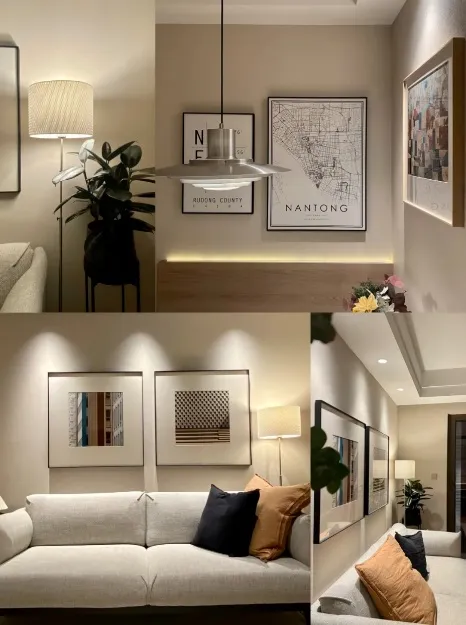
Illuminating Homes with Nature's Touch – Coloria's Commitment to Green Building Solutions in the Heart of the Middle East
In today's world, where every choice we make echoes through the planet's ecosystems, the building industry stands at a crossroads. As cities grow and homes become smarter, the demand for construction materials—especially lighting solutions—that balance functionality, aesthetics, and environmental responsibility has never been higher. For homeowners, architects, and developers alike, lighting is no longer just about brightness; it's about making a statement: "This space was built with the future in mind."
Consider the numbers: residential buildings account for nearly 20% of global carbon emissions, with lighting and electrical systems contributing a significant chunk of that footprint. Traditional lighting fixtures, often made from virgin plastics, aluminum, or non-recyclable metals, not only deplete finite resources but also end up in landfills after their lifespan, releasing toxic chemicals into the soil and air. It's a cycle that's increasingly hard to justify in an era of "net-zero" goals and climate action.
Enter the rise of sustainable lighting—a movement that's reshaping how we think about the fixtures that light our living rooms, bedrooms, and kitchens. At the forefront of this shift are innovative materials that challenge the status quo, and among them, plant-based materials are emerging as a game-changer. Derived from renewable resources like bamboo, hemp, agricultural waste, and even algae, these materials offer a path to lighting solutions that are kind to the planet without compromising on durability or design.
For Coloria, a global leader in one-stop architectural solutions, this isn't just a trend—it's a mission. With decades of experience as a trusted building material supplier in Saudi Arabia and beyond, the company has witnessed firsthand the transformative power of sustainable practices in aligning with regional visions like Saudi Arabia's "2030 Vision," which prioritizes green growth and localized sustainable development. Today, Coloria is proud to lead the charge in bringing plant-based lighting fixtures to residential and commercial projects, proving that "going green" doesn't mean sacrificing quality or convenience.
What exactly makes plant-based materials so revolutionary for lighting fixtures? Let's start with the basics: unlike petroleum-based plastics or mined metals, plant-based materials are sourced from renewable resources that can be regrown and replenished. This alone drastically reduces the carbon footprint associated with raw material extraction and production. But the benefits don't stop there.
| Feature | Traditional Lighting Materials (Plastic/Metal) | Coloria's Plant-Based Materials |
|---|---|---|
| Raw Material Source | Fossil fuels (non-renewable), mined metals | Bamboo, hemp, rice husk, agricultural by-products (renewable) |
| Carbon Emissions (Production) | High (5-8kg CO₂ per kg of material) | Low (1.2-2kg CO₂ per kg of material) |
| End-of-Life Impact | Non-biodegradable; contributes to landfill waste | Biodegradable or recyclable; minimal environmental residue |
| Fire Safety Rating | Varies (often B-Class; requires chemical flame retardants) | Class A (meets hospital/school safety standards with natural fire resistance) |
| Aesthetic Versatility | Limited; often requires painting or coating for texture | Natural textures and tones; customizable finishes (wood grain, matte, etc.) |
One of the most common misconceptions about plant-based materials is that they're "weaker" or less durable than their synthetic counterparts. But Coloria's R&D team has spent years debunking this myth. By combining plant fibers with eco-friendly binders and advanced processing techniques, the company has developed lighting fixtures that are not only strong and impact-resistant but also naturally fire-retardant and moisture-resistant—critical qualities for residential use.
Take, for example, Coloria's bamboo-based lamp shades. Bamboo, known for its rapid growth and tensile strength, is processed into a fine fiber that's mixed with a plant-derived resin to create a material that's lightweight yet sturdy. The result? A lamp shade that diffuses warm, natural light while withstanding daily wear and tear. Similarly, the company's hemp-based ceiling light panels leverage the fiber's natural insulating properties, reducing heat loss and energy consumption in homes—a small detail that adds up to big savings on utility bills.
Did You Know? Bamboo absorbs 5 times more carbon dioxide and produces 35% more oxygen than equivalent trees, making it one of the most eco-friendly resources on the planet. By using bamboo in lighting fixtures, Coloria helps sequester carbon even before the product reaches the customer!
But sustainability isn't just about the materials themselves—it's about the entire lifecycle. Coloria's plant-based lighting fixtures are designed for disassembly, meaning components can be easily separated and recycled or composted at the end of their life. This "cradle-to-cradle" approach ensures that even after years of use, the fixtures don't become a burden on the environment.
What sets Coloria apart as a sustainable residential lighting manufacturer? It's simple: we don't just sell products—we deliver complete solutions. As a one-stop architectural solution provider, we understand that building a home or commercial project involves countless moving parts, and lighting is just one piece of the puzzle. That's why we've designed our services to seamlessly integrate with every stage of your project, from initial design to final installation.
Imagine working with a single partner who can supply not only your plant-based lighting fixtures but also your solar panels, wall materials, flooring, and even custom furniture. That's the power of Coloria's "one-stop procurement" model. By consolidating your material needs under one roof, we eliminate the hassle of coordinating with multiple suppliers, reduce lead times, and ensure that every component—including your lighting—aligns with your sustainability goals.
For clients in Saudi Arabia and the Middle East, this localized approach is especially valuable. With a dedicated (agency) in Saudi Arabia and deep roots in the region, Coloria has a nuanced understanding of local building codes, climate conditions, and design preferences. Whether you're constructing a residential complex in Riyadh or a boutique hotel in Jeddah, our team can recommend plant-based lighting solutions that thrive in the region's unique environment—think fixtures that resist humidity, stand up to high temperatures, and complement the aesthetic of Middle Eastern architecture.
But our reach extends far beyond the Middle East. Coloria's global service network ensures that clients around the world can access our sustainable lighting solutions, backed by the same commitment to quality and customer satisfaction. From Europe to Asia, we've built partnerships with architects, developers, and contractors who share our vision of a greener built environment.
From design consultation to post-installation maintenance, our team is with you every step of the way. Need help integrating plant-based lighting with smart home systems? We've got you covered.
Every project is unique, which is why we offer fully customizable lighting solutions. Choose from a range of plant-based materials, finishes, and designs to match your vision.
All our plant-based lighting fixtures meet international sustainability standards, including LEED and BREEAM, ensuring your project qualifies for green building certifications.
By streamlining our supply chain and leveraging local resources in Saudi Arabia, we make sustainable lighting accessible and affordable for projects of all sizes.
Don't just take our word for it—let our projects speak for themselves. Here are a few examples of how Coloria's plant-based lighting fixtures have transformed residential and commercial spaces:
Residential Complex in Riyadh, Saudi Arabia: A 200-unit housing development aimed at aligning with Saudi Arabia's 2030 Vision for sustainable communities. Coloria supplied over 1,000 plant-based lighting fixtures, including bamboo fiber pendant lights for living rooms and hemp-based wall sconces for bedrooms. The result? A 30% reduction in carbon emissions compared to traditional lighting, and a project that qualified for green building incentives under local regulations.
Eco-Friendly Villa in Dubai, UAE: A luxury villa focused on minimal environmental impact. Coloria's custom-designed algae-based chandelier became the centerpiece of the dining room, while our recycled agricultural waste ceiling lights added warmth to the bedrooms. The client reported not only lower energy bills but also positive feedback from guests impressed by the unique, natural aesthetic of the fixtures.
Student Housing in Jeddah, Saudi Arabia: A university dormitory project prioritizing safety and sustainability. Coloria's Class A fireproof plant-based lighting fixtures (made with bamboo charcoal board) met strict fire safety standards for educational facilities, while their sound-absorbing properties improved the acoustic comfort of shared spaces. The project now serves as a model for sustainable student housing in the region.
These case studies highlight a common theme: sustainable lighting isn't just about "being green"—it's about enhancing the quality of life for occupants, reducing operational costs, and contributing to a project's overall success. With Coloria, you're not just choosing a supplier; you're choosing a partner invested in your project's long-term impact.
At Coloria, sustainability is more than a product line—it's a core value that guides everything we do. We believe that building a greener future requires investing in both the planet and the people who shape it. That's why we're proud to support Saudi Arabia's 2030 Vision through localized employment initiatives, training programs for Saudi nationals, and partnerships with local universities to drive innovation in green building materials.
Our team is our greatest asset, and we're committed to nurturing talent from diverse backgrounds. By fostering a culture of creativity and collaboration, we empower our employees to develop groundbreaking solutions like our plant-based lighting materials. We also recognize that sustainability is a journey, not a destination, which is why we continuously invest in research and development to improve our materials and processes.
Looking ahead, we're excited to expand our range of plant-based products, exploring new materials and applications that push the boundaries of sustainable design. From integrating IoT technology into our lighting fixtures for smarter energy use to developing new plant-based composites for exterior lighting, the future is bright—and green.
Our Promise: For every plant-based lighting fixture sold, Coloria plants 10 trees through our reforestation partners in Saudi Arabia and East Africa. It's our way of giving back to the planet and ensuring that our growth contributes to a healthier, more sustainable world.
The time to embrace sustainable lighting is now. With global temperatures rising, resource scarcity intensifying, and consumers increasingly demanding eco-friendly options, the building industry has a responsibility to lead the charge toward a greener future. Coloria is ready to walk that path with you.
Whether you're an architect designing the next iconic residential building, a developer looking to meet ESG targets, or a homeowner dreaming of a space that reflects your values, we invite you to explore what's possible with plant-based lighting. Contact us today to learn more about our products, services, and how we can help bring your sustainable vision to life.
Together, we can build spaces that light up our lives—and light the way to a more sustainable tomorrow.
Recommend Products












