
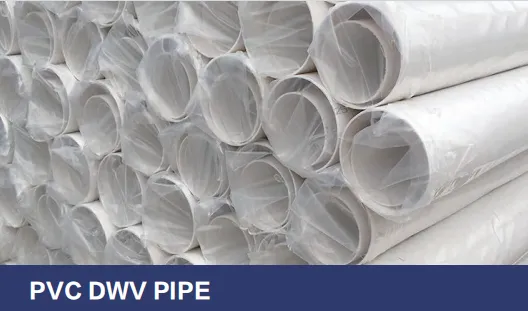
When you turn on the faucet in your kitchen or flush the toilet, you rarely think about the network of pipes working silently behind the walls. Yet these humble components—the drain, waste, and vent (DWV) systems—are the unsung heroes of any building, ensuring hygiene, safety, and functionality. In today's world, where sustainability is no longer a buzzword but a critical necessity, even these behind-the-scenes elements are getting a green makeover. Enter sustainable PVC DWV pipes: a blend of durability, efficiency, and environmental responsibility that's reshaping the construction industry, one pipe at a time.
As cities grow and buildings become more complex, the demand for reliable, long-lasting DWV systems has never been higher. But with this demand comes a responsibility: to choose materials that don't compromise the planet's health for short-term convenience. Global carbon goals, from the Paris Agreement to net-zero pledges by nations and corporations, are pushing industries to rethink their practices—and the building sector is no exception. At the heart of this transformation are suppliers who understand that sustainability isn't just an add-on but a core business imperative. Among these are forward-thinking pvc dwv pipe suppliers and one-stop architectural solution providers who are redefining what it means to deliver pvc dwv pipe solutions that align with both performance needs and environmental stewardship.
First, let's demystify the term: DWV stands for Drain, Waste, and Vent. These pipes are responsible for carrying wastewater away from sinks, showers, toilets, and appliances, while also venting sewer gases to the outside, preventing odors and maintaining proper pressure in the system. Without a well-designed DWV system, buildings would be prone to backups, leaks, and even health hazards.
PVC (polyvinyl chloride) has long been a popular choice for DWV pipes, and for good reason. It's lightweight, making installation easier and reducing labor costs. It's resistant to corrosion, chemicals, and biological growth—critical traits for pipes that handle everything from kitchen grease to bathroom waste. It's also cost-effective compared to materials like copper or cast iron, without sacrificing longevity. But for years, PVC has faced criticism for its environmental impact, particularly around production processes and recyclability. This is where sustainable innovation comes in.
Modern sustainable PVC DWV pipes are a far cry from their predecessors. Today's pvc dwv pipe solutions prioritize eco-friendly raw materials, energy-efficient manufacturing, and end-of-life recyclability. Suppliers are investing in research to reduce the carbon footprint of every step, from resin production to delivery. For instance, some leading suppliers now use recycled PVC content in their pipes, diverting plastic waste from landfills and reducing the need for virgin materials. Others have switched to renewable energy sources—like solar or wind power—for their manufacturing facilities, slashing greenhouse gas emissions during production.
Take, for example, a pvc dwv pipe supplier that sources 30% of its resin from post-consumer recycled plastic. By doing so, they not only keep plastic out of oceans and landfills but also reduce the energy required to produce new PVC by up to 50%, according to the Vinyl Institute. Multiply that across millions of pipes, and the impact adds up quickly. It's these small, intentional choices that make a big difference in the fight against climate change.
The building sector is a major player in global carbon emissions, accounting for nearly 40% of energy-related CO2 emissions worldwide, according to the International Energy Agency (IEA). This includes emissions from both operational energy (heating, cooling, lighting) and embodied carbon—the emissions released during the extraction, manufacturing, transportation, and installation of building materials. While operational carbon has traditionally received more attention, embodied carbon is gaining recognition as a critical area for reduction, especially as buildings become more energy-efficient in operation.
Global carbon goals, such as limiting global warming to 1.5°C above pre-industrial levels, require urgent action across all industries. For building materials like PVC DWV pipes, this means re-evaluating every stage of the product lifecycle. A pipe that's cheap to produce but has a high carbon footprint or can't be recycled is no longer acceptable. Instead, the focus is on "cradle-to-grave" sustainability—ensuring that from the moment raw materials are sourced to the day the pipe is replaced, its environmental impact is minimized.
This shift isn't just about compliance; it's about future-proofing the industry. Governments are increasingly implementing stricter regulations on carbon emissions and waste, while consumers and businesses are demanding greener options. A pvc dwv pipe supplier that ignores these trends risks falling behind, while those that embrace sustainability are positioning themselves as leaders in a rapidly evolving market. For instance, the European union's Carbon Border Adjustment Mechanism (CBAM), which taxes high-carbon imports, has already pushed suppliers to reduce their embodied carbon to remain competitive.
Not all pvc dwv pipe suppliers are created equal. When it comes to aligning with global carbon goals, the best suppliers go beyond surface-level claims. They integrate sustainability into their core operations, from sourcing to customer support. Here are key traits to look for:
1. Commitment to Renewable Energy: Leading suppliers power their manufacturing plants with renewable energy, reducing reliance on fossil fuels. Some have even achieved carbon-neutral production by offsetting remaining emissions through verified projects like reforestation or renewable energy development. For example, a supplier in Saudi Arabia might use solar power to run its extrusion lines, leveraging the region's abundant sunlight to cut carbon emissions.
2. Recycled Content and Circular Economy Practices: A truly sustainable supplier prioritizes recycled materials. For example, using post-consumer or post-industrial recycled PVC in pipe production not only reduces waste but also lowers the energy required compared to producing virgin PVC. Additionally, many suppliers offer take-back programs for old pipes, ensuring they're recycled rather than landfilled—a cornerstone of the circular economy.
3. Third-Party Certifications: Certifications like ISO 14001 (environmental management systems), GREENGUARD (low chemical emissions), or LEED (Leadership in Energy and Environmental Design) compliance demonstrate a supplier's commitment to sustainability. These certifications are not easy to obtain; they require rigorous auditing and ongoing improvement, making them a reliable indicator of genuine environmental responsibility.
4. One-Stop Solutions with a Green Focus: Many carbon-aligned suppliers operate as one-stop architectural solution providers, offering not just pipes but a full range of sustainable building materials. This integrated approach reduces the need for multiple suppliers, cutting down on transportation emissions and simplifying the procurement process for builders and contractors. For example, a supplier might offer pvc dwv pipe solutions alongside other eco-friendly products like low-VOC adhesives or recycled insulation, creating a cohesive, sustainable building package.
5. Transparency and Reporting: Carbon-aligned suppliers don't hide behind vague sustainability claims. They publish annual sustainability reports, detailing their carbon footprint, waste reduction goals, and progress toward targets. This transparency allows customers to make informed decisions and holds suppliers accountable for their environmental commitments.
| Feature | Traditional PVC DWV Pipes | Sustainable PVC DWV Pipes (from Carbon-Aligned Suppliers) |
|---|---|---|
| Raw Material Sourcing | Primarily virgin PVC resin; limited use of recycled content | High percentage of recycled PVC (post-consumer/post-industrial); responsibly sourced additives |
| Manufacturing Process Emissions | Reliance on fossil fuels; higher CO2 emissions | Renewable energy-powered facilities; energy-efficient production techniques |
| Recyclability | Limited recycling infrastructure; often ends in landfills | Designed for recyclability; supported by take-back programs |
| Carbon Footprint | Higher embodied carbon due to virgin materials and fossil fuel use | 30-50% lower embodied carbon (varies by supplier) |
| Certifications | Few to no environmental certifications | ISO 14001, GREENGUARD, LEED-compliant, etc. |
| End-of-Life Management | Disposal-focused; little consideration for reuse/recycling | Circular economy approach; materials reclaimed for new pipe production |
The table above highlights the stark differences between traditional and sustainable PVC DWV pipes. For builders, contractors, and developers, choosing the latter isn't just an environmental decision—it's a practical one. Sustainable pipes often offer the same or better performance than traditional options, with the added benefit of aligning with green building standards and reducing long-term environmental liability.
Consider a mid-rise apartment complex with 100 units. Using sustainable PVC DWV pipes from a carbon-aligned supplier could reduce the project's embodied carbon by several tons compared to traditional pipes. Multiply that across hundreds of similar projects, and the collective impact on global carbon emissions becomes significant.
Sustainable PVC DWV pipes aren't limited to one type of building—they're versatile enough to meet the demands of both residential and commercial projects. In residential buildings, where cost and durability are key, these pipes offer homeowners peace of mind knowing their plumbing system is both reliable and eco-friendly. For example, a family building a new home might prioritize sustainable materials to reduce their carbon footprint, and a pvc dwv pipe supplier offering recycled-content pipes would be an ideal partner.
Commercial buildings, such as hospitals, schools, and office complexes, have even more stringent requirements. Hospitals, for instance, need DWV systems that resist bacteria growth and are easy to clean—qualities that PVC inherently offers. When paired with sustainability features, these pipes become part of a holistic approach to green healthcare design. Similarly, schools benefit from low-emission materials, ensuring healthy indoor air quality for students and staff. Carbon-aligned suppliers understand these unique needs and often tailor their pvc dwv pipe solutions to specific sectors, offering pipes with additional features like antimicrobial coatings or enhanced fire resistance, all while maintaining a low carbon footprint.
One-stop architectural solution providers are particularly valuable in large commercial projects, where coordinating multiple materials can be complex. By offering sustainable DWV pipes alongside other eco-friendly building products, these suppliers streamline the process, ensuring that every component works together to meet the project's sustainability goals. For example, a developer constructing a LEED-certified office building might source not just DWV pipes but also energy-efficient lighting, recycled steel framing, and low-VOC paint from the same supplier, simplifying logistics and ensuring consistency in environmental standards.
Even in retrofitting projects, sustainable PVC DWV pipes shine. Older buildings often have outdated plumbing systems that waste water or leak, contributing to higher operational carbon footprints. Replacing these with sustainable DWV pipes not only improves efficiency but also reduces the building's overall environmental impact. A supplier that offers both products and installation guidance can make these retrofits smoother, helping building owners meet their carbon reduction targets without sacrificing performance.
Despite their progress, sustainable PVC DWV pipe suppliers face challenges. One common hurdle is the perception that "sustainable" means "more expensive." While it's true that some eco-friendly materials carry a higher upfront cost, the long-term savings—from reduced maintenance, lower energy bills (in the case of energy-efficient buildings), and compliance with green building incentives—often offset this. Suppliers are working to educate customers about the total cost of ownership, emphasizing that sustainable pipes are an investment in both the planet and their project's future value.
Another challenge is the availability of recycled PVC feedstock. While recycling infrastructure is improving, it's still not as widespread as it needs to be. To address this, some suppliers are partnering with recycling facilities and waste management companies to create closed-loop systems, ensuring a steady supply of recycled materials. Innovations in material science are also helping: new additives and processing techniques allow for higher percentages of recycled content without compromising pipe strength or durability.
Looking ahead, the future of sustainable PVC DWV pipes is bright. Emerging technologies like carbon capture during manufacturing, bio-based PVC alternatives, and even smarter pipes with built-in leak detection sensors are on the horizon. These innovations will further reduce the environmental impact of DWV systems while enhancing their performance. For suppliers, staying at the forefront of these developments is key to remaining aligned with evolving global carbon goals.
Imagine a world where every new building project automatically includes sustainable DWV pipes, where recycling old pipes is as common as recycling plastic bottles, and where suppliers compete not just on price but on carbon reduction. This future is within reach, thanks to the dedication of carbon-aligned suppliers and the growing demand for greener building practices. It won't happen overnight, but each step—each recycled pipe, each renewable-powered factory, each transparent sustainability report—brings us closer.
Sustainable PVC DWV pipes are more than just a trend—they're a necessary evolution in the building industry's journey toward carbon neutrality. As global goals become more ambitious, the role of suppliers becomes increasingly critical. A pvc dwv pipe supplier that prioritizes sustainability isn't just selling a product; they're selling a vision of a greener, more resilient built environment. By choosing these suppliers and their pvc dwv pipe solutions, builders, contractors, and homeowners are taking a tangible step toward reducing their carbon footprint and contributing to a healthier planet.
Whether you're constructing a single-family home or a sprawling commercial complex, the pipes behind your walls matter. They're a testament to the choices we make today—and the legacy we leave for tomorrow. So the next time you turn on the faucet or flush the toilet, take a moment to appreciate the sustainable systems working behind the scenes. And remember: every pipe, every supplier, and every decision counts in the fight against climate change.
As we look to the future, one thing is clear: sustainability isn't optional—it's essential. And with the right suppliers by our side, we can build a world where buildings don't just serve us, but protect the planet too. The path forward is challenging, but it's also full of opportunity. Let's seize it—one pipe at a time.
Recommend Products












