

In the quiet suburbs of Riyadh, a young architect named Lina recently stood in front of a half-finished residential project, staring at a stack of traditional stone wall panels. "These are beautiful," she thought, running a hand over the rough surface, "but the delivery truck's exhaust fumes, the waste from cutting them to size, the carbon footprint of quarrying… it all adds up." Like many in her field, Lina was grappling with a universal challenge: how to create spaces that feel warm and timeless while honoring the planet. That's when a colleague mentioned a local Saudi Arabia building materials supplier making waves with a different approach—one that marries the aesthetic of natural stone with a commitment to carbon-neutrality. Intrigued, Lina dug deeper, and what she found wasn't just a product, but a movement. This is the story of that supplier, their journey to redefine sustainable interior decoration materials, and how their PU stone wall panel solutions are changing the game for builders, homeowners, and the environment alike.
Let's start with the facts, because numbers have a way of cutting through the noise. The construction industry is responsible for roughly 39% of global carbon emissions, according to the United Nations Environment Programme. That's more than the energy sector and transportation combined. A big chunk of that comes from building materials—quarrying stone, manufacturing concrete, transporting heavy slabs across continents. Traditional stone wall panels, for example, require massive machinery to extract from the earth, emit high levels of CO2 during processing, and often end up in landfills when projects are renovated because they're too heavy or brittle to repurpose.
"We used to see sustainability as a 'nice-to-have'—something clients asked for if they had extra budget," says Ahmed, a project manager with a Riyadh-based construction firm. "Now? It's non-negotiable. Developers are chasing LEED certifications, homeowners are asking for carbon footprints before signing contracts, and governments are tightening regulations. The days of choosing materials based solely on cost or looks are gone. Suppliers who don't adapt will get left behind."
Enter the rise of forward-thinking suppliers who see themselves not just as vendors, but as partners in the fight against climate change. Among them is a one-stop architectural solution provider that's made carbon neutrality its north star. "We didn't start this company to sell wall panels," says Fatima, co-founder of the supplier. "We started it because we visited a quarry outside Jeddah in 2015 and saw mountains of discarded stone waste, diesel trucks idling, and workers breathing in dust. We thought, 'There has to be a better way to bring beauty into buildings without destroying the planet.'"
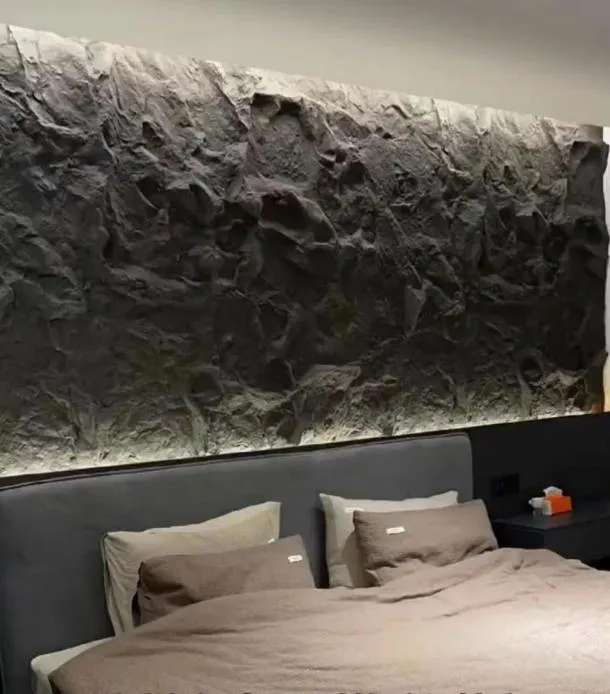
Fatima and her co-founder, Kareem, spent the next three years researching alternatives. They experimented with recycled plastics, bamboo composites, and even agricultural waste before landing on polyurethane (PU) stone panels. "PU is lightweight, durable, and can mimic the texture of natural stone perfectly," Kareem explains. "But the real breakthrough was figuring out how to make the entire production process carbon-neutral. That meant rethinking every step—from where we source raw materials to how we ship the final product."
Traditional stone panels start with mining, which releases CO2 and disrupts ecosystems. This supplier's approach? Skip the quarry altogether. Their PU stone wall panels are made using 60% recycled content—think post-consumer plastic bottles, industrial foam scraps, and even leftover stone dust from local quarries that would otherwise go to waste. "We partnered with a recycling facility in Dammam to collect and process these materials," Fatima says. "Not only does it keep waste out of landfills, but it also cuts down on the energy needed to produce new raw materials. For every ton of recycled content we use, we avoid approximately 1.2 tons of CO2 emissions."
They also source non-recycled components locally whenever possible. "Importing raw materials from Europe or Asia adds so much to the carbon footprint," Kareem notes. "By working with suppliers within a 300-kilometer radius of our factory in Riyadh, we've reduced transportation emissions by 75% compared to our competitors who source globally."
Walk into their Riyadh factory, and you'll notice something missing: the hum of diesel generators. Instead, rows of solar panels cover the roof, and a small wind turbine spins gently in the background. "We invested in renewable energy early on, even when it was more expensive," Fatima admits. "Today, 90% of our electricity comes from solar and wind, and the remaining 10% is offset by purchasing carbon credits from reforestation projects in the Asir region. Our goal is to be 100% renewable-powered by 2026."
The factory floor itself is a model of efficiency. Machines are calibrated to minimize energy use, and a closed-loop water system recycles 95% of the water used in production. "We even repurposed the heat from our molding machines to warm the factory in winter," Kareem adds with a smile. "Waste heat isn't waste if you're creative."
Perhaps most impressively, the production process generates almost no waste. "Any off-cuts or defective panels are ground down and reused in new batches," Fatima explains. "In 2024, we sent zero waste to landfills—a milestone we're incredibly proud of."
Even the best production practices can be undone by inefficient transportation. That's why this supplier took a hard look at their delivery methods. "PU stone panels are 70% lighter than natural stone," Kareem points out. "That means we can fit more panels per truck, reducing the number of trips needed. For example, a single truck can carry 200 square meters of our panels, whereas the same truck would only fit 60 square meters of traditional stone. Fewer trips equal fewer emissions."
They've also swapped their fleet of diesel trucks for electric vehicles (EVs) for local deliveries within Riyadh and Jeddah. For longer hauls, they partner with logistics companies that use hybrid trucks and optimize routes to minimize mileage. "Last year, we calculated that our transportation emissions were 62% lower than the industry average," Fatima says. "It's not perfect yet, but we're constantly tweaking our approach."
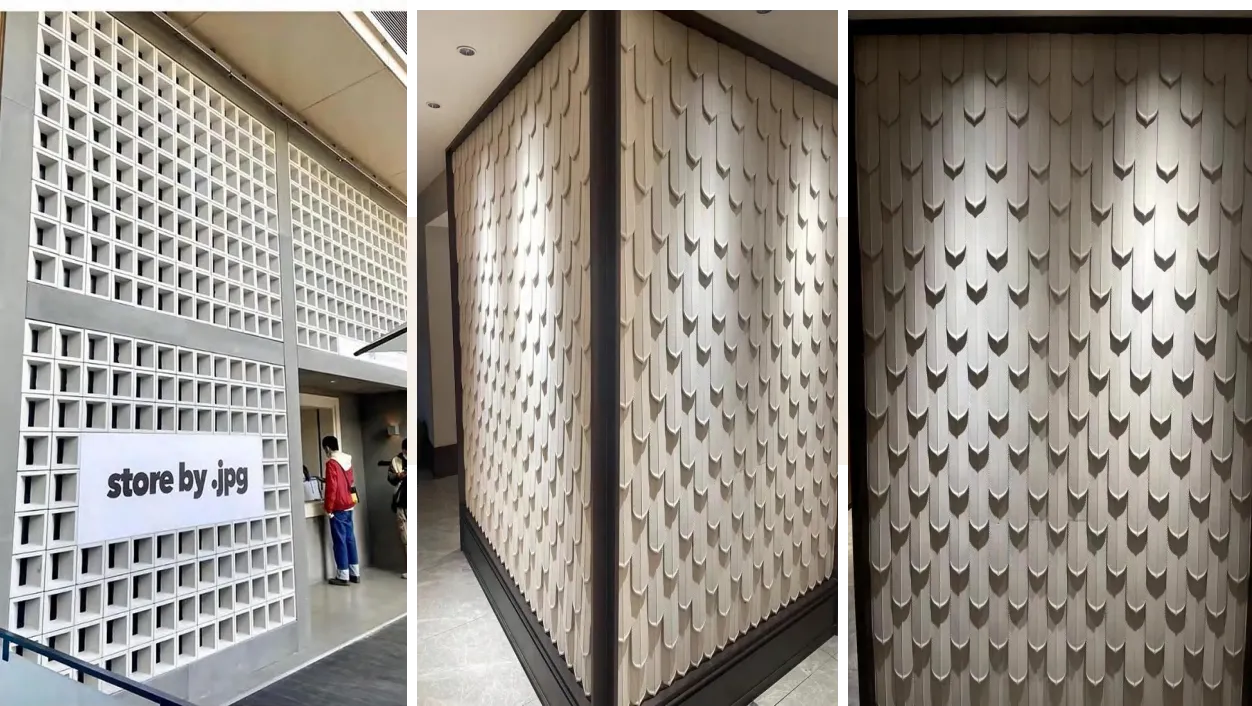
Let's be honest: Sustainability is a selling point, but if the product doesn't perform, no one will buy it. That's why this supplier didn't just focus on green practices—they obsessed over making PU stone wall panels that are better than traditional alternatives. "We wanted architects and homeowners to choose us not just because we're sustainable, but because our panels make their lives easier," Kareem says.
So, what makes these panels stand out? For starters, they're incredibly versatile. Available in over 50 finishes—from rough-hewn "mountain rock" to smooth "marble"—they can mimic almost any natural stone. "Lina, the architect I mentioned earlier, used our 'cloud stone' finish for a luxury villa's living room," Fatima recalls. "Her client couldn't believe it wasn't real marble. When Lina told them it was PU, they were shocked by how light it was—installation took half the time of real stone."
Lightweight also means safer installation. Traditional stone panels require heavy machinery and multiple workers to lift, increasing the risk of injury. "Our panels weigh about 8kg per square meter, compared to 25kg for natural stone," Kareem notes. "A single worker can carry and install them, which cuts labor costs and speeds up projects."
Durability is another win. PU is resistant to moisture, mold, and pests—common issues with wood or fiberboard panels. "We tested our panels in a humidity chamber for 1,000 hours," Fatima says. "No warping, no mold growth. They're also fire-resistant, meeting Class B1 standards, which is crucial for commercial projects like hotels or offices."
| Metric | Traditional Natural Stone Panels | Carbon-Neutral PU Stone Wall Panels |
|---|---|---|
| Carbon Footprint (per sqm) | 18-22 kg CO2e | 2.3 kg CO2e (fully offset to net-zero) |
| Weight (per sqm) | 20-25 kg | 7-9 kg |
| Installation Time (per sqm) | 45-60 minutes | 15-20 minutes |
| Waste During Installation | 15-20% (due to cutting) | Less than 2% (pre-cut to size) |
| Water Resistance | Prone to staining/erosion | 100% waterproof |
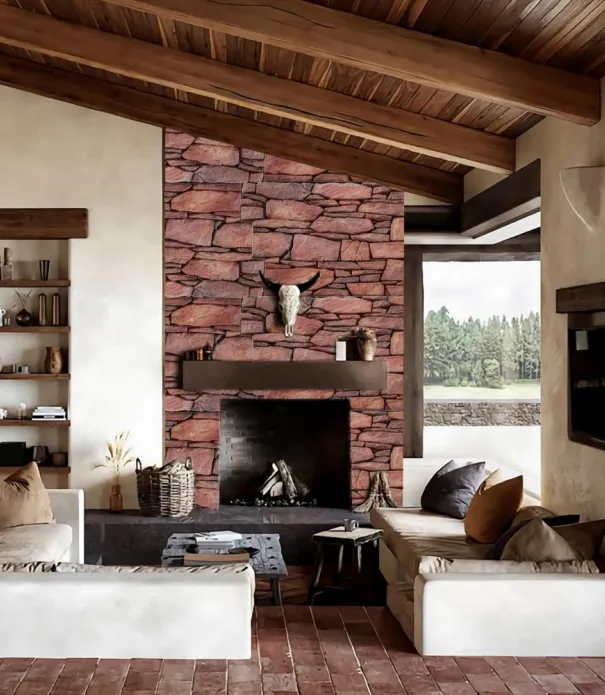
In 2023, developer Al-Mansoori wanted to build a 50-unit apartment complex with a "rustic mountain" aesthetic—but they also aimed for LEED Silver certification. "Traditional stone was out of the question due to cost and carbon emissions," says project manager Ali Al-Mansoori. "We reached out to this supplier, and their PU stone panels checked every box."
The complex used 2,500 square meters of "mountain rock" PU panels for exterior walls. "Installation was a breeze," Ali recalls. "We finished the exterior cladding two weeks ahead of schedule, and the carbon footprint of the materials was 85% lower than if we'd used natural stone. Plus, residents love the look—many thought we imported stone from the Swiss Alps!" The project went on to earn LEED Gold, exceeding their initial goal.
GreenHaven, a tech startup hub, wanted to create a workspace that reflected their eco-friendly values. "We didn't just want to say we're sustainable—we wanted to show it," says founder Layla Hassan. They chose the supplier's "wood grain stone" PU panels for the lobby and common areas.
"The panels are lightweight, so we could install them on interior walls without reinforcing the structure," Layla explains. "And since they're mold-resistant, we didn't have to worry about humidity in Jeddah. Our employees comment on how warm and inviting the space feels, and clients often ask where we got the 'stone' from. It's become a conversation starter about sustainability."
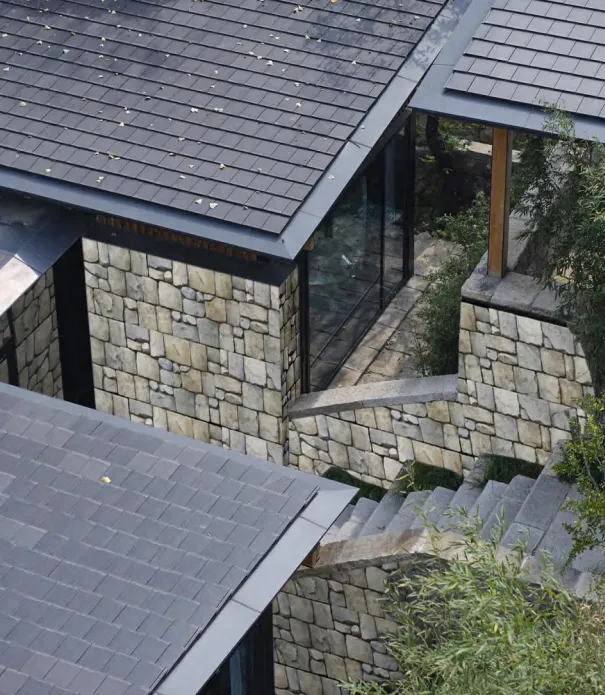
For this Saudi Arabia building materials supplier, carbon neutrality is just the beginning. "We believe sustainability is about people, too," Fatima says. Their factory runs on a "zero-waste, zero-discrimination" policy—all employees receive fair wages, health insurance, and training in sustainable practices. "Our workers aren't just assembling panels; they're part of the mission," Kareem adds. "We hold monthly workshops on climate change, and many have started composting at home or carpooling to work. It's inspiring to see the culture spread beyond the factory walls."
They also give back to the community. A portion of every sale goes to reforestation projects in Saudi Arabia's Al-Baha region, where over 10,000 trees have been planted since 2020. "We visit the sites twice a year with employees and their families," Fatima says. "There's something powerful about seeing the tangible impact of your work—rows of green where there was once desert."
Lina, the architect, sums it up best: "As designers, we have the power to shape the built environment. But we can't do it alone. We need suppliers who share our values—who see sustainability not as a marketing buzzword, but as a responsibility." By choosing a PU stone wall panel supplier that prioritizes carbon-neutral production, Lina and others like her are proving that beautiful, functional spaces and a healthy planet don't have to be mutually exclusive.
So, what's next for this trailblazing supplier? "We're expanding our product line to include other sustainable interior decoration materials—think bamboo charcoal board wall panels and WPC flooring," Kareem reveals. "And we're working on a take-back program, where we'll recycle old PU panels into new ones. The goal? To be a truly circular business by 2030."
In a world where every choice matters, suppliers like this one are more than just vendors—they're partners in building a greener future. Whether you're an architect, a developer, or a homeowner, the next time you're choosing building materials, ask: What's the story behind this product? Because the best spaces aren't just built with materials—they're built with purpose.
Recommend Products











